

For this guide, we group essential oil diffusers into four main types: heat, evaporative, waterless and ultrasonic. Nebulizing diffusers are included under waterless diffusion because they use undiluted essential oil without a water tank. At Scentreat, we break down how each type works, its main pros and cons, and where it works best, so you can compare the options and choose the diffuser that fits your room, scent preference, and daily routine.
Each diffuser type works differently, with its own strengths and trade-offs:
- Heat diffusers: Simple and affordable, but heat can change how an oil smells.
- Evaporative diffusers: Portable and low maintenance, best for small or close-range spaces.
- Waterless diffusers: Diffuse essential oil without a water tank for a stronger, more concentrated scent. They are convenient and often portable, but may use oil faster than ultrasonic models.
- Ultrasonic diffusers: Use water and cool mist for a softer, quieter scent that suits most everyday rooms.
For most home users, ultrasonic is the easiest place to start. Scentreat offers ultrasonic models for bedrooms and everyday rooms, along with waterless options for stronger scent, travel, and spaces where you prefer not to use a water tank.
What Is an Essential Oil Diffuser

An essential oil diffuser is a device that disperses essential oils into the air to add fragrance to a room.
People use diffusers because they make it easy to change scents based on the room, mood or daily routine. They are commonly used in bedrooms, living spaces and work areas for home fragrance and relaxation.
If you're new to essential oils, our guide to essential oils for diffuser explains which oils are commonly used. If you use a diffuser around pets or young children, see our essential oil diffuser safety guide.

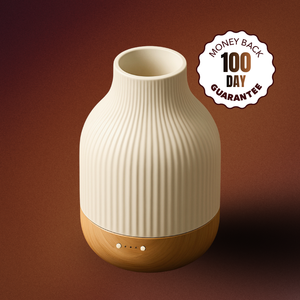
Handcrafted ceramic essential oil diffuser for bedroom and sleep: quieter than a whisper (27.3 dB, lab-test...
How Does an Essential Oil Diffuser Work?

Essential oil diffusers release fragrance into the air using different methods. Some use ultrasonic vibrations to create a cool mist, while others use airflow, evaporation, heat or direct atomization.
An ultrasonic essential oil diffuser, for example, mixes water with essential oil and uses high-frequency vibrations to create a fine mist without added heat. Waterless diffusers disperse concentrated essential oil without a water tank, while evaporative and heat diffusers release scent through airflow or warming.
The diffusion method affects how strong the scent feels, how much space it can cover and how quickly the diffuser uses essential oil. For step-by-step instructions, see how to use an essential oil diffuser.
The 4 Main Types of Essential Oil Diffusers

There are several types of essential oil diffusers, and understanding the differences can make it easier to choose the right one for your space.
The most common types include:
- Heat diffusers
- Evaporative diffusers
- Waterless diffusers
- Ultrasonic diffusers
Each type uses a different method to disperse essential oils into the air, which affects how strong the scent feels, how evenly it spreads, and how comfortable it is for everyday use.
Heat Diffusers

Heat diffusers use warmth to release the scent of essential oils into the air. This can be done using a small candle flame (candle diffusers), electric oil warmers, or plug-in heat devices. Some designs also use indirect heat, such as lamp rings placed on light bulbs or wax warmers. As the oil warms up, it gradually releases its aroma into the surrounding space.
While simple in design, heat can affect the natural composition of essential oils. Because of this, the scent may feel less balanced compared to other methods, and this type is generally less preferred for regular use.
We like
- Simple and easy to use
- Usually affordable
We don't like
- Heat can alter how an essential oil smells
- Usually provides lighter, more limited scent coverage
- Not ideal for unattended use
Evaporative Diffusers

Evaporative diffusers use airflow to spread scent by helping essential oils evaporate into the air. This can happen through a small fan, or by applying oil onto a pad, stone, or hanging diffuser placed near airflow — such as on a car vent.
As air passes through or around the oil, it carries the scent into the surrounding space. These diffusers work best in small, close-range areas like cars or desks. However, the scent may become uneven over time, as lighter components evaporate faster than heavier ones.
We like
- Simple and low maintenance
- Portable and easy to use
- No water tank required
We don't like
- Uneven scent over time
- Not suitable for larger spaces
- Limited control over scent intensity
Waterless Diffusers

Waterless diffusers disperse essential oil without mixing it with water. Depending on the design, they may use airflow, atomization or other methods to turn concentrated oil into a fine mist.
Because the oil is not diluted in a water tank, waterless diffusers usually produce a stronger and more noticeable scent than ultrasonic models. They can work well in living rooms, bedrooms, cars and other spaces where you want stronger fragrance without filling a water tank.
For example, the Scentreat Waterless Ceramic Diffuser & Night Light can diffuse directly from a 5, 10 or 15 ml essential oil bottle and also includes a 120 ml water mode when you want a softer scent.
What About Nebulizing Diffusers?
Nebulizing diffusers are a type of waterless diffuser that use airflow to break undiluted essential oil into fine droplets. They typically produce a stronger scent and can be useful for larger or more open spaces, although they may use essential oil faster than water-based ultrasonic diffusers.
We like
- Stronger, more concentrated scent
- No water tank to fill in waterless mode
- Often compact and portable
- Useful when you want stronger scent or a water-free setup
We don't like
- Can use essential oil faster than ultrasonic models
- Strong output may feel too intense in small rooms
- Atomizers and oil paths still need occasional cleaning
- Some models cost more than basic ultrasonic diffusers
Ultrasonic Diffusers

Ultrasonic diffusers use water and high-frequency vibrations to create a fine, cool mist that carries essential oils into the air. Instead of diffusing pure oil, they mix essential oils with water, which creates a softer and less concentrated scent than most waterless diffusers.
Because of this, ultrasonic diffusers are a practical choice for everyday use, especially in bedrooms, relaxation spaces and other rooms where you prefer a gentle background scent. For example, the Scentreat Ceramic & Rubber Wood Ultrasonic Diffuser combines cool-mist diffusion with an 180 ml tank, quiet operation and a warm light that can be turned fully off.
We like
- Gentle, quiet operation for everyday use and relaxation
- No added heat
- Available in a wide range of tank sizes and designs
- Adds a small amount of moisture with the mist, though it is not a room humidifier
We don't like
- Requires water and regular cleaning
- Some models have lights that cannot be fully turned off
- Less concentrated scent than most waterless diffusers
What to Consider When Choosing an Essential Oil Diffuser
Choosing the right essential oil diffuser depends on how well it fits your space and routine.
Before choosing, consider:
- Room size: smaller diffusers for bedrooms, larger ones for open spaces
- Diffuser type: ultrasonic for a softer scent, waterless for stronger output
- Noise level: important if used for sleep or work
- Maintenance: some require regular cleaning
- Design: should fit naturally into your space
The best diffuser isn't the one with the most features — it's the one you'll actually use consistently. Once you know which type fits your routine, our best essential oil diffuser picks can help you narrow it down to a specific model.
Which Diffuser Type Is Best for Different Needs

The right essential oil diffuser depends on the space where you plan to use it. A diffuser that works well in a bedroom may feel too weak in a large living room or too strong in a small enclosed space, so match the diffuser to the room and scent strength you want.
Bedroom (Sleep and Wind-Down)
Bedrooms usually benefit from a softer, quieter scent rather than strong continuous output. An ultrasonic diffuser is often the best fit because it creates a gentle mist and works well with features like timers and fully adjustable lighting. If you prefer a stronger scent, a waterless diffuser can also work well on a lower setting.
Home Office (Focus and Clarity)
For a home office, look for controlled scent that stays in the background rather than becoming distracting. Ultrasonic diffusers work well for steady everyday use, while evaporative diffusers are a simple option for smaller desks or workspaces.
Living Room and Shared Spaces
Living rooms often need more scent coverage because they are larger and have more airflow. An ultrasonic diffuser works well in smaller or enclosed living rooms, while a waterless diffuser can provide stronger output for larger or open-plan spaces.
Small Spaces (Bathroom, Entryway)
For bathrooms, entryways and other small spaces, evaporative diffusers or small ultrasonic models usually provide enough scent without becoming overpowering. Heat diffusers can also work, but electric warmers are generally more practical than candle-based models for regular use.
For Beginners (Getting Started)
If you're new to essential oil diffusers, simplicity matters more than extra features. An ultrasonic diffuser is usually the easiest place to start because it is simple to use, widely available and suitable for many everyday rooms.
Key Takeaway
- Bedroom: Ultrasonic for soft, quiet scent
- Home Office: Ultrasonic or evaporative
- Living Room: Ultrasonic for smaller rooms; waterless for larger spaces
- Small Spaces: Evaporative or small ultrasonic
- Beginners: Ultrasonic
Benefits of Using an Essential Oil Diffuser

Essential oil diffusers add fragrance to a room and can become part of everyday relaxation, sleep, or focus routines. Research on aromatherapy is still developing, so these benefits are best viewed as part of a comfort and wellness routine rather than guaranteed health effects.
- Relaxation: Lavender, chamomile, and frankincense are commonly used to create a calmer atmosphere.
- Sleep routines: Gentle scents such as lavender can complement a consistent wind-down routine before bed.
- Fresh-feeling spaces: Eucalyptus, peppermint, and citrus oils can make a room feel fresher and more inviting.
- Focus: Peppermint, sweet orange, lemon, and rosemary are popular choices for work and study spaces.
- Home fragrance: Diffusers let you change scents easily without relying on candles or synthetic room sprays.
For a deeper look at the research and practical uses, see our guide to essential oil diffuser benefits.
Which Scentreat Essential Oil Diffuser Is Right for You?

Scentreat offers both ultrasonic and waterless essential oil diffusers, so the best choice depends on where you plan to use it and how strong you want the scent to feel.
- Ceramic & Rubber Wood Diffuser: Best for bedrooms and everyday home use. Its 180 ml tank runs 8–10 hours on intermittent mist, the warm light turns fully off, and independent laboratory testing measured it at 27.3 dB(A) from 1 meter.
- Minimalist Wood Diffuser: Best for everyday rooms when you want a larger tank and softer decor style. It has a 200 ml tank, up to 10 hours of intermittent mist and coverage up to 375 sq ft.
- 2-in-1 Waterless Ceramic Diffuser & Night Light: Best when you want stronger fragrance without filling a water tank every time. It can run directly from a 5, 10 or 15 ml essential oil bottle, or switch to a 120 ml water mode for softer diffusion.
- CalmRide Portable Diffuser: Best for cars, desks and travel. It runs directly from a 10–20 ml essential oil bottle and provides up to 60 hours of misting per USB-C charge.
For a softer everyday scent, start with one of Scentreat's ultrasonic models. If you prefer stronger fragrance, cordless use or a water-free setup, choose one of the waterless models.
All four Scentreat diffusers include a 100-day money-back guarantee and one-year warranty. Browse the Scentreat essential oil diffuser collection to compare them side by side.
Handcrafted ceramic essential oil diffuser for bedroom and sleep: quieter than a whisper (27.3 dB, lab-test...
Conclusion
Choosing between essential oil diffuser types comes down to scent strength, room size, maintenance and whether you prefer water-based or waterless diffusion. Ultrasonic diffusers are a practical starting point for most everyday rooms; for example, the Scentreat Ceramic & Rubber Wood Diffuser offers a softer cool mist, quiet operation and a warm light that can turn fully off. Waterless models make more sense when you want stronger fragrance or greater portability.
If you are ready to choose a specific model, compare Scentreat's ultrasonic and waterless options in the Scentreat essential oil diffuser collection.
Still deciding which type fits your space? Message Scentreat on Facebook or Instagram, or email support@scentreat.com for help choosing a diffuser.
Frequently Asked Questions

What are the four main types of essential oil diffusers?
The four main types covered in this guide are heat, evaporative, waterless, and ultrasonic diffusers. Each uses a different method to disperse essential oil, which affects scent strength, maintenance, and where the diffuser works best.
Which type of essential oil diffuser is best for most homes?
For most home users, an ultrasonic diffuser is the easiest all-around choice. It produces a softer scent, runs quietly, and works well in bedrooms, living rooms, and other everyday spaces.
What is the difference between a waterless and ultrasonic diffuser?
A waterless diffuser disperses essential oil without a water tank, so the scent is usually stronger and more concentrated. An ultrasonic diffuser mixes oil with water to create a finer, softer mist that is better suited to gentle everyday scenting.
Which diffuser type is best for a bedroom?
An ultrasonic diffuser is usually the best fit for a bedroom because it offers a softer scent and quiet operation. Look for a model with adjustable mist, a timer, and a light that can turn fully off.
Which diffuser type works best for larger rooms?
Waterless diffusers can be a good fit for larger or open spaces because their more concentrated output can make the scent easier to notice across the room. Always check the manufacturer's recommended coverage for the specific model.
Do waterless diffusers use more essential oil?
They can. Because waterless diffusers use concentrated oil without diluting it in a water tank, they may go through essential oil faster than ultrasonic models, especially on higher output settings.
Is an ultrasonic diffuser the same as a humidifier?
No. An ultrasonic diffuser is designed primarily to disperse essential oils, while a humidifier is designed to raise the moisture level of a room. A diffuser releases some moisture with its mist, but it should not be treated as a replacement for a humidifier.
More Diffuser How-To Guides
- Are Essential Oil Diffusers Safe? Risks & Safety Tips
- Diffuser Benefits for Sleep: What Really Changes (and What Doesn’t)
- How Many Drops in a Diffuser? Easy Guide by Size
- How to Clean an Essential Oil Diffuser - Easy Step-by-Step Guide
- How to Use an Essential Oil Diffuser - Easy Step-by-Step Guide
- Is It Bad to Run a Diffuser Every Day?

