

Key Takeaways
BEST BUY PICKS
Running a diffuser every day is fine for most people — the key is how you run it, not how often. Use 30–60 minute on/off cycles instead of continuous diffusion, keep the room lightly ventilated, and keep sessions shorter around pets and young children. Do that, and a daily diffuser habit is a perfectly comfortable part of home life.
For the complete guide, see Essential Oil Diffuser: Benefits, Types, and How to Choose.
Below you'll find everything worth knowing: the intermittent-run pattern that keeps scent fresh, ventilation basics, pet and kid cautions, and a few honest signs that a routine needs dialling back.
Is Daily Diffuser Use Safe?

General Safety Overview
For most people, using a diffuser every day is perfectly normal. Diffusers are designed for regular home use and appear in bedrooms, living rooms, and workspaces as an everyday fragrance habit.
How often you run it matters far less than the session length, room size, and ventilation. Those three variables shape the actual experience more than frequency does.
The Intermittent-Run Pattern
Run the diffuser for 30–60 minutes, then let it rest for at least 30 minutes before the next cycle. This is the standard pattern most diffuser users settle on, and for good reason:
- Fragrance stays noticeably fresh each time the diffuser comes back on
- It prevents scent from building up to levels that feel heavy or headache-inducing
- Your nose gets enough of a break to keep perceiving the scent accurately
Continuous all-day diffusion is what causes most of the complaints about diffusers — not daily use itself. Switch to a cycle and most issues resolve on their own.
Ventilation: How Little Is Enough?
You don't need to fling the windows open. A slightly open door or window during each session is enough to prevent fragrance accumulation — particularly in rooms under roughly 150 sq ft (14 m²).
Why it matters: in a sealed room, each diffuser cycle layers on top of the last. Light ventilation clears that baseline between sessions so fragrance always smells clean rather than stale and thick.
Benefits When Used Properly
Many people build a diffuser into their morning or evening ritual because it's one of the few home fragrance options that stays consistent without constant attention.
- Keeps rooms smelling fresh between cleaning days
- Creates a more welcoming atmosphere with minimal effort
- Supports winding down in the evening when paired with calming oils
- A stable, repeatable scent cue that many people find grounding
For those who use a diffuser as part of their nighttime routine, choosing the right model can make a noticeable difference. Our guide to the Best Essential Oil Diffusers for Bedroom Sleep covers the features that help create a quieter, more comfortable sleep environment.
Best Practices for Daily Use
- Use 30–60 min on / 30 min off cycles rather than continuous diffusion — keeps the fragrance feeling fresh and prevents scent saturation
- Keep a window or door slightly open during each session
- Match fragrance intensity to room size — smaller rooms need fewer drops
- Keep the diffuser clean per care instructions (once a week is a good rhythm)
- Address any persistent odours at the source before reaching for more fragrance
Why Diffuser Quality Matters
A well-made diffuser gives you consistent mist output at low settings — which means you can run shorter, lower-intensity sessions and still get a comfortable result. Budget diffusers often have inconsistent output that nudges you toward higher settings and longer runs, which is where problems start.
Quiet ultrasonic operation also matters for daily use: you won't notice a 25 dB hum after an hour, but you will notice a rattling or high-pitched unit.
Pet & Child Safety: What to Know Before Daily Use

Around Cats
Cats deserve a specific mention because they are genuinely more sensitive to certain essential oils than dogs or humans. Cats lack a key liver enzyme (glucuronyl transferase) that metabolises compounds found in many common oils — so what diffuses safely around an adult human can accumulate in a cat's system over time.
Oils to be cautious with around cats include:
- Tea tree (melaleuca)
- Eucalyptus
- Peppermint
- Citrus (lemon, orange, bergamot, grapefruit)
- Cinnamon and clove
The ASPCA Animal Poison Control Center maintains an updated list of toxic plants and substances for cats and dogs — worth bookmarking if you diffuse regularly with pets at home. If your cat shows signs of lethargy, drooling, or breathing changes after a diffuser session, contact your vet.
Practical rule: short daily sessions (30–45 min) in a well-ventilated room, with the cat able to leave freely, are considered lower-risk. Avoid diffusing in any room where the cat is confined or sleeping for extended periods.
Around Young Children
Children's airways are smaller and their developing systems process inhaled compounds differently. The American Academy of Pediatrics (HealthyChildren.org) recommends keeping all strong scents and diffused oils away from infants under 3 months, and using caution in toddlers' rooms. For children under 2, it's worth checking with your paediatrician before establishing a daily diffuser routine in a shared space.
For older children (3+), the main considerations are the same as for adults — shorter sessions, lighter fragrance levels, and good airflow.
Oils to avoid around young children (under 2):
- Peppermint and menthol-heavy blends (can slow breathing in very young children)
- Eucalyptus
- Rosemary
Common Situations Where Daily Use May Need Adjusting

1. The Fragrance Feels Too Strong
A comfortable fragrance should enhance a room, not fill it wall-to-wall. If you're regularly opening windows or turning the diffuser off because the scent feels overwhelming, the fix is usually shorter cycles or fewer drops — not a different oil.
2. You're No Longer Noticing the Scent (Scent Fatigue)
Scent fatigue — your nose adapting to a constant fragrance until it stops registering it — is one of the most common diffuser frustrations. After extended exposure, the scent is still present in the room; you've just stopped noticing it.
The reset is simple: step out of the room for 15–20 minutes. When you return, your olfactory sensitivity resets and you can gauge the actual scent level accurately again. This also tells you whether the room actually needs more fragrance (it usually doesn't).
3. Poor Ventilation
In rooms with limited airflow, fragrance layers on itself across sessions. A diffuser that feels balanced in a well-aired living room may feel stifling in a sealed bedroom by mid-afternoon.
4. Using Fragrance to Mask an Odour Problem
A diffuser can maintain a pleasant atmosphere; it can't fix a recurring source odour. If a room consistently smells stale or musty, the source needs to be addressed first. Fragrance on top of an underlying problem usually makes both worse.
5. Different Preferences in Shared Spaces
One person's "just right" is another's "too much." In shared rooms, starting at the lowest fragrance setting and adjusting up together tends to land better than defaulting to a heavier routine and asking others to tolerate it.
Who Should Be More Careful With Daily Use?

People Sensitive to Fragrances
Some people find even mild scents distracting or headache-inducing. Starting with the lightest setting and the shortest session (20–30 min) is always the right move.
Those New to Diffusers
New diffuser owners often assume stronger = better. The opposite is usually true — a lighter, intermittent routine almost always feels more pleasant than a heavy continuous one.
Smaller Enclosed Rooms
A bedroom under 100 sq ft or a home office with the door closed will concentrate fragrance faster than an open-plan living area. Start conservatively; you can always add more.
Simple Adjustments That Usually Help
- Reduce run time to a 30-minute session
- Reduce the number of drops by half
- Crack a window or door during diffusion
- Move the diffuser away from where people sit longest
For most people, daily use stays comfortable once those basics are dialled in. And if you're still exploring the right setup, the guide on where to place a bedroom diffuser covers placement strategies that make a real difference.
Signs Your Diffuser Routine Needs Adjusting
1. You Keep Switching Fragrances After a Few Days
If every oil seems to "stop working" after 2–3 days, that's scent fatigue — not a problem with the oils. Taking 15–20 minute breaks out of the room (or rotating between two scents week by week) solves this without buying more product.
2. Run Times Keep Creeping Up
If you started at 30-minute sessions and now need to run the diffuser all day to notice anything, the routine has drifted. Reset: take 2–3 days off from diffusing, then restart at short sessions. The scent will feel noticeably stronger again.
3. Same Routine in Every Room
A bedroom and an open-plan living area don't need the same intensity. Match the routine to the space, not the other way around.
4. Fragrance Has Become a Chore
A diffuser should make a space feel better — not add to a mental checklist. If the routine feels like work, simplify it: fewer drop counts, a single go-to fragrance per room, timer-based cycles. For a genuinely low-maintenance option, the guide to plug-in essential oil diffusers covers models that handle cycles automatically.
Want more reading on what makes a diffuser worth running daily? The post on beyond fragrance — the benefits of using a diffuser goes into the broader reasons people build diffusers into their everyday routines.
The Scentreat Rubber Wood & Ceramic Diffuser for Daily Use

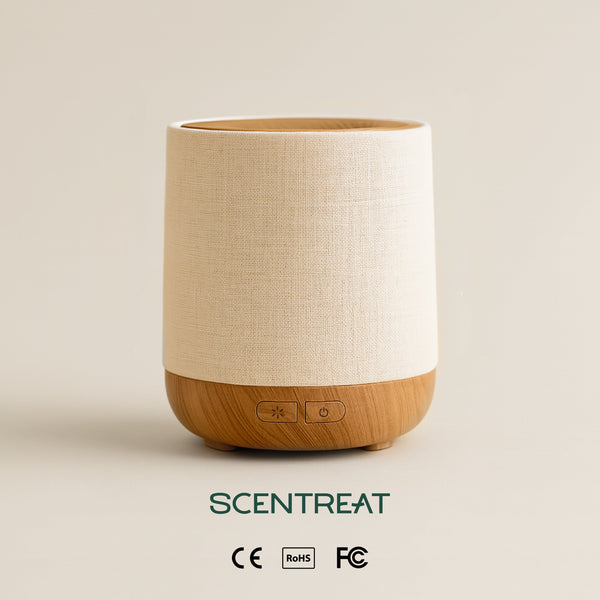
If you want a diffuser that works well on a daily intermittent-run schedule, the SCENTREAT Rubber Wood & Ceramic Ultrasonic Diffuser is built for exactly that. Whisper-quiet ultrasonic operation, consistent mist at low settings, and a natural ceramic and rubber wood body that sits comfortably in any room.
Designed for Everyday Spaces
- Bedrooms, living rooms, home offices, guest rooms
- Compact enough for a nightstand or desk
- Consistent output at low settings — no need to crank it up
- Quiet enough that you genuinely forget it's on
Who It's For
- People building a simple, repeatable daily fragrance routine
- Homeowners who want scent that enhances without dominating
- Anyone moving away from room sprays toward something more consistent
Browse the full diffuser collection to find the right fit for your space, and pair it with 100% pure essential oils — lavender, chamomile, sweet orange, or whichever profile suits your daily routine best.
Conclusion
Running a diffuser every day is perfectly fine for most people. The habit that trips people up isn't frequency — it's continuous, unventilated diffusion without breaks. Stick to 30–60 minute cycles, keep light airflow in the room, and use extra caution around cats and young children.
A well-matched diffuser and a simple routine take most of the guesswork out of it. Scentreat makes it easy to get there — straightforward diffusers, 100% pure oils, and a 90-day money-back guarantee.
For more tips, follow us on Facebook and Instagram, or reach our team at support@scentreat.com — available 24/7.
Frequently Asked Questions
Is it okay to run a diffuser every day?
Yes, for most people daily use is completely normal. The key is to use 30–60 minute on/off cycles rather than running the diffuser continuously, and to keep the room lightly ventilated during each session.
How long should I run a diffuser each session?
30–60 minutes on, then at least 30 minutes off is the standard intermittent pattern. It keeps the fragrance feeling fresh, prevents scent buildup, and gives your olfactory system enough of a break to keep perceiving the scent accurately.
Can a diffuser make a room smell too strong?
Yes, especially with continuous diffusion in a sealed room. Reduce run time, use fewer drops, or crack a window. Switching from continuous to intermittent cycles usually solves the problem without changing anything else.
Is it safe to run a diffuser every day around pets or children?
Short daily sessions (30–45 min) in a well-ventilated room with an open exit are generally lower-risk. For cats specifically, avoid oils with eucalyptus, tea tree, peppermint, and citrus — cats lack the liver enzyme to process certain compounds. For children under 2, check with your paediatrician before establishing a daily routine. When in doubt, consult your vet or paediatrician.
Do diffusers work better than room sprays?
Many people prefer diffusers for daily use because they provide consistent, gradual fragrance rather than a short burst that fades quickly. A diffuser running on a 30–60 min cycle gives a more even baseline scent throughout the day.
Can I use different essential oils in the same diffuser?
Yes. Rinse the water tank between fragrance changes and you can mix and rotate freely. Many people keep one scent per room to build a consistent atmosphere rather than rotating too frequently.