

Wondering how to use an essential oil diffuser the right way for the best results? The answer is simple: follow the correct setup for your diffuser type, use the right amount of oil, and run it in controlled sessions for a balanced scent.
Quick answer: For an ultrasonic diffuser, fill the tank to the fill line with room-temperature water, add 3–5 drops of essential oil per 100 ml of water, then run in 30–60 minute cycles with 30-minute breaks. Before your very first use, rinse the water tank and wipe it dry to clear any manufacturing residue. Clean the tank lightly after each session and do a deeper rinse weekly to keep the ultrasonic membrane performing well.
Not sure which diffuser you own? Our guide to diffuser benefits, types, and how to choose identifies each one before you set it up.
In this guide, Scentreat will explain how to use an essential oil diffuser step by step, how different types work, and how to get the most comfortable and consistent scent experience in your space.
Not All Essential Oil Diffusers Work the Same

Not all essential oil diffusers work the same way — and understanding this makes a big difference in how your space actually feels.
Some diffusers use water to create a soft mist, while others disperse pure oil directly or rely on airflow or heat. Each method affects how strong the scent is, how evenly it spreads, and how comfortable it feels over time.
Because of these differences, using the right type of diffuser — and using it correctly — helps create a more balanced, consistent, and natural scent experience instead of something that feels too weak or overwhelming.
The Main Types of Essential Oil Diffusers
Not all essential oil diffusers work the same, and the type you choose affects how the scent feels in your space.
Each one uses a different method to diffuse fragrance, which changes how strong, consistent, and comfortable the experience is.
1. Ultrasonic Diffusers

How they work
Ultrasonic diffusers use water and high-frequency vibrations to create a fine mist that carries essential oils into the air. This results in a softer, more balanced scent that spreads evenly throughout the space — which is why they're the most popular choice for everyday home use.
Pros
- Balanced, even scent that feels natural over time
- Quiet operation, suitable for sleep and daily use
- Easy setup and low-effort maintenance
- Works well in bedrooms, living spaces, and everyday environments
Cons
- Only available online
This is the most common and beginner-friendly option for everyday use.
2. Nebulizing Diffusers

How they work
Nebulizing diffusers disperse pure essential oil directly into the air without using water or heat. This creates a more concentrated and immediate scent.
Pros
- Strong, noticeable fragrance
- No dilution — pure oil experience
- Works well in larger spaces
Cons
- Uses oil more quickly
- Can be slightly noisier
- Higher price point
3. Evaporative or Fan Diffusers

How they work
These diffusers use airflow to evaporate essential oils from a pad or filter, spreading the scent into the surrounding area.
Pros
- Simple and easy to use
- No water required
- Lightweight and often portable
Cons
- Less consistent scent distribution
- Scent fades faster over time
- Limited coverage
4. Heat and Candle Diffusers

How they work
Heat diffusers use a warming element or candle to gently heat essential oils, releasing fragrance into the air.
Pros
- Simple setup with no electronics
- Quiet operation
- Often more affordable
Cons
- Heat may alter oil properties
- Less control over scent intensity
- Requires careful monitoring for safety
5. Reed Diffusers

How they work
Reed diffusers use natural sticks (reeds) to absorb oil and release scent gradually into the air through passive diffusion.
Pros
- No electricity required
- Continuous, low-maintenance scent
- Decorative and space-friendly
Cons
- Subtle scent, not very strong
- Limited control over intensity
- Needs occasional reed flipping
How to Use an Ultrasonic Diffuser

Understanding how to use an ultrasonic diffuser correctly helps create a more balanced and consistent scent without wasting oil.
Before First Use: Rinse the Tank
Before your very first session, rinse the water tank with clean water and wipe it dry. This removes any manufacturing residue from the factory and ensures the first diffusion is completely clean. It only takes a minute and makes a real difference to how the initial mist smells.
Step 1. Fill the Water Tank
Open the diffuser and fill the tank with clean, room-temperature water up to the indicated fill line.
Always use room-temperature water — hot water stresses the ultrasonic membrane and can warp the plastic housing over time, shortening the diffuser's lifespan. Avoid overfilling, as this can affect mist performance.
Step 2. Add Essential Oil Drops
Add 3–5 drops of essential oil per 100 ml of water as a starting point. Adjust by 1–2 drops based on room size and personal preference — a smaller room like a bedroom may need only 3 drops per 100 ml, while a larger open-plan living area may benefit from 5–6 drops. Waterless portables such as a portable essential oil diffuser take neat oil from the bottle instead, so the drops-per-100-ml rule does not apply to them; for big spaces see which diffuser works in a large room.
Proper oil usage helps maintain a comfortable scent when learning how to use an ultrasonic diffuser. We cover this further in How Many Drops in a Diffuser? Easy Guide by Size.
Step 3. Replace the Lid and Choose a Setting
Secure the lid and select your preferred mist mode or timer setting if available.
Different settings allow you to control how strong or continuous the mist is, which helps tailor the experience to your space.
Step 4. Run in 30–60 Minute Cycles
Run the diffuser in 30–60 minute sessions, then give the room a 30-minute break. Continuous diffusion in an enclosed space can cause scent fatigue — where your nose stops registering the fragrance — and may reduce air quality comfort over long periods. Cycling on and off keeps the scent fresh and the experience pleasant.
The mist will gradually disperse essential oils into the air, creating a soft and even scent over time. For sleep use, starting the diffuser 30 minutes before bed and letting it run through a timed session is a popular approach — see our guide on when to use a diffuser before bed for timing details.
Step 5. Clean After Each Use
Empty any leftover water after each session and wipe the tank dry. Standing water accelerates mineral build-up on the ultrasonic membrane and can develop a musty smell. Once a week, do a deeper clean: add a small amount of white vinegar or a diluted cleaning solution, run briefly, then rinse thoroughly and air dry before the next use.
How to Use a Nebulizing Diffuser

Understanding how to use a nebulizing diffuser correctly helps control scent intensity and avoid overuse, since it works with pure essential oil.
Step 1. Add Pure Essential Oil Directly
Place essential oil into the diffuser's glass reservoir without adding water.
Using pure oil is what allows this type of diffuser to create a stronger, more concentrated scent.
Step 2. Adjust the Output Level
Set the diffuser to a low or medium output to start.
This helps prevent the scent from becoming too intense, especially in smaller spaces.
Step 3. Run It in Short Sessions
Use the diffuser in short intervals rather than continuously.
Because the scent is more concentrated, shorter sessions help maintain comfort and avoid overwhelming the space.

Handcrafted ceramic essential oil diffuser for bedroom and sleep: quieter than a whisper (27.3 dB, lab-test...
How to Use an Evaporative or Fan Diffuser

Evaporative diffusers are simple to use, but require proper setup to keep the scent consistent.
Step 1. Add Oil to the Pad or Filter
Apply a few drops of essential oil onto the pad or filter.
This is where the scent is held before being dispersed into the air.
Step 2. Insert the Pad into the Diffuser
Place the pad back into the diffuser according to the design.
Make sure it is positioned correctly for even airflow.
Step 3. Turn on the Fan
Switch on the diffuser to allow airflow to spread the scent.
The fan helps evaporate the oil and distribute it throughout the space.
How to Use a Heat or Candle Diffuser

Heat-based diffusers are simple, but require extra care to use safely.
Step 1. Add Water or Oil According to the Design
Some models use water with oil, while others use oil only.
Always follow the design of your diffuser to avoid overheating.
Step 2. Apply Gentle Heat Safely
Use a candle or heating element to warm the oil gradually.
Gentle heat helps release the scent without burning the oil too quickly.
Step 3. Never Leave It Unattended
Always monitor the diffuser while it is in use.
This helps prevent safety risks and ensures proper operation.
Handcrafted ceramic essential oil diffuser for bedroom and sleep: quieter than a whisper (27.3 dB, lab-test...
How to Use a Reed Diffuser

Reed diffusers are the simplest type and require minimal setup.
Step 1. Remove the Stopper
Open the bottle and remove the seal.
This allows the oil to be absorbed by the reeds.
Step 2. Insert the Reeds
Place the reeds into the bottle.
They will begin to draw the oil upward.
Step 3. Let the Reeds Absorb the Oil
Allow time for the reeds to fully soak.
This is what enables the scent to diffuse into the air.
Step 4. Flip the Reeds Every Few Days
Turn the reeds periodically to refresh the scent.
This helps maintain a consistent fragrance over time.
Are Essential Oil Diffusers Safe Around Pets and Children?
Diffusers are generally safe in well-ventilated spaces, but some oils are not appropriate around pets and young children.
Cats and dogs process certain aromatic compounds differently from humans. The ASPCA Animal Poison Control Center notes that some essential oils can be harmful to pets, particularly cats, who lack the liver enzymes to metabolize certain plant compounds. Oils commonly flagged include tea tree, eucalyptus, pennyroyal, and clove. If you have pets, diffuse in a room they can freely leave, keep sessions short, and ensure good ventilation.
For young children, the American Academy of Pediatrics (healthychildren.org) recommends caution with strong aromatic products around infants and toddlers. Under 2 years old, skip eucalyptus, rosemary and peppermint entirely — the 1,8-cineole and menthol in them can trigger breathing difficulty at that age. For children over 2, keep diffuser sessions to 30 minutes or less in their room, use mild oils like lavender at minimal concentrations, place the diffuser well away from the cot or bed, and always ensure the room is well ventilated.
When to consult a professional: If a pet shows signs of respiratory distress, drooling, or lethargy after diffuser use, contact your veterinarian. If a child has asthma or other respiratory sensitivities, check with their pediatrician before using a diffuser in their room.
For a deeper look at how timing and session length affect safety and comfort, see our post on how long to diffuse oils at night for better sleep.
Handcrafted ceramic essential oil diffuser for bedroom and sleep: quieter than a whisper (27.3 dB, lab-test...
How Diffusers Fit Into an Aromatherapy Routine
A diffuser is most effective when it's part of a consistent daily ritual rather than a random add-on. Scent signals travel from the nose to brain areas closely tied to memory and emotion, which is why a smell can pull up an association so quickly. In practice, using the same oil blend at the same time each day can help that blend become a personal cue for relaxation, focus, or morning energy over time.
Research suggests inhaled lavender may help improve perceived relaxation and sleep quality, according to NCCIH (National Center for Complementary and Integrative Health). Pairing a calm-blend oil with a 30-minute pre-sleep diffusion session is a practical way to build that association. Explore the broader benefits of using a diffuser for more on how aromatherapy fits into daily wellness.
If you're building a sleep routine, the sleep oil collection is a good starting point — it includes 100% pure oils that pair well with a bedtime diffusion session.
Why the Scentreat Diffuser Is Easy to Use for Beginners

The SCENTREAT Ultrasonic Diffuser is designed for users who want a simple, reliable way to enjoy essential oils without complicated setup or maintenance.
Built with a focus on everyday usability, it delivers a balanced scent experience, quiet operation, and a design that fits naturally into your space. Whether you're new to essential oils or looking for something easy to use daily, it provides a smooth and consistent experience.
Key Features
- Simple Setup and Operation: Easy to fill, easy to use, and requires minimal adjustment — making it ideal for beginners.
- Balanced Ultrasonic Diffusion: Creates a soft, even mist that feels comfortable over time instead of becoming overwhelming.
- Quiet and Consistent Performance: Runs quietly in the background, suitable for sleep, work, or relaxation.
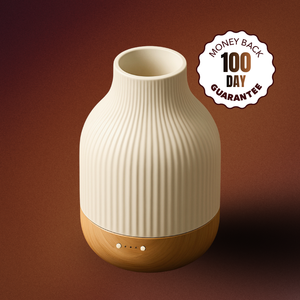
- Clean, Minimal Design: Rubber wood and ceramic construction — a ceramic and rubber wood housing — blends naturally into bedrooms, living spaces, and modern interiors.
- Low Maintenance: Simple cleaning and daily use make it easy to maintain long-term.
Main Benefits
- Easy to use for beginners with no learning curve
- Consistent scent that feels natural and comfortable
- Quiet operation for everyday environments
- Minimal effort required for setup and cleaning
- Designed for daily use without constant adjustment
If you're just starting out and want a reliable daily diffuser, the essential oil diffuser collection is a good place to compare options.
Conclusion
Learning how to use an essential oil diffuser correctly makes a big difference in comfort and consistency. Start with 3–5 drops per 100 ml, use room-temperature water, run in 30–60 minute cycles, and clean the tank after each session. With those habits in place, a good diffuser becomes a quiet, reliable part of your daily routine. The waterless option works differently again — Scentreat's Waterless Ceramic Night Light runs up to 40 hours from a bottle of neat oil, or 6–8 hours in 120 ml liquid mode.
Frequently Asked Questions
How many drops of essential oil should I use?
Use 3–5 drops per 100 ml of water as a starting point. Adjust by 1–2 drops based on room size and personal sensitivity — a small bedroom may need only 3 drops, while a large open-plan space may benefit from 5–6.
Can I use tap water in a diffuser?
Yes, but filtered or distilled water helps reduce mineral build-up on the ultrasonic membrane. If your tap water is hard, filtered water will extend the time between deep cleans.
How long should I run my diffuser?
Run in 30–60 minute cycles with 30-minute breaks in between. Continuous diffusion in an enclosed space can cause scent fatigue and affect air quality comfort. Shorter, intermittent sessions keep the fragrance feeling fresh.
How often should I clean my diffuser?
Empty and wipe the tank dry after each use. Do a deeper clean — a brief run with diluted white vinegar, followed by a thorough rinse — about once a week. This prevents mineral build-up and keeps the mist quality consistent.
Can I leave my diffuser on overnight?
Better not to leave it running all night, even with an auto shut-off feature. Use a timer instead: 30–60 minutes before sleep is enough to scent the room, and the auto shut-off gives you a second layer of safety if you drift off first. Running continuously in a closed bedroom causes scent fatigue — your nose stops registering the fragrance — wastes oil, and leaves pets or small children in the room exposed for hours with no break. See our guide on how long to diffuse oils at night for full timing details.
Is it safe to use a diffuser around pets and children?
Use caution. Some essential oils — including tea tree, eucalyptus, and clove — can be harmful to cats and dogs. Always diffuse in a well-ventilated room that pets can freely leave, and keep sessions short. For young children, choose mild oils like lavender at low concentrations and ensure good ventilation. Consult your vet or pediatrician if anyone in the household has respiratory sensitivities.
Why is my diffuser not producing mist?
It may need cleaning or the water level may be too low. Mineral build-up on the ultrasonic membrane is the most common cause — a white vinegar clean usually restores performance. Also check that the water level is within the fill-line range, not overfilled or underfilled.

