

Why do closets smell musty in summer? Heat raises the air's moisture-carrying capacity, so summer air holds far more water vapor than winter air — and when that warm, humid air drifts into a cool, enclosed closet, it can condense onto surfaces and settle deep into fabrics. Combined with poor airflow and the absence of sunlight, humidity above 60% creates conditions where mildew-forming fungi can grow, producing the earthy, stale smell most people recognize. The fix starts with controlling moisture, not just masking the odor.
In this guide, Scentreat will break down the humidity and condensation mechanism behind musty closets, name the best moisture-absorbing solutions, and explain when a musty smell warrants more than a DIY fix. For related context, see our guide to Common Reasons Your Bedroom Smells Bad.
Why Does Summer Make Closets Smell Musty? (The Humidity Mechanism)

The short answer: warm summer air holds more water vapor, and when it flows into a relatively cooler, enclosed closet, that moisture condenses on cool walls, fabric fibers, and shoe soles. This creates the damp micro-environment that mildew-forming fungi need to colonize surfaces and release their characteristic musty odor compounds.
Think of it like a cold glass on a humid day — moisture migrates from the warmer, wetter air to the cooler, enclosed surface. Closets are essentially that glass, sealed shut most of the day.
The 60% Humidity Threshold
When closet relative humidity (RH) stays above 60%, conditions become favorable for mold and mildew growth. The sweet spot for a healthy indoor environment is 30–50% RH. Keep the closet under 60% and mildew growth slows significantly; let it climb past 70% and it can accelerate quickly. A small hygrometer placed inside your closet (under $15 at most hardware stores) tells you exactly where you stand. If the reading is consistently above 60% in summer, moisture control should be your first step, not fragrance.
According to the U.S. Environmental Protection Agency, keeping indoor humidity below 60% is one of the most effective ways to prevent mold growth indoors.
Key Reasons for Summer Musty Closet Smells
- High Humidity & Heat: Summer air carries more water vapor; enclosed closets trap it against fabrics and surfaces where mildew slowly takes hold.
- Condensation on Cool Surfaces: When warm humid air meets the cooler interior walls or shoe soles of a closed closet, moisture deposits — the same physics behind window condensation on cold mornings.
- Poor Ventilation: Closets stay closed most of the day, so humid air cannot escape and fresh dry air cannot replace it.
- Damp Clothes & Shoes: Shoes worn in summer heat, lightly sweaty clothing, and gym bags stored before fully drying add moisture directly to the air inside the closet.
- Dark & Enclosed Conditions: Without sunlight or airflow, moisture has nowhere to go — it just settles deeper into fabrics and corners over time.

Handcrafted ceramic essential oil diffuser for bedroom and sleep: quieter than a whisper (27.3 dB, lab-test...
What Causes Musty Closet Smells in Summer?

If you're wondering why your closet smells musty specifically in summer and not the rest of the year, the cause is almost always the seasonal spike in ambient humidity combined with the closet's naturally poor ventilation.
High Humidity & Heat
Summer air naturally carries more moisture, and enclosed closets trap that humidity inside. Over time, damp air settles into clothing, shoes, towels, and shelves, creating the stale smell many people notice during humid seasons. RH above 60% is the tipping point where mildew growth becomes increasingly likely.
Poor Ventilation
Closets receive very little airflow because doors stay closed most of the time. Without proper ventilation, humid air cannot escape, and the moisture stays in contact with absorbent materials — clothing, cardboard boxes, wood shelving — long enough for mildew odors to develop.
Damp Clothes & Shoes
Shoes worn during hot weather, slightly sweaty summer clothing, and gym bags stored before fully drying can raise the closet's internal humidity substantially. Leather shoes and canvas sneakers are especially effective at holding moisture, which is why shoe closets often smell the strongest in summer.
Dark & Enclosed Storage Conditions
Closets are naturally darker spaces with limited sunlight and circulation. These conditions mean moisture that condenses or is introduced via damp items has no natural escape route — it simply stays, and over days and weeks, mildew gradually colonizes the surface of fabrics and walls.
Overcrowded Shelves & Fabrics
Closets packed too tightly with clothing, blankets, or storage boxes block air from circulating between items. A small air gap between garments is all that's needed for moisture to evaporate and dissipate — without it, humidity builds and stale odors follow. Thinning out your closet is often the single easiest fix.
Signs Your Closet Needs a Summer Refresh

Musty closet smells develop gradually. Knowing the early warning signs helps you act before visible mold appears.
Clothes Smell Stale After Storage
If freshly washed clothes begin smelling slightly damp or stale after a few days in the closet, the internal RH is likely already elevated — the fabric is absorbing ambient moisture.
Shoes Hold Odor More Easily
Summer heat and humidity make shoe closets smell stronger than usual. Sneakers and sandals trap moisture inside for hours after being worn, adding to the closet's overall humidity load.
Towels and Linens Feel Damp
Linen closet mildew smell commonly develops when towels or bedding hold small amounts of moisture that cannot dry properly in enclosed storage — especially if they were folded and stored while still slightly warm from the dryer.
Closet Air Feels Heavy or Stuffy
A closet that feels humid or warm when opened typically lacks enough airflow to prevent moisture from accumulating. This is the easiest sign to catch early.
Odors Return Quickly After Cleaning
If the smell disappears after airing out but returns within a few days, humidity is still the active source. Surface cleaning alone won't resolve it — moisture control is the next step.
How to Prevent Mold Smell in Closet Spaces

Reducing trapped humidity is more effective long-term than masking odors. These strategies work best in combination, targeting the moisture source from multiple angles.
Improve Closet Airflow
- Leave closet doors open for at least 30 minutes daily, especially after humid afternoons
- Avoid packing clothing too tightly — keep a finger-width gap between hanging items
- Create small gaps between storage boxes and walls so air can circulate behind them
- Use a small battery-powered fan for very enclosed or wall-in closets during peak summer months
Good airflow is the simplest and cheapest fix. It allows water vapor to escape before it can condense or be absorbed by fabrics.
Use Desiccants and Natural Moisture Absorbers
Several natural and low-cost materials actively pull moisture from closet air. Use them in combination for best results:
- Silica gel desiccants — highly effective at absorbing moisture from enclosed spaces. Reusable packets can be recharged by placing them in a warm oven for 1–2 hours. Place 1–2 packets near shoes or on shelves where humidity concentrates.
- Activated charcoal — absorbs both moisture and odor compounds. Place bamboo charcoal bags on shelves or in shoe compartments; recharge in sunlight monthly.
- Cedar blocks or cedar rings — natural aromatic wood that absorbs some moisture while releasing a clean, woody scent that deters moths and insects. Sand lightly every few months to refresh the scent. Cedar works best as a supplementary measure alongside a desiccant, not as a standalone humidity fix.
- Baking soda — a budget-friendly odor absorber. An open box or sachet on a shelf helps with mild stale smells, though it's less effective at pulling moisture than silica gel.
For heavily humid closets, a small plug-in dehumidifier (the mini "egg" style designed for closets) can keep RH in the 30–50% target range throughout summer without much effort.
Avoid Storing Damp Items
- Let shoes dry fully — ideally 24 hours — before placing them back inside
- Avoid storing slightly damp towels, gym bags, or laundry
- Air out summer clothing before long-term storage, especially items worn during exercise
Refresh Stored Fabrics Regularly
- Wash blankets, towels, and linens seasonally and store them only when completely dry
- Rotate unused clothing and stored fabrics to prevent long-term moisture absorption
- Remove old clutter — cardboard boxes hold moisture and are a common hidden culprit
Moisture trapped inside fabrics is one of the biggest contributors to mildew smell in shoe closets and linen closets. Regular rotation lets fabrics air out between uses. For more practical tips, see our full guide on Best Musty Smell Eliminators for Your Home.
Keep Closets Clean During Humid Seasons
- Wipe shelves and corners with a diluted white vinegar solution at the start of summer
- Remove dust and fabric buildup — both trap moisture against surfaces
- Check darker corners for visible mold spots, especially near baseboards and exterior walls
When Does a Musty Closet Smell Signal a Mold Problem?
Not every musty smell means visible mold — but some signs are worth taking more seriously.
Investigate further if you notice:
- The smell is earthy, persistent, and returns within 1–2 days of airing out
- You can see fuzzy or discolored spots on walls, baseboards, shoe soles, or fabric
- The closet shares a wall with a bathroom, laundry area, or exterior wall (higher condensation risk)
- Family members experience unexplained allergy-like symptoms near that area of the home
For small mold spots (under 10 sq ft), cleaning with a diluted white vinegar or hydrogen peroxide solution is generally manageable as a DIY step. For larger mold areas (10 sq ft or more), the EPA recommends consulting a professional mold remediation contractor — not DIY-cleaning — because disturbing larger mold colonies without proper containment can spread spores through the air. See the EPA's mold cleanup guidance for more detail.
If mold is confirmed or strongly suspected, also assess the source of moisture — a small plumbing leak behind a wall or a gap in exterior waterproofing can keep reintroducing humidity no matter how many desiccants you place inside. Addressing the source is the only permanent fix.
For nursery-specific mold concerns — where air quality is especially important — see our post on Mold Smell in a Nursery: What to Do.
Handcrafted ceramic essential oil diffuser for bedroom and sleep: quieter than a whisper (27.3 dB, lab-test...
Product Spotlight: Freshen the Space Around Your Closet

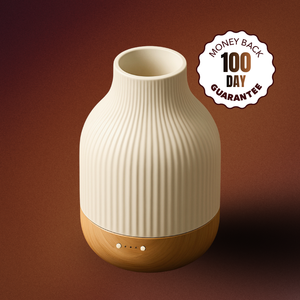
Once humidity is under control, a quality diffuser in the adjoining bedroom or dressing area can help the overall space smell cleaner and lighter. The ceramic diffuser from SCENTREAT disperses essential oils gradually via ultrasonic mist — no heat, no synthetic fragrance — making it a gentle complement to the moisture-management steps above.
Pairing it with lighter summer oils like eucalyptus, lemon, or peppermint adds a clean, airy quality to bedrooms and dressing areas without masking the closet problem underneath. The diffuser doesn't belong inside the closet itself — it works best in the adjacent room, where it can shift the ambient scent of the whole space.
Two safety notes before you switch it on. Leave eucalyptus and peppermint out if a child under two sleeps or plays in that room — the 1,8-cineole and menthol in them are linked to reflex breathing problems at that age — and check with your pediatrician before diffusing anything around a baby. Before you make this a nightly habit with a cat in the house, make sure there is a clear way out — feline livers cannot break down the phenols and monoterpenes that make up much of tea tree, pine, citrus, eucalyptus and peppermint. Dogs are not in the same category, but no pet should be treated with essential oil at home unless a vet has said to, whatever the label promises.
If you'd prefer to browse first, the Fresh & Clean collection covers oils suited to summer freshness and light everyday use.
For a broader look at diffuser options, you can also explore Essential Oil Diffuser Benefits, Types & How to Choose — helpful context if you're deciding on your first diffuser or upgrading.
Conclusion
Closets smell musty in summer because warm air carries more moisture, and that moisture condenses and settles into the enclosed, poorly ventilated space — raising humidity above the 60% threshold where mildew thrives. The fix is layered: improve airflow, keep RH in the 30–50% range with desiccants (silica gel is most effective), add cedar or activated charcoal for supplementary odor absorption, and avoid storing damp items. For persistent or widespread mold, professional remediation is the right call. For a cleaner-smelling space overall, once the moisture is addressed, a gentle diffuser in the adjoining room can help. Scentreat rates the Ceramic & Rubber Wood Diffuser for the adjoining room, up to 30 m² (320 sq ft), rather than for the closet itself.
Frequently Asked Questions
Why do closets smell musty more in summer?
Summer air holds more water vapor, and when warm humid air enters a cooler, enclosed closet, moisture condenses onto surfaces and fabrics — raising humidity above 60% and creating conditions where mildew-forming fungi produce their characteristic earthy odor.
What is the ideal humidity level for a closet?
The target range is 30–50% relative humidity (RH). Once closet RH climbs above 60%, mold and mildew growth becomes increasingly likely. A small hygrometer inside the closet lets you monitor this accurately.
Is musty closet smell a sign of mold?
It can be. If the smell is earthy, persistent, and returns within a day or two of airing out, check for visible mold on walls, baseboards, or stored items. Small spots (under 10 sq ft) can usually be cleaned with diluted vinegar. Larger areas — or any growth you cannot trace to a clear source — should be assessed by a professional mold remediation contractor, per EPA guidance.
How do I remove mildew smell in shoe closets?
Allow shoes to dry fully before storage (at least 24 hours), place silica gel desiccant packets near footwear, and leave the closet door open periodically to allow humid air to escape. Cedar shoe trees or cedar rings also help absorb residual moisture and add a clean scent.
What causes linen closet mildew smell?
Damp towels or bedding stored before fully drying, poor ventilation, and trapped summer humidity are the most common causes. Make sure all linens are completely dry — not just warm from the dryer — before folding and storing.
What are the best moisture absorbers for a closet?
Silica gel desiccants are the most effective at pulling moisture from enclosed air. Activated charcoal (bamboo charcoal bags) absorbs both moisture and odors. Cedar blocks add natural fragrance and mild moisture absorption. Baking soda is a budget option for mild odors. For consistently high humidity (above 60%), a small plug-in closet dehumidifier is the most reliable solution.
Can essential oils help with musty closet smell?
Essential oils are a complement to moisture control, not a replacement. Once humidity is addressed, diffusing lighter oils like eucalyptus or lemon in the adjoining room can help the space smell cleaner and fresher overall. Diffuse in a well-ventilated room a cat can leave at will, and leave eucalyptus and peppermint out of rooms used by children under two.
How can I prevent mold smell in closet spaces?
Improve airflow (open the door daily), keep closet RH below 60% with desiccants or a small dehumidifier, never store damp items, and clean shelves and corners at the start of each summer. If mold returns after cleaning, identify the underlying moisture source.

