

Mold smell in a nursery usually means trapped moisture — high humidity, poor airflow, or a hidden damp spot behind furniture, walls, or flooring. The safe fix is to find and dry the moisture source first, wash or replace damp fabrics, hold humidity at 30–50% RH with ventilation or a dehumidifier, and call a certified mold remediation professional if visible mold covers more than 10 square feet. Because infants breathe nursery air for 12–16 hours a day, acting early matters more than masking the smell.
Health note — infant safety: Babies and newborns are more sensitive to indoor air pollutants than adults. Mold can affect a baby's breathing, trigger respiratory symptoms, and worsen existing conditions. If you notice a persistent mold smell, visible mold spots, or your baby develops coughing, wheezing, or congestion, consult your pediatrician and contact a certified mold remediation professional. As a general rule of thumb, the EPA advises that a moldy patch larger than about 10 square feet is beyond a routine DIY cleanup and should be handled with professional remediation guidance. The American Academy of Pediatrics (AAP) advises that infants should not be exposed to moldy indoor environments.
In this Scentreat guide, we'll explain how to identify mold-related nursery odors, safe cleaning steps, how humidity and airflow affect nursery air quality, and what to do when the problem goes beyond a quick clean. We cover indoor moisture broadly in our guide to common reasons your bedroom smells bad — many of the same principles apply to nurseries.
What Causes Mold Smell in a Nursery?

A mold smell in a nursery is usually caused by trapped moisture, high humidity, poor airflow, or hidden damp areas where mold and mildew slowly develop over time. Because nurseries contain soft fabrics, enclosed corners, wooden furniture, and limited ventilation, stale moisture builds up more easily than many parents realize.
The EPA and AAP recommend keeping indoor humidity between 30–50% RH — above 60% RH, mold growth accelerates significantly. Common causes include:
- High Humidity & Poor Ventilation: Stagnant air allows humidity to remain trapped inside the nursery, creating a damp environment where mold odors develop more easily. Target 30–50% relative humidity with a hygrometer.
- Hidden Water Leaks: Leaks behind walls, near windows, ceilings, or under flooring can go unnoticed for long periods while moisture slowly spreads into surrounding materials.
- Condensation & Damp Surfaces: Cold windows, exterior walls, and areas behind furniture may collect condensation, especially in humid climates or rooms with limited airflow.
- Moisture From Fabrics & Nursery Items: Wet towels, damp clothing, diapers, rugs, stuffed toys, and fabric storage bins absorb humidity and contribute to lingering musty smells.
- Poor Air Circulation Around Furniture: Cribs, dressers, and shelves placed tightly against walls trap moisture behind them, creating hidden damp spots where stale odors build gradually.
Over time, these conditions create the damp, earthy smell many parents notice before visible mold even appears. That's why identifying humidity and airflow problems early is often just as important as cleaning the nursery itself.
 Pair it with 100% Pure Lavender Essential Oil
$14.99
Pair it with 100% Pure Lavender Essential Oil
$14.99
How to Tell If the Smell May Be Mold

Not every nursery odor comes directly from mold, but certain smells are more likely to signal hidden moisture or mildew. Understanding the warning signs early may help prevent bigger moisture problems later on.
Damp or Earthy Smell
- Mold odors are often described as musty, stale, earthy, or similar to wet towels and old cardboard
- The smell may feel stronger in enclosed or poorly ventilated spaces
- Persistent damp smells usually indicate trapped moisture somewhere in the room
Smell Returns Quickly After Cleaning
- If the nursery smells fresher temporarily but the odor returns soon after, hidden humidity or moisture may still be present
- Air fresheners mask the smell briefly without addressing the underlying issue
- Recurring odors often point to ongoing ventilation or dampness problems
Stronger Odors Near Windows or Corners
- Mold smells are often more noticeable near windows, closets, curtains, rugs, or furniture placed against walls
- Condensation and limited airflow may allow moisture to collect in these areas over time
- Exterior walls and darker corners are especially common problem spots
Humid or Stuffy Nursery Air
- A nursery that constantly feels damp, warm, or poorly ventilated may create conditions where mold-related odors develop more easily
- Excess humidity can slowly settle into fabrics, furniture, and soft materials throughout the room
Visible Moisture or Condensation
- Foggy windows, damp fabrics, water stains, peeling paint, or moisture behind furniture can all signal excessive humidity
- Even without visible mold, persistent moisture may still contribute to stale nursery odors over time
Many parents notice mold smells more strongly:
- During rainy weather
- Early in the morning after windows have been closed all night
- Near air vents or curtains
- In rooms with limited airflow
Persistent nursery odors usually mean moisture and airflow problems should be addressed early before the smell becomes harder to remove — and before the situation worsens for your baby's breathing.
Safe Nursery Cleaning Steps for Musty Odors

Once you suspect mold or trapped moisture in a nursery, cleaning the space carefully and safely becomes important. The goal is not just removing odors temporarily, but reducing the humidity and stale air that allow smells to keep returning.
Remove Damp Fabrics and Soft Items
- Wash crib sheets, blankets, curtains, rugs, and plush toys if they smell damp
- Avoid leaving wet towels or clothing inside the nursery
- Replace heavily moisture-absorbing items if odors remain trapped inside fabrics after washing
Clean Nursery Surfaces Gently
- Wipe down shelves, walls, windowsills, furniture, and corners regularly
- Mild soap or diluted white vinegar (1:1 with water) is commonly used for light surface odor cleanup
- Avoid strong chemical sprays and bleach fumes around sleeping and play areas — ventilate thoroughly and let the room air out before bringing your baby back in
Improve Airflow Throughout the Room
- Open windows when weather allows to bring in fresh air
- Leave small gaps between furniture and walls for ventilation
- Avoid overcrowding closets, bins, and storage corners where moisture accumulates
Reduce Excess Humidity
- Keep nursery humidity between 30–50% RH — use an inexpensive hygrometer (humidity sensor) to monitor it
- Dry condensation near windows or walls quickly; don't let it sit
- If you use a cool-mist humidifier for your baby, clean it every 1–3 days to prevent bacterial and mold buildup inside the tank
- A dehumidifier may help in naturally humid climates or poorly ventilated rooms
Check for Hidden Moisture Problems
- Inspect windows, ceilings, closets, carpets, and nearby bathrooms for dampness
- Look for water stains, peeling paint, or persistent condensation
- Recurring odors may require professional inspection for hidden leaks or mold growth
Reducing moisture and improving airflow are more effective long term than simply covering nursery odors with fragrance products. Fix the moisture source first — always.
How Humidity and Airflow Affect Nursery Smells

Humidity and airflow play a major role in how a nursery smells over time. Even clean nurseries may develop musty odors if moisture stays trapped without proper ventilation.
High Humidity Creates Damp Conditions
- Excess humidity allows moisture to settle into fabrics, rugs, curtains, mattresses, and wooden furniture
- Warm and damp environments make it easier for mold and mildew odors to develop gradually
- Nurseries near bathrooms, laundry rooms, or exterior walls are often more vulnerable to humidity buildup
Poor Airflow Traps Stale Air
- Closed windows and limited ventilation may cause stale air to remain trapped inside the nursery
- Corners, closets, and areas behind furniture collect humidity more easily when airflow is restricted
- Rooms that feel stuffy or damp hold odors longer than well-ventilated spaces
Better Ventilation Helps Reduce Recurring Odors
- Opening windows occasionally helps circulate fresher air
- Leaving small gaps between furniture and walls can improve airflow throughout the nursery
- Balanced humidity (30–50% RH) and regular ventilation help prevent musty nursery smells from returning quickly
For a broader look at how airflow affects home smells, see our guide to why your bedroom never smells fresh — the same ventilation principles apply to nurseries.
When to Call a Mold Remediation Professional
Some nursery mold situations go beyond a DIY clean — and in a baby's room, it's better to act early than to wait. Contact a certified mold remediation professional if:
- Visible mold covers more than 10 square feet — the EPA's general threshold for when professional remediation is recommended over DIY cleanup
- The mold returns within weeks of cleaning — a sign that moisture is still entering from a hidden source (a leak, condensation pipe, or structural issue)
- Mold is near or inside HVAC vents — spores can spread to every room in the home through the duct system
- You can smell mold but cannot find it — hidden mold behind drywall, under flooring, or inside wall cavities requires professional testing
- Your baby is showing respiratory symptoms — wheezing, persistent coughing, nasal congestion, or skin irritation that worsens in the nursery warrants both a pediatrician visit and a professional inspection of the room
The EPA mold guidelines are a helpful starting point for understanding when a situation needs professional attention. Do not attempt to remove large areas of mold yourself without proper protective equipment and containment — especially in a baby's room.
Pair it with 100% Pure Lavender Essential Oil
$14.99
Purifier & Diffuser Do's and Don'ts for Nurseries

Air purifiers and diffusers are commonly used in nurseries to help improve the room environment — but they work best after the moisture source has been addressed, not as a substitute for it. Never use a diffuser to mask a mold smell in a nursery without fixing what's causing the moisture first.
Use Gentle and Well-Ventilated Diffusion
- Keep airflow moving throughout the room whenever possible
- Use lighter scent diffusion in short sessions rather than running a diffuser continuously — around 3 drops per 100 ml of water is a light dose, and the room should be ventilated between sessions
- If your cat follows you from room to room, an open door matters more than which oil you pick — cats lack the enzyme that clears essential oil compounds, so an exposure they cannot escape is the actual problem. Dogs clear these compounds normally, but oil on the coat is never appropriate: animals groom themselves, which turns a topical dab into a swallowed dose.
- Place diffusers away from cribs, bassinets, and direct sleeping areas
Prioritize Airflow and Moisture Control First
- Air purifiers and diffusers should not replace proper cleaning or humidity control
- Hidden moisture and mold problems need to be addressed at the source
- Ventilation and lower humidity are the most effective long-term solutions
Avoid Overly Strong Nursery Fragrance
- Heavy scents may feel overwhelming in small enclosed nursery spaces and may irritate a baby's airways
- Do not use diffuser oils to mask a mold smell — masking the odor does not fix the moisture problem and could delay identifying a worsening situation
- Softer and more balanced scent environments are generally preferred around babies
Be Careful With Humidifiers
- Excessive humidifier use may push nursery humidity above 60% RH, accelerating mold growth
- An ultrasonic diffuser is a water device too — it puts a small amount of moisture back into the air, so in a room you are trying to dry out, run it in short sessions rather than continuously and keep an eye on the hygrometer
- Clean cool-mist humidifiers every 1–3 days and change the water daily
- Monitor humidity carefully to avoid creating damp conditions
Keep Devices Clean and Maintained
- Clean diffusers, humidifiers, and purifiers regularly
- Replace filters and empty standing water often
- Dirty devices may spread stale odors back into the nursery environment
For most nurseries, a combination of proper airflow, lower humidity, regular cleaning, and — once the room is dry and safe — gentle fragrance usually works better than relying on stronger scent products alone. You can also read our broader guide to diffuser vs. humidifier to understand which device makes sense for your nursery situation.

Handcrafted ceramic essential oil diffuser for bedroom and sleep: quieter than a whisper (27.3 dB, lab-test...
Why Choose Scentreat for a Fresher Nursery Environment?

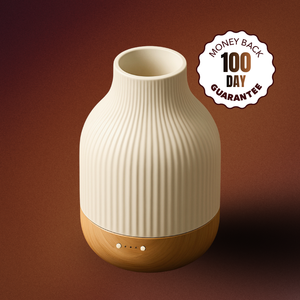
Once humidity and mold issues are fully resolved, many parents look for a gentle way to maintain a fresher, calmer nursery atmosphere day to day. The Ceramic & Rubber Wood Diffuser is designed for exactly that — soft, consistent ultrasonic mist that creates a lighter scent environment without overwhelming a small room.
This diffuser works by:
- Gently dispersing 100% pure essential oils through ultrasonic vibration — no heat, a ceramic and rubber wood exterior
- Creating a softer and more balanced scent environment than room sprays
- Covering a room of up to 30 m² (320 sq ft) from a 180 ml tank
- Running 4–5 hours continuously, or 8–10 hours on the intermittent setting, so one fill covers several wind-down sessions
Why It Works Well for Nursery Spaces
Gentle and Balanced Fragrance
Instead of overpowering room sprays, ultrasonic diffusion creates a lighter scent experience that feels cleaner and more comfortable in enclosed spaces.
Quiet Operation for Wind-Down Routines
Independent laboratory testing measured the Ceramic & Rubber Wood Diffuser at 27.3 dB(A) at 1 meter on maximum mist, so a short session before a nap or at bedtime will not disturb a baby who is settling. As above, run it for a short while before sleep and switch it off once the room is lightly scented, rather than leaving it running while your baby sleeps.
Natural and Minimalist Design
The rubber wood and ceramic exterior blends naturally into nursery decor while creating a softer aesthetic compared with many plastic home fragrance devices.
BPA-Free, No Heat
Made with natural materials over a BPA-free reservoir, with cold ultrasonic diffusion — no heat, no warping, no burned oil residue.
How It Fits Into a Fresher Nursery Routine
Improving nursery airflow, reducing humidity, and maintaining regular cleaning habits are still the most important steps for controlling musty odors long term. Once those moisture problems are properly addressed, a quiet essential oil diffuser simply helps support a fresher and calmer environment. You can also explore our fresh and clean scent collection for oils commonly used in family spaces.
Conclusion
Mold smell in a nursery is almost always linked to trapped moisture, elevated humidity, or poor airflow — not a surface odor you can cover up. Fix the moisture source first. Keep humidity between 30–50% RH, improve ventilation, and call a professional if mold covers more than 10 square feet or returns after cleaning. If your baby shows any respiratory symptoms, see your pediatrician promptly. Once the room is dry and safe, Scentreat diffusers and 100% pure essential oils can help support a calmer, fresher nursery atmosphere naturally.
For more on how home scent and air quality intersect, read our bedroom scent questions answered guide — it covers ventilation, humidity, and fragrance layering in one place.
Frequently Asked Questions
Is a mold smell in a nursery dangerous for babies?
Persistent mold or musty smells in a nursery can be a health concern for infants, who are more sensitive to indoor air pollutants than adults. Mold can affect a baby's breathing and trigger respiratory symptoms. If the smell is persistent, if you see visible mold, or if your baby is showing symptoms like coughing or wheezing, consult your pediatrician and a certified mold remediation professional promptly. The AAP advises that infants should not be exposed to moldy indoor environments.
What causes musty nursery smells?
High humidity, poor airflow, damp fabrics, condensation, and hidden moisture leaks are the most common causes. Nurseries are particularly vulnerable because they contain many soft materials that absorb humidity — rugs, curtains, stuffed toys, and crib mattresses all trap moisture over time.
What humidity level should a nursery be?
The EPA and AAP recommend keeping indoor humidity between 30–50% relative humidity (RH). Above 60% RH, mold growth becomes significantly more likely. An inexpensive hygrometer (humidity sensor) placed in the nursery can help you monitor the level and know when to open windows or run a dehumidifier.
How can I reduce humidity in a nursery?
Improving ventilation, opening windows occasionally, drying damp surfaces quickly, and using dehumidifiers may help reduce excess moisture. Also watch your cool-mist humidifier — clean it every 1–3 days and change the water daily to prevent bacterial and mold buildup inside the tank.
When should I call a professional for nursery mold?
Call a certified mold remediation professional if visible mold covers more than 10 square feet (the EPA's general threshold), if mold returns quickly after cleaning, if mold is near HVAC vents, or if you can smell mold but cannot find its source. Also seek professional help — and see your pediatrician — if your baby is showing respiratory symptoms that worsen when in the nursery.
Is it safe to use a diffuser in a nursery?
Many pediatricians advise caution with essential oil diffusers in rooms where newborns sleep. If you do use a diffuser in a nursery, keep sessions short, ensure good ventilation, keep the diffuser away from the crib, and check with your pediatrician first. Avoid peppermint and eucalyptus around children under 2 — the menthol and 1,8-cineole in these oils are widely advised against for babies and toddlers because of the risk of slowed or reflexive breathing — and skip essential oils altogether for newborns and infants under 3 months. Never use a diffuser to mask a mold smell without first fixing the underlying moisture problem.
Can air purifiers help with nursery odors?
Air purifiers with HEPA filters may help reduce airborne mold spores and improve airflow, but they do not eliminate the moisture source. They should complement — not replace — proper moisture control and cleaning. Fix the dampness first, then use an air purifier for ongoing air quality support.

