

Key Takeaways
BEST BUY PICKS
Why does a bedroom sometimes smell stale even after cleaning? Why do fragrances seem stronger on rainy days? And why do luxury hotels always smell so effortlessly fresh?
Short answer: Bedroom scent is shaped by three things — airflow, humidity, and fabric. Odors cling to soft surfaces like bedding and curtains; humidity between 30–50% keeps fragrance balanced; and consistent ventilation does more than any spray. The sections below give you the full picture, question by question.
If you want a deeper dive into specific causes, see our guide to 13 Common Reasons Your Bedroom Smells Bad.
Why Does My Bedroom Smell Stale Even After Cleaning?

The short answer: the odor is in the fabric, not the floor. Bedding, curtains, rugs, and upholstered furniture absorb odors and release them slowly — especially in rooms with limited airflow. Cleaning hard surfaces removes visible grime but rarely touches these soft reservoirs.
Humidity adds to the problem. When moisture becomes trapped indoors, odors linger and intensify even after the room looks clean. This is one reason bedrooms can smell less fresh during rainy seasons or in humid climates. We cover the full list of sources in 13 Common Reasons Your Bedroom Smells Bad.
Improving airflow, keeping fabrics dry, and maintaining a consistent fragrance routine usually makes a bigger difference than fragrance alone. A window open for 10–15 minutes after waking can clear overnight moisture and shift how the whole room feels.
Why Does Fragrance Feel Stronger on Rainy Days?

Moisture slows how scent molecules dissipate, so they linger in the air longer. When humidity rises, certain fragrance notes — especially sweet, floral, or rich ones — feel heavier and more concentrated than they would on a dry day.
The EPA recommends keeping indoor humidity between 30–50% for general comfort and air quality. Staying within that range also helps fragrances behave more predictably — not disappearing too fast in dry conditions or becoming overwhelming in damp ones. For a closer look at what extended humidity does to a room, see What Happens If Your Bedroom Stays Humid for Too Long?
That's why many people switch to lighter fragrance profiles — white tea, fresh linen, bergamot, or soft woods — during humid seasons. These scents tend to feel cleaner and more balanced when moisture levels are high.
Why Do Hotel Rooms Always Smell Fresh?

It's the system, not just the spray. Hotels maintain regular linen changes, controlled scent routines, and continuous HVAC airflow through every guest room. No single element does all the work.
Many hotels also use fragrance profiles designed to feel clean and welcoming rather than noticeable. Notes such as white tea, citrus, fresh linen, and soft woods are common because they read as "clean" across a wide range of guests.
The takeaway for home use: combine cleanliness, airflow, fabric care, and a subtle, consistent scent routine. Fragrance is the finishing layer, not the foundation.
Why Doesn't My Room Spray Last Very Long?

Room sprays deliver a burst, not a baseline. Once sprayed, fragrance particles disperse and fade as air circulates — typically within 20–40 minutes depending on room size and ventilation.
Factors like room size, airflow, humidity, and temperature all affect how long the scent stays noticeable. A larger, well-ventilated room will clear faster than a small, still one.
For a more consistent fragrance experience, many people pair room sprays with a diffuser. Rather than one burst, a diffuser maintains a steady, low-level scent throughout the day — especially useful for bedrooms used through the evening.
Why Does My Bedroom Smell Different in the Morning?

Overnight, the room becomes a closed system. Doors and windows are shut, air circulation drops, and body heat gradually raises moisture levels — all of which make certain odors more noticeable by morning.
Bedding and pillows absorb and slowly release scent over the course of the night. The combination of accumulated CO2, body warmth, and fabric-held odors creates the characteristic "morning bedroom" smell many people recognize immediately upon waking.
Opening windows for even 10 minutes, refreshing bedding regularly, and diffusing a light citrus or linen scent in the morning can reset the atmosphere quickly. For more practical tactics, our post on how to keep a bedroom smelling fresh covers a full routine.
Why Do Some Bedrooms Hold Odors Longer?

Soft surfaces and still air are the main culprits. Bedding, curtains, rugs, upholstered furniture, and clothing all absorb odors and release them slowly — particularly if they're not aired out or washed regularly.
Limited ventilation locks odors in rather than flushing them out. When fresh air can't circulate, smells accumulate over days and become harder to clear with fragrance alone. An air purifier with a HEPA filter can help by physically capturing airborne odor particles, complementing ventilation rather than replacing it.
Regular airflow, clean fabrics, and proper moisture control are still the most effective long-term approach. Fragrance and purification work best as maintenance, not as a fix for underlying ventilation issues.
Why Do Certain Scents Help a Room Feel Cleaner?

Cleanliness isn't a smell — it's an association. Certain fragrance notes feel clean because our brains connect them with environments we already trust: freshly washed sheets, an airy spa, a well-kept hotel room.
Notes like fresh linen, white tea, citrus, and light eucalyptus trigger those associations. This is one reason these fragrance families are standard in hospitality and wellness settings — they read as "tidy" before anyone even looks around the room.
The full effect comes from layering: clean surfaces, fresh air, dry fabrics, and a carefully chosen scent profile. When all four are present, even a modest fragrance intensity feels remarkably fresh. That's also why many fresh & clean essential oils work best as a finishing layer over a clean room, not as a cover for one that isn't.
Why Does Airflow Affect Bedroom Fragrance?

Airflow distributes scent evenly and prevents heavy pooling. The same diffuser and the same oil can smell completely different in a room with good circulation versus one that's sealed and still.
When air circulates properly, fragrance disperses more evenly and feels lighter throughout the space. In rooms with limited airflow, scent can concentrate in corners or near the diffuser itself, creating an uneven experience that feels either too strong or too faint depending on where you're sitting.
Many people improve their fragrance experience simply by adjusting airflow before touching diffuser settings. Open a window, run a fan on low, or improve cross-ventilation — then reassess. Simple habits like these can noticeably improve how fragrance performs without adding more oil.
Why Do Some Fragrances Feel Too Heavy for Bedrooms?

Bedrooms are enclosed, so scent compounds faster. Rich gourmand fragrances, heavy florals, and very sweet blends can hit an uncomfortable threshold in 20–30 minutes in a typical bedroom — especially with a door closed or during humid weather.
This isn't a flaw in the oil; it's a room-size and ventilation issue. The same fragrance might feel perfect in a large living room and overwhelming in a 120 sq ft bedroom.
That's why many people gravitate toward lighter profiles — white tea, fresh linen, bergamot, eucalyptus, and soft woods — for overnight or all-day bedroom diffusing. These scents stay pleasant at low intensity and don't fatigue the nose as quickly. For sleep-focused oils specifically, the Sleep & Relax collection is a good starting point.
Why Do Fresh Linen Scents Feel So Relaxing?

Fresh linen works because it's built on memory, not marketing. The scent is closely tied to the experience of climbing into a freshly made bed — one of the most universally positive sensory associations people carry from childhood.
That familiarity signals safety and comfort to the nervous system. The room doesn't need to look different; just smelling like clean bedding can shift how relaxed a person feels almost immediately.
For this reason, fresh linen remains one of the most requested fragrance categories among Scentreat customers building a bedroom scent routine. Paired with a bedroom essential oil diffuser set to run 30–60 minutes before sleep, it can help reinforce the mental cue that the room is a place for rest.
Why Does Humidity Change How Fragrance Smells?

Humidity affects both how long fragrance lingers and how intensely certain notes register. Higher moisture in the air slows evaporation of scent molecules, making fragrances feel richer — sometimes uncomfortably so.
Some scent profiles feel stronger, heavier, or cloying in humid conditions. This effect is most noticeable during rainy seasons or in naturally humid climates. The 30–50% indoor RH target (EPA guidance) is a practical benchmark: below 30% and some fragrances vanish too quickly; above 50% and the room can start to feel heavy regardless of the oil used.
Many people respond by switching to lighter fragrance profiles and reducing diffuser run times during humid weather — small adjustments that keep the experience comfortable year-round. For more on managing humidity's effects, see our post on best essential oil diffusers for bedroom sleep.
Why Choose the Scentreat Rubber Wood & Ceramic Ultrasonic Essential Oil Diffuser?

Creating a fresh, inviting bedroom is mostly about consistency. That's why a diffuser tends to outperform occasional room sprays — it maintains a low, steady scent layer rather than delivering one burst that fades.
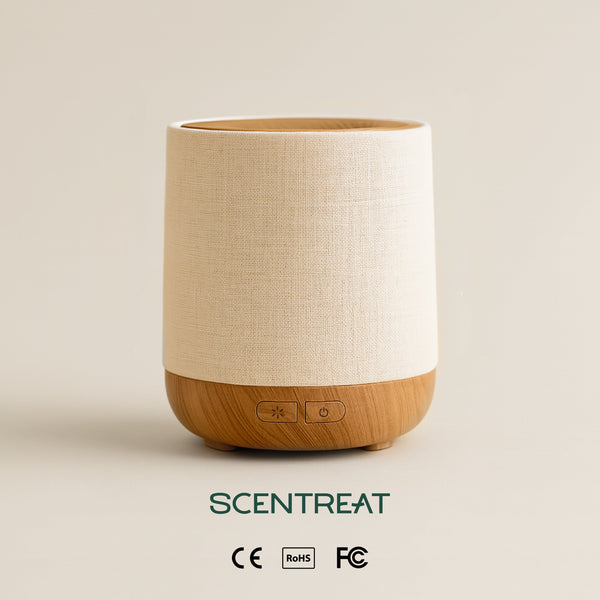
The Scentreat whisper-quiet ultrasonic diffuser is handcrafted from rubber wood and ceramic — no plastic contact with the water or oil. It runs quietly enough for sleep and complements a wide range of interior styles.
Consistent Fragrance Experience
Unlike fragrance that quickly fades or requires constant reapplication, a diffuser disperses scent gradually throughout the room, creating a more comfortable and balanced atmosphere from morning to night.
Quiet Ultrasonic Operation
Designed for bedrooms and relaxation spaces, the diffuser operates quietly while dispersing fragrance — suitable for reading, resting, working, or winding down in the evening.
Natural, Timeless Design
The combination of rubber wood and ceramic creates a clean, modern look that blends naturally with a wide range of interior styles, from minimalist bedrooms to cozy guest rooms.
Works with a Variety of Fragrance Profiles
Whether you prefer fresh linen, white tea, bergamot, eucalyptus, or soft woody notes, the diffuser pairs with different essential oils to match your preferred bedroom atmosphere.
Easy to Incorporate into Daily Routines
Many people use a diffuser as part of their regular bedroom routine, creating a space that feels welcoming, comfortable, and consistently fresh throughout the year.
If you're looking for a more consistent bedroom fragrance experience, explore the SCENTREAT diffuser collection to find an option that fits your space. You can also browse SCENTREAT essential oils to discover fragrance profiles that support the clean, relaxing atmosphere you want at home.
Conclusion
Bedroom fragrance comes down to three levers: airflow, fabric care, and moisture control. Get those right and a subtle, consistent scent routine becomes the finishing touch — not the cover-up. Vary your oil with the season, keep bedding fresh, and let the room do most of the work.
Scentreat helps support that experience with thoughtfully designed diffusers and 100% pure essential oils for everyday use.
For more tips and inspiration, follow us on Facebook and Instagram. If you have any questions about Scentreat's products or promotions, please feel free to contact us at support@scentreat.com. Our dedicated team is available 24/7 and always happy to assist you.
Frequently Asked Questions
Why does my bedroom smell stale even after cleaning?
Odors can remain trapped in bedding, curtains, carpets, and other fabrics. Limited airflow and excess humidity can also make stale smells more noticeable even after hard surfaces are clean.
Why do fragrances seem stronger on rainy days?
Higher humidity levels slow how scent molecules dissipate, making certain fragrances linger longer and feel heavier. Keeping indoor humidity between 30–50% (EPA guidance) helps fragrances behave more predictably.
What scents work best for bedrooms?
White tea, fresh linen, bergamot, eucalyptus, and soft woods are popular because they feel clean, light, and relaxing — and stay comfortable at the lower intensities suited to enclosed bedroom spaces.
How can I make my bedroom smell more like a hotel?
Focus on clean bedding, good airflow, subtle fragrance profiles, and a consistent scent routine rather than stronger fragrances. The freshness in a hotel room is a system — not a single product.
Is a diffuser better than a room spray?
They serve different purposes. Room sprays provide immediate fragrance that typically lasts 20–40 minutes, while diffusers help maintain a more consistent low-level scent experience over hours.
How often should I wash my bedding to keep my bedroom smelling fresh?
Weekly sheet washing and every 3–4 days for pillowcases is a commonly recommended cadence, according to the Sleep Foundation. Sheets and pillowcases absorb sweat and body oils overnight and are one of the primary odor sources in a bedroom. Diffusing a light, clean scent after laundering can help extend that fresh feeling between washes.
What scents are best for neutralizing bedroom odors — not just masking them?
Eucalyptus, tea tree, and citrus oils (like sweet orange or lemon) are widely used for their fresh, clean profiles that can help cut through stale-room odors rather than simply layering over them. For a curated starting point, browse the Fresh & Clean collection.