

Walk into the lobby of a Westin, a Ritz-Carlton, or a W Hotel and the scent hits you before you even reach the front desk. That impression is no accident — it's the result of custom fragrance design, cold-air HVAC diffusion, and a carefully layered scent profile that runs 24 hours a day, throughout the entire property.
Why do luxury hotels smell so good? They commission bespoke signature scents built from layered fragrance notes — typically a bright top note (bergamot or white tea), a soft heart (jasmine or cedar), and a warm base (sandalwood or musk). Those fragrances are pumped through HVAC-mounted cold-air nebulizers so every corridor, elevator, and room carries the same subtle, consistent scent. The result feels expensive because it is consistent, never heavy.
Before copying a hotel, rule out what is causing the smell at home: common reasons your bedroom smells bad.
In this guide, Scentreat breaks down exactly how hotel scent programs work — the real brand names, the technology, and how to replicate that feeling in your own bedroom.
What Makes Luxury Hotel Scents Different?

Luxury hotels rarely rely on fragrance alone. Instead, they create a complete sensory experience that combines cleanliness, atmosphere, and carefully selected scent profiles.
A Signature Scent Creates Recognition
Many luxury hotels use a signature fragrance that guests associate with the brand.
- Creates a memorable first impression
- Helps guests recognize the hotel experience instantly
- Strengthens emotional connections with the brand
Fragrance Supports Perceived Cleanliness
A well-designed scent can reinforce the feeling that a space is clean and well maintained.
- Fresh notes create an immediate sense of cleanliness
- Consistent fragrance helps rooms feel cared for
- Balanced scents feel more refined than overpowering fragrances
Scent Influences Mood and Comfort
Hotels use fragrance strategically to influence how guests feel.
- Soft scents encourage relaxation
- Fresh notes create a welcoming atmosphere
- Warm notes help spaces feel comfortable and inviting
Consistency Is Key — and the HVAC System Is Why
One reason hotel fragrances feel more luxurious than anything you'd find in a retail candle aisle is consistency. Most large luxury hotels don't use plug-in diffusers or reed sticks — they pump fragrance directly through their HVAC ventilation system using cold-air nebulizers mounted inside the ductwork.
Cold-air nebulization breaks a fragrance oil into a micro-fine dry mist without heat or water. That mist is carried by the existing air-handling system at low concentration throughout every floor, corridor, and guest room simultaneously. Because there's no hot-water tank, no evaporation cycle, and no single point-source (like a tabletop diffuser), the scent arrives from every vent at once — present and even, never heavy or localized. Guests perceive it as "the air just smells good here" rather than "there's a candle somewhere."
Scent zoning adds another layer: lobbies often run a brighter, more energizing accord (citrus, white tea), while spa corridors switch to something calmer (eucalyptus, sandalwood), and guest rooms carry a softer, sleep-supportive profile (lavender, cedar, musk). The technology is invisible to guests; the effect is unmistakable.
 Pair it with 100% Pure Bergamot Essential Oil
$14.99
Pair it with 100% Pure Bergamot Essential Oil
$14.99
Which Hotels Use Signature Scents — Real Examples

Named hotel scents are some of the most recognized fragrances in the world — and understanding them reveals exactly why the effect works.
| Hotel Brand | Signature Scent | Fragrance Profile |
|---|---|---|
| Westin Hotels | White Tea | Top: white tea + mint. Heart: cedar. Base: warm musk. Light, clean, immediately calming. |
| W Hotels | Figue Blanche | Top: bergamot + green fig. Heart: jasmine. Base: sandalwood + vetiver. Fresher and more energized than Westin. |
| Marriott / JW Marriott | Moana Loa | Top: citrus. Heart: white flowers + light woods. Base: amber + soft musk. Warmer, more tropical. |
| Ritz-Carlton | Various bespoke blends (property-specific) | Often built around cedar + rose + sandalwood. Each location carries its own variation. |
| Four Seasons | Property-bespoke | Frequently features soft citrus and white florals, with cedar or vetiver as the base. |
Notice the pattern: every profile uses three layers — a bright, attention-catching top note; a softer, more complex heart; and a warm, lingering base. That structure is what makes hotel scents feel "expensive." A single-note candle or plug-in air freshener has no depth, so it smells flat. A layered accord evolves as you move through the space, which keeps the nose interested without feeling heavy.
Curious about how a hotel-style layered scent compares to everyday room sprays? See our deep-dive on what makes a hotel scent smell expensive.
Why Hotels Invest in Signature Fragrances

Luxury hotels view fragrance as part of their overall brand experience. Just as architecture, lighting, and service help shape guest perceptions, scent plays a powerful role in creating memorable experiences.
Creates Stronger Guest Memories
Scent is closely connected to memory and emotion. The olfactory nerve has a direct pathway to the limbic system — the brain's emotional processing center — which is why a familiar hotel scent can instantly transport you back to a past stay. The nose adapts to a scent that never changes, which is why hotel scent reads strongly to a guest walking in and barely registers to the staff who work there.
- Guests often remember how a hotel felt, not just how it looked
- Fragrance can trigger positive memories long after a stay
- Signature scents help create lasting impressions
Helps Differentiate the Brand
Many luxury hotels want guests to recognize their properties beyond visual design alone.
- Creates a unique identity
- Supports brand consistency across locations
- Makes the experience feel more distinctive
Enhances the Feeling of Luxury
Certain fragrance families are commonly associated with premium environments.
- White tea and bergamot feel fresh and polished
- Cedar and sandalwood add warmth and grounding
- Amber and musk create depth and sophistication
Supports the Overall Guest Experience
The goal is not simply to make a space smell pleasant.
- Fragrance complements interior design and lighting
- Supports comfort and relaxation from the moment guests arrive
- Helps create the atmosphere guests expect from luxury hospitality
When combined with excellent service and thoughtful design, fragrance becomes an important part of what makes luxury hotels feel special.
How Do Luxury Hotels Diffuse Scent Throughout the Property?

The "how" is the part most people never know — and it's the single biggest reason hotel scent feels so different from home fragrance.
Cold-Air Nebulization Through HVAC
The most common method in large hotels is HVAC-integrated cold-air diffusion. A commercial-grade nebulizer converts fragrance oil into a dry, ultra-fine particle mist (typically 1–10 microns) and injects it directly into the air-handling system. The HVAC fan then distributes that mist through every vent on a given zone.
Because the particles are so small and dry, they stay airborne far longer than water-based mist — and they leave no residue on surfaces or fabrics. Fragrance concentration is typically set below 0.1% of total air volume, which is why you notice the scent but never feel it's "thick" or intrusive.
Scent Zoning by Area
A large hotel doesn't use one fragrance everywhere. Separate HVAC zones allow different scents — or different concentrations — in the lobby, corridors, spa, gym, and guest floors. Common zoning logic:
- Lobby / reception: brighter, more uplifting (white tea, bergamot, citrus)
- Spa / wellness: calming, grounding (eucalyptus, cedar, lavender)
- Guest rooms: softer, sleep-supportive (white tea, cedar, musk)
- Gym / fitness: fresh, invigorating (peppermint, mint, citrus)
Scented Laundry Products
Hotels reinforce the overall scent experience through laundry. Many use fragrance-matched fabric conditioners or dryer sheet formulas so that sheets, towels, and robes carry a complementary — not identical — scent. This layering of the same fragrance family across multiple touchpoints (air, linen, amenities) is what makes the atmosphere feel immersive.
What Fragrance Notes Do Luxury Hotels Use Most?
While every hotel brand develops its own fragrance identity, most luxury properties build around the same core note families — because these are the combinations that smell universally clean and expensive.
Top Notes: The First Impression
Top notes are what you smell first — they're the brightest and most volatile, hitting the nose within the first few seconds. Luxury hotels almost always open with:
- White tea — the most widely used hotel top note; clean, light, slightly floral
- Bergamot — bright citrus with a faint floral edge; feels polished rather than sharp
- Yuzu or lime — fresher, more modern alternative to bergamot; common in newer boutique properties
Heart Notes: The Complexity
Heart notes emerge a few minutes in and give the fragrance its character. They're why a good hotel scent keeps catching your attention without ever feeling aggressive:
- Jasmine — soft, slightly sweet floral; adds femininity without heaviness
- Cedar — dry, clean wood; bridges the freshness of the top and the warmth of the base
- Peony or soft white flowers — gentle, airy, spa-like
Base Notes: The Memory
Base notes are what linger longest — the scent you catch on your pillow the next morning or in your clothes after checkout:
- Sandalwood — creamy, warm, universally flattering; the most common hotel base
- Vanilla and amber — soft and enveloping; adds a slight sweetness that reads as "comfort"
- White musk — clean, skin-like, extends the fragrance without adding obvious scent
- Vetiver — earthy, grounding; often used in boutique or design-forward hotels
You can explore many of these individual notes as 100% pure oils. If you want to experiment with layering a hotel-style accord at home, start with the full aromatherapy oils collection — bergamot, cedarwood, and sandalwood are natural starting points.
Why Hotel Scents Feel More Expensive Than Home Fragrances

The difference is rarely the fragrance itself — it's the delivery system and the intent behind it.
The type of diffuser you use at home can also affect how fragrance travels through a room. Understanding the different types of essential oil diffuser can help you choose a setup that better matches the atmosphere you're trying to create.
Fragrances Are Carefully Layered
Most luxury hotel scents contain multiple layers — a top note for immediate impression, a heart note for complexity, and a base note for lasting warmth. Most home fragrances are single-note or lightly blended, which means they smell good but flat.
Diffusion Is Controlled, Not Occasional
Hotels aim for fragrance that is always present but never overpowering — continuous low-level diffusion rather than a burst when someone sprays a room spray. The HVAC system runs 24 hours; there's no "on" and "off."
- Consistent scent levels throughout the space
- Balanced fragrance distribution across every vent
- Subtle scenting that the brain reads as "the air," not "a product"
Fragrance Supports the Environment
Luxury hotels create cleanliness before introducing fragrance — no fragrance is asked to mask anything. That's why the scent feels "clean" rather than compensatory.
The Goal Is Atmosphere, Not Intensity
Many people assume stronger fragrance equals more luxury. Hotels do the opposite: soft and consistent, never announcing itself, always there. That restraint is the luxury signal.
 Pair it with 100% Pure Lavender Essential Oil
$14.99
Pair it with 100% Pure Lavender Essential Oil
$14.99
How Scent Influences the Guest Experience

Luxury hotels understand that fragrance affects more than just how a space smells. It shapes how guests perceive cleanliness, comfort, and even the overall quality of their stay.
Creates a Strong First Impression
Scent works below the level of attention — a guest often notices how a lobby smells before they consciously take in the decor. A pleasant, well-balanced scent signals quality within seconds of arrival.
Reinforces Comfort and Relaxation
Many hotel fragrances are designed to promote calm. Notes like white tea, cedarwood, and soft musk carry strong associations with cleanliness and comfort, which is why many guests describe feeling at ease within moments of walking in — an effect of familiarity and expectation as much as of the scent itself.
Makes Spaces Feel Cleaner
While fragrance does not replace cleaning, a fresh, neutral scent — not a perfume, not a chemical — reinforces the perception that a space is well-maintained. Hotels know that smell is the fastest shortcut to "this place is clean."
Encourages Positive Memories
Scent has a direct neural connection to the hippocampus (long-term memory) and amygdala (emotion). Guests associate certain scents with travel experiences, relaxation, and reward — which is exactly what a luxury hotel wants them to feel. That memory is part of why guests return.
Can You Create a Similar Experience at Home?
While luxury hotels invest heavily in scent branding, you can get close with the right approach. The key is focusing on three things hotels get right: cleanliness first, a layered fragrance profile, and consistent diffusion.
Start with a Clean Environment
Luxury fragrance performs best in a clean, well-ventilated space. Before introducing any scent, address odor sources, refresh fabrics, and improve airflow. A clean environment lets fragrance register as "the room" rather than "something covering a smell."
If your bedroom has persistent odor issues, see our guide on how to make your bedroom smell like a hotel — it walks through the step-by-step order that professionals use.
Choose a Layered Signature Scent
Rather than using a single oil, blend a top + heart + base. A simple starting point that mirrors the Westin White Tea profile:
- Top: bergamot or white tea (2–3 drops)
- Heart: cedarwood (2 drops)
- Base: sandalwood or soft musk (1–2 drops)
Use that blend in a diffuser set to a low, steady output — not a short, strong burst. Exploring essential oil blends for diffuser is a good starting point for finding combinations that work together.
Focus on Consistency, Not Intensity
Run your diffuser at a lower output for longer, rather than a strong burst for an hour. The goal is the same low-level, ever-present scent that makes hotel lobbies feel so effortlessly good.
In bedrooms, the best essential oil diffuser for sleep matters — a quiet ultrasonic diffuser that can run through the night without motor noise is the closest home equivalent to a hotel HVAC system.
Think Beyond Fragrance Alone
Luxury hotels create atmosphere through multiple elements working together: clean surroundings, comfortable furnishings, thoughtful lighting, and a consistent fragrance routine. When these layers align, the space feels polished and memorable — and no single element feels like it's working too hard.
 Pair it with 100% Pure Sandalwood Essential Oil
$14.99
Pair it with 100% Pure Sandalwood Essential Oil
$14.99
How Scentreat Helps Create a Luxury Hotel Scent at Home

The reason hotel scent feels so different from a typical plug-in diffuser comes down to delivery: consistent, low-level, dry diffusion — never a burst, never chemical. A good ultrasonic diffuser running the right blend can get you most of the way there at home.
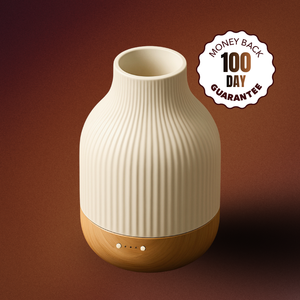
The Scentreat Ceramic & Rubber Wood Diffuser is designed for exactly that kind of long, quiet, steady diffusion — the same output character that makes hotel air feel like the air, not like a product. Pair it with a layered fragrance blend (bergamot + cedar + sandalwood is a great starting point), and the effect in a bedroom or living space is noticeably closer to what you'd find at a Westin or JW Marriott.
Key Features
- Natural rubber wood and ceramic construction over a BPA-free reservoir
- Quiet ultrasonic diffusion technology — runs overnight without noise
- Compatible with a wide range of 100% pure essential oils
- Designed for bedrooms, living rooms, and guest spaces
- Compact design that fits easily into modern interiors
Create the Hotel Experience Guests Remember
One reason luxury hotels invest in signature scents is because fragrance influences how people remember a space. The same logic applies at home: a familiar, well-chosen scent in your bedroom signals calm and comfort every time you walk in — not because of the oil alone, but because it's always there at the same level.
If you're ready to build a hotel-style scent routine at home, browse whisper-quiet bedroom diffusers or explore the 100% pure aromatherapy oils to find fragrance profiles inspired by the clean, layered scents of luxury hotels.
If a cat shares the room, make sure there is a clear way out — feline livers cannot break down the phenols and monoterpenes that make up much of tea tree, pine, citrus, eucalyptus and peppermint. Dogs cope better, but no pet should be treated with essential oil at home unless a vet has said to, whatever the label promises.
Conclusion
Luxury hotels smell so good because of three things working together: a bespoke, layered fragrance (white tea or bergamot on top, cedar or jasmine in the heart, sandalwood or musk at the base); cold-air HVAC nebulization that distributes that scent evenly and continuously at low concentration; and an underlying commitment to cleanliness so the fragrance enhances rather than covers. The Westin's White Tea, W Hotels' Figue Blanche, and Marriott's Moana Loa are famous precisely because they got all three right. With the right blend and a diffuser built for quiet, continuous output, the same atmosphere is achievable at home. Hotels run scent continuously at low strength; the home equivalent is a low output left running for as long as possible. On Scentreat's Ceramic & Rubber Wood Diffuser the 180 ml tank gives 4–5 hours of continuous output, or 8–10 hours on intermittent mode — which cycles the mist on and off rather than releasing one strong burst, so it can carry a low, steady level through most of a night.
Frequently Asked Questions
Why do luxury hotels smell so good?
Luxury hotels commission bespoke signature fragrances built from layered note profiles — white tea or bergamot up top, cedar or jasmine in the heart, sandalwood or musk as the base — and pump them through HVAC-mounted cold-air nebulizers so the scent is continuous and even throughout the entire property.
What scent does the Westin Hotel use?
The Westin's signature scent is White Tea — a clean, calm blend built around white tea and mint as the opening notes, cedar in the heart, and a warm white musk base. It has become one of the most recognized hotel fragrances in the world.
How do hotels diffuse scent throughout the entire building?
Most large luxury hotels use HVAC-integrated cold-air nebulizers — commercial devices that break fragrance oil into a dry, ultra-fine mist and inject it directly into the building's ventilation system. The existing HVAC fans then carry the scent through every vent at low, even concentration. Because the particles are so small and dry, they stay airborne without leaving residue on surfaces or fabrics.
What scents do luxury hotels use most?
Most luxury hotels build their signature scent around white tea, bergamot, or citrus as the top note; cedar, jasmine, or soft florals in the heart; and sandalwood, amber, vanilla, or white musk as the base. The Westin uses white tea, W Hotels uses fig and bergamot (Figue Blanche), and Marriott uses citrus with a warm amber-musk base (Moana Loa).
Can I make my home smell like a luxury hotel?
Yes. The key is layering — blend a bright top note (bergamot or white tea), a woody heart (cedarwood), and a warm base (sandalwood or musk), then run it in a quiet ultrasonic diffuser at a low, continuous setting rather than in short bursts. Start with a clean, well-ventilated room so the fragrance enhances the space instead of masking it.
Do hotels use essential oils?
Some boutique hotels use essential oil-based fragrance blends, while larger chains typically use proprietary fragrance formulations developed by specialist scent branding firms. The oil itself is less important than how it's diffused — consistent, low-level cold-air distribution is what creates the "hotel" effect.

