

Scentreat vs cheap diffusers comes down to what you want beyond a room that smells good. At Scentreat, we compared our Ceramic Diffuser with three lower-priced models on noise evidence, runtime, lighting, materials, returns, and price. Here is what the extra cost buys, where a budget model may be enough, and which details are worth checking before you order.
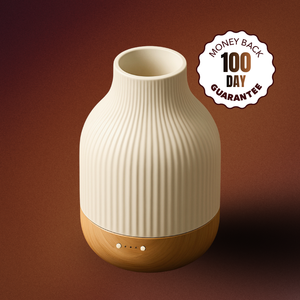
Quick Specs Comparison: Scentreat vs Cheap Diffusers
We make the Scentreat model in this comparison. All four use the same editorial scoring criteria; the figures come from official product, support, policy, and brand listing sources, with an independent laboratory noise test for our model. InnoGear’s exact 12407-SW model is listed as sold out on its own website, so check availability before treating it as a buying option.
- Best overall: Scentreat Ceramic Diffuser (9.7 / 10)
- InnoGear 150 ml Ceramic Stone 12407-SW (8.7 / 10)
- ASAKUKI Rock 100-DF001 (8.6 / 10)
- Pure Enrichment PureSpa Natural (7.7 / 10)
| Product | Rating | Tank (ml) | Runtime (h) | Noise (dB) | Price |
|---|---|---|---|---|---|
| Scentreat Ceramic Diffuser | 9.7 | 180 | 4–5 / 8–10 | 27.3 (lab) | $99.95 |
| InnoGear Ceramic Stone 12407-SW | 8.7 | 150 | 4–6 / 8–10 | — | $34.99 |
| ASAKUKI Rock 100-DF001 | 8.6 | 500 | Up to 16 | 23 (brand) | $35.99 |
| Pure Enrichment PureSpa Natural | 7.7 | 200 | 8–10 | — | $39.99 |
Noise figures marked lab come from an independent laboratory, and those marked brand are the manufacturer's own numbers; for scale, a whisper is about 30 dB. How we score diffusers explains each column and rating.
Scentreat vs Three Budget Diffusers, Ranked
The four diffusers below are ranked by our rating. All four are ultrasonic, so each one turns water and a few drops of essential oil into a cool mist in the same basic way.
1. Scentreat Ceramic Diffuser – Best Overall

The Scentreat Ceramic Diffuser is our top pick for anyone who diffuses most days in a bedroom, living room or home office. Its noise level was measured by an independent laboratory, and its warm yellow light can be dimmed, set to breathe, or switched off completely. A full 180 ml tank runs 4–5 hours on continuous mist or 8–10 hours on intermittent, and a timer can stop the mist after 1, 3 or 8 hours.
The outside is a handcrafted ceramic cover on a solid natural rubber wood base, so on a shelf or nightstand it reads as a piece of decor rather than an appliance. Inside, the water sits in a BPA-free ABS and PP reservoir, and the unit switches itself off when the water runs out.
Our rating: 9.7 / 10
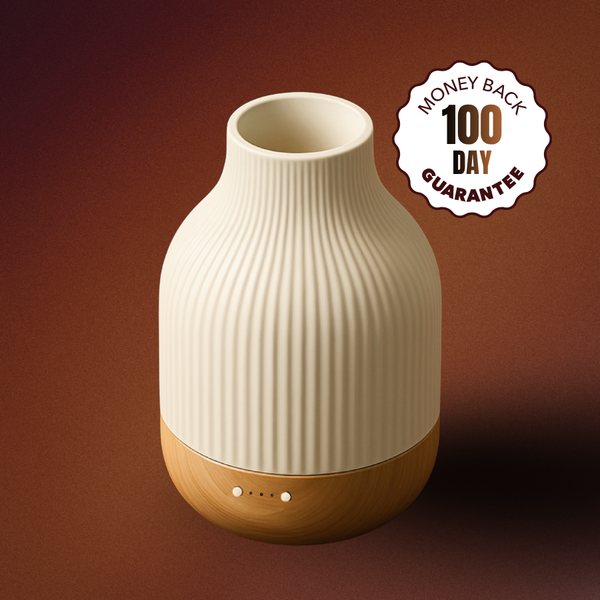
Whisper-quiet at 27.3 dB(A), made for sleep
Quiet Ceramic Essential Oil Diffuser for Bedroom & Sleep★★★★★ 4.92/5 · Verified reviews
Limited Offer — Free Oils + eBooks View full product detailsAt $99.95, it is rated for rooms up to about 320 sq ft and includes a 100-day money-back guarantee and one-year limited warranty. See the full controls, dimensions, and care instructions to check the fit for your room.
Why It Stands Out:
- Lab-measured noise, with the distance and mist setting stated
- A warm light that dims, breathes, or turns off completely
- 8–10 hours per fill on intermittent mode, plus a timer of up to 8 hours
- Handcrafted ceramic and solid rubber wood outside, with the reservoir material named
Who It's Best For:
- People who diffuse every day and want the diffuser to stay in the background
- Bedrooms, home offices and living spaces up to about 320 sq ft (30 m²)
- Anyone who wants a diffuser that looks like decor rather than a gadget
Trade-Offs:
- Sold only at scentreat.com
Explore the Scentreat Ceramic Diffuser for dimensions, controls, and care instructions.
2. InnoGear 150 ml Ceramic Stone Diffuser 12407-SW
The InnoGear Ceramic Stone 12407-SW has a handcrafted ceramic cover, 150 ml PP tank, separate light and mist controls, and automatic shut-off. The brand lists 4–6 hours of continuous mist or 8–10 hours intermittently, a regular $34.99 price, and a 12-month warranty. Its own page currently marks this model sold out.
Our rating: 8.7 / 10
Good for: a ceramic cover at a lower price
Limitations:
- No decibel figure for this model, only a claim that it is 32% quieter than conventional diffusers
- No room-size rating or timer listed on the product page
3. ASAKUKI Rock 100-DF001
The ASAKUKI Rock 100-DF001 offers a remote and 1-, 2-, or 3-hour timer. Its 500 ml tank is rated for up to 16 hours, without a stated mode. The regular price is $35.99. ASAKUKI lists 23 dB without comparable test conditions, PP construction, and a one-year warranty extendable to two years; its brand listing describes a light-off option.
Our rating: 8.6 / 10
Good for: shoppers on a tight budget, or anyone who wants a remote control
Limitations:
- The brand does not say how the 23 dB figure was measured, or which mist mode the 16-hour runtime is for
- A PP finish rather than ceramic or natural wood, if those materials suit your room better
4. Pure Enrichment PureSpa Natural
The PureSpa Natural has faux-wood accents and color-changing lights. At $39.99, it holds 200 ml, is rated for 8–10 hours and up to 250 sq ft, and switches off when water is low or empty. A two-year warranty is included. Its direct-store return policy has a 60-day window for eligible new, unused products.
Our rating: 7.7 / 10
Good for: a simple diffuser at a low price
Limitations:
- No decibel figure on the product page, and the run time is not split by mode
- The product page does not say what the diffuser is made of or whether the light switches off
For more budget options, our roundup of popular essential oil diffusers on Amazon covers other models shoppers often compare.

Handcrafted ceramic essential oil diffuser for bedroom and sleep: quieter than a whisper (27.3 dB, lab-test...
What Actually Makes the Difference?

Every diffuser in this comparison uses the same core technology: a small disc under the water vibrates and turns the water and oil into a fine, cool mist. Because the mechanism is shared, the useful differences are the ones you can check before you buy. If you are still choosing a type, our guide to essential oil diffuser types and how to choose explains how ultrasonic compares with nebulizing and other designs.
Proof Behind the Noise Figure

Noise matters most when a diffuser sits close to where you read, work or sleep. A quietness claim is more useful when its measurement conditions are stated. What separates one claim from another is whether the figure comes with the distance and mist setting it was measured at. That is why noise evidence carries the most weight in our rating: a lower number with no method behind it does not show that one diffuser is quieter than another in your room.
What It Is Made Of, and What the Brand Tells You
The ceramic-and-wood model has a handcrafted cover and natural rubber wood base around a BPA-free ABS + PP reservoir. InnoGear also offers a real ceramic cover, with a PP tank; ASAKUKI names PP, while Pure Enrichment describes faux-wood accents without specifying the underlying material.
Choose the exterior you want to see on your shelf, then check what holds the water and how to clean it. A ceramic cover alone does not prove better mist output, safer oil use, or longer life. BPA-free describes a material claim; it does not establish that nothing can migrate from the tank.
Light and Timer Controls
For evening use, check whether the light turns off and how the mist stops. On our ceramic model, the warm light dims, breathes or switches off, and the timer runs for 1, 3 or 8 hours, long enough to cover a full evening. ASAKUKI's timer stops at 1, 2 or 3 hours, and InnoGear lists separate light and mist buttons but does not list a timer.
Returns and Warranty Terms
Scentreat includes a 100-day money-back guarantee and a one-year limited warranty. That adds reassurance to the purchase; the main reasons to choose this model are its ceramic-and-wood finish, separate light control, and flexible timer.
Which Option Fits Your Routine?

The right choice depends on how often you diffuse and what you want from the diffuser besides scent.
Choose the Scentreat Ceramic Diffuser if you:
- Diffuse most days in a bedroom, living room or home office
- Read, work or sleep near the diffuser and want a noise level backed by a laboratory measurement
- Want a light that switches off and a timer that runs up to 8 hours
- Want a diffuser in ceramic and solid wood that fits the look of your room
A budget model may be enough if you:
- Diffuse only now and then, or want to try aromatherapy before spending more
- Have a firm budget under $40
- Are happy to go by each brand's own noise and material claims

If you like the idea but prefer fabric to ceramic, the Scentreat Wood Diffuser (our rating: 9.7 / 10) has a fabric cover on a solid wood base, a 200 ml tank and a price of $79.95. You can compare every model in our Scentreat essential oil diffuser collection, and our roundup of the best essential oil diffusers covers more types and budgets.
For the wider price question, Is a $100 Diffuser Worth It? looks at what changes as you spend more, and our guide to what an essential oil diffuser costs breaks down typical price ranges. If you want to know more about us first, Is Scentreat Legit? is our own overview of the company, its policies and its product claims.
Getting the Most From Any Diffuser


Follow the instructions for your exact device and oil, including the fill line and recommended amount. Begin with a scent level you find comfortable, keep the room ventilated, and clean the tank as directed. Our setup guide explains the everyday steps.
Water-level shut-off protects the device; it does not tell you how long fragrance exposure suits everyone in the room. Stop if scent causes discomfort. Ask a veterinarian before using oils around pets, and seek appropriate advice when children, pregnancy, or breathing conditions are involved.
Conclusion
The Scentreat vs cheap diffusers comparison is most useful when you separate price from the features you will actually use. All four make cool mist, but their controls, finishes, documentation, and return terms differ. A lower-cost model can meet a simple fragrance need; spending more makes sense when the design and everyday controls are worth that difference to you.
Our pick is the Scentreat Ceramic Diffuser for its handcrafted finish, warm light that switches off, and flexible timer. The ceramic cover and wood base make it easy to leave on display, while the published noise-test conditions give you a clearer basis for comparing sound.
Need a hand choosing a diffuser or an oil? Message us on Facebook or Instagram, or email support@scentreat.com.
Frequently Asked Questions
Does a higher price mean a diffuser performs better?
Price alone does not predict mist output or lifespan. Compare the exact models, their controls, and the evidence behind their specifications. Scentreat Ceramic Diffuser earns 9.7/10 under our published editorial criteria, which weight those features rather than price alone.
Why does the Scentreat Ceramic Diffuser cost more?
The $99.95 model combines a handcrafted ceramic cover and natural rubber wood base with separate light control and a 1-, 3-, or 8-hour timer. These are useful differences if the diffuser will sit beside your bed or chair every day. See the product details to decide whether they suit your routine.
Is Scentreat quieter than cheap diffusers?
An independent laboratory measured Scentreat Ceramic Diffuser at 27.3 dB(A) from 3.3 ft (1 m), at maximum continuous mist in a semi-anechoic room with a 17.8 dB(A) background. For scale, a whisper is about 30 dB. ASAKUKI’s 23 dB figure lacks comparable conditions, so these numbers do not establish which sounds quieter in the same room.
Does the Scentreat Ceramic Diffuser use plastic?
Yes. Its water reservoir is BPA-free ABS + PP, beneath the ceramic cover and rubber wood base. The outer finish and the water-contact material are separate parts; ceramic outside does not mean a ceramic tank inside.
Can I run it overnight?
The 180 ml tank is rated for 8–10 hours intermittently, but runtime is not a recommendation to diffuse through the night. Follow the device and oil directions and choose a session that suits the room’s occupants. The timer and water-level shut-off have different functions.
What room size is it made for?
Scentreat Ceramic Diffuser is manufacturer-rated for up to about 320 sq ft. For a slightly larger enclosed room, the Scentreat Wood Diffuser is rated for about 375 sq ft. Airflow, layout, and placement affect how evenly you notice the scent.

