

How long do essential oil diffusers last? Most electric diffusers keep working for several years, but there is no fixed expiration date. Lifespan depends on the type of diffuser, how often you run it and how well you look after it. At Scentreat, we suggest judging a diffuser by how it performs rather than how old it is, because weak mist or a fading scent usually means it needs cleaning, not replacing.
How Long Do Essential Oil Diffusers Last at a Glance?

Different designs wear in different places, so the useful question is less "how many years?" and more "which part is likely to give out, and can it be cared for?"
| Diffuser type | Parts that wear first | Realistic lifespan guidance |
|---|---|---|
| Ultrasonic (water-based) | Ultrasonic plate, small fan, seals, power adapter | Often several years with regular cleaning. Scale and oil film are the usual causes of weak mist, and both can be cleaned. |
| Waterless (nebulizing or atomizing) | Atomizer, air pump, tubing or oil pathway | Can last for years, but designs vary widely. Thick oils can clog the atomizer. |
| Cold-air (one type of waterless) | Atomizing head, airflow system, seals | No universal figure. Runs on undiluted oil, so oil compatibility matters more than water quality. |
| Rechargeable (any of the above) | Battery, charging port | Battery capacity fades gradually with charge cycles, even when the rest of the device is fine. |
| Reed diffuser (non-electric) | Reeds and oil only | Nothing mechanical to wear out. Reeds and oil are replaced as they are used up, and the vessel is reused. |
Published estimates vary widely, from less than a year to around five years, and they rarely come with test data or manufacturer figures behind them. A well-kept diffuser can keep running well beyond any of those numbers, while one that is rarely cleaned or often knocked over may fail much sooner. That's why its current condition tells you more than its age.
Some manufacturers rate their diffusers in operating hours rather than years. If your manual lists a rated run life, divide it by the hours you use the diffuser each day for a rough estimate.
It also helps to separate the life of the device from other "how long" questions. How long one tank of water runs, how long a bottle of oil lasts and how many hours a battery holds per charge are all different from how many years the diffuser itself will work.
What Affects the Lifespan of an Essential Oil Diffuser?

Two identical diffusers can age very differently. A few factors come down to design, but most are about everyday use and care.
Diffuser Type and Technology
An ultrasonic diffuser uses a small plate that vibrates rapidly to turn water and a few drops of oil into a cool mist. A waterless diffuser skips the water and breaks the oil itself into fine particles, using an air pump, an atomizing head or, in some designs, a porous ceramic core.
Neither technology is guaranteed to outlast the other. Build quality, the parts used and how the device is treated matter more than the label. If you're still deciding between formats, our guide to waterless vs ultrasonic diffusers compares them side by side.
How Often You Use It
A diffuser that runs for an hour a few evenings a week has a much lighter workload than one running all day, every day. More operating hours simply mean more use of the parts that make mist or move oil.
That doesn't mean you should ration it. Timers and intermittent modes let you enjoy the scent without running the motor or plate nonstop, and they're often better for scent too, since your nose adapts to a constant aroma.
Oil Residue and Mineral Buildup
In water-based diffusers, minerals in tap water leave scale on the ultrasonic plate, especially in hard-water areas. Essential oils add a thin, sticky film. Leaving oily water standing in the tank between sessions is what builds that film fastest. If you live in a hard-water area, filtered or distilled water can slow scale, as long as your manual allows it.
Buildup is the most common reason a working diffuser seems to be failing. It weakens the mist long before any part actually wears out, and it is almost always fixable with a proper clean.
Essential Oil Compatibility
Most diffusers are designed for 100% pure essential oils. Oils diluted in a carrier oil, or fragrance oils with additives, can coat an ultrasonic plate or clog a waterless atomizer, and that damage can look like ordinary wear.
Waterless models are the most sensitive here because the oil passes straight through the mechanism. Our list of the best essential oils for waterless diffusers covers which oils flow well and which tend to clog.
Cleaning, Storage, and Heat Exposure
Regular cleaning keeps buildup from settling in, and storing a diffuser clean and dry keeps moisture from sitting inside it for weeks. Where you place it matters too. Direct sun, radiators and other heat sources are hard on plastics, seals and batteries.
Physical accidents shorten a diffuser's life faster than anything else. A unit that gets knocked over, overfilled or splashed so that water reaches the base or air outlet can suffer damage that cleaning won't undo.
7 Signs It May Be Time to Replace Your Diffuser

Most of these signs are about wear and performance, and several have simple fixes. Three are different: water reaching the electrical base, a swollen battery and any sign of electrical damage are safety issues, so stop using the diffuser right away if you notice them.
1. Weak Mist Persists After Cleaning
Weak or patchy mist is the most common complaint, and the cause is usually buildup, a wrong water level or a low mist setting. Overfilling can also cause trouble, because water pushed into the air outlet makes the unit spit instead of mist.
Clean the tank and gently swab the ultrasonic plate as your manual describes, then check the fill line and settings. Our guide to a diffuser not producing mist walks through every check. If the mist stays weak after a proper clean, the plate or fan may be worn, and it's time to contact support or plan a replacement.
2. The Diffuser Keeps Shutting Off Unexpectedly
Many shutdowns are intentional. A timer may have ended, the water may have dropped low enough to trigger automatic shut-off, or an intermittent mode may simply be in its pause.
Check the water level, timer and power connection first. If the unit still cuts out repeatedly during correct use, stop troubleshooting and contact the manufacturer. Our article on a diffuser that's not working covers the power-related causes in more detail.
3. Water or Oil Leaks Repeatedly
A small puddle is often just overfilling, a cover that isn't seated properly, condensation around the outlet or a surface that isn't level. Those are easy to correct.
Repeated leaks are another matter, especially from a crack in the tank or a worn seal. If liquid is reaching the base or any electrical opening, unplug the diffuser and stop using it. For the common causes and fixes, see why an essential oil diffuser leaks.
4. It Makes New or Unusual Noises
A faint hum or gentle bubbling is normal for many diffusers, and waterless models with pumps tend to sound different from ultrasonic ones. What matters is change: a new grinding, rattling, clicking or buzzing sound, especially alongside weaker performance.
Make sure the diffuser sits level and the water is at the right line. If the new noise continues, stop using it and contact support. Don't open the housing to investigate unless the manufacturer provides a user-serviceable procedure.
5. Unpleasant Odors Remain After Cleaning
A sour or musty smell usually comes from old oily water or mold in hard-to-reach corners, and a thorough clean normally clears it. Our guide to a moldy diffuser explains how to tackle it.
If the musty smell comes straight back, or mold has settled in places you can't reach, replacement is often the hygienic choice. A burning or hot-plastic smell is different: treat it as a safety sign (see sign 7).
6. The Rechargeable Battery No Longer Performs Well
Every rechargeable battery slowly holds less charge as it ages, so a gradual drop in runtime is normal. Runtime per charge also varies with the mist level you use, so compare like with like before deciding the battery is failing.
If the case bulges, the battery feels unusually hot or the device swells, stop using and charging it immediately. Don't puncture, open or try to replace a lithium-ion battery yourself. Contact the manufacturer, and dispose of the device through a local battery or electronics recycling point.
7. There Are Signs of Electrical Damage
A burning smell, smoke, sparks, scorch marks, melted plastic, a frayed cord or a plug that gets hot are all reasons to stop immediately. Switch the diffuser off, unplug it if it's safe to do so, and don't run it again to "see if it happens twice."
These aren't maintenance problems, and they shouldn't be repaired at home. Contact the manufacturer for guidance, and if safe operation can't be confirmed, replace the diffuser.
Should You Clean, Repair, or Replace Your Diffuser?

Use this table to decide quickly what to do with the problem in front of you.
| What you notice | Try first | Get support or replace when |
|---|---|---|
| Weak mist | Check the water level and settings, then clean the tank and plate | Mist stays weak after a proper clean |
| Weak scent, normal mist | Check oil amount, oil age, room size and scent fatigue | Rarely a reason to replace the device |
| Mineral scale | Descale following your model's instructions | Scale won't shift without scratching the plate |
| Oily residue or clogging | Clean with the method for your diffuser type; switch to pure oils | Clogging returns despite correct oils and care |
| Unexpected shutdowns | Check the water level, timer and power connection | It keeps cutting out during correct use |
| Repeated leaks | Check the fill line, cover fit and level surface | Leaks continue or liquid reaches the base |
| Cracked reservoir | Stop using it; ask about a replacement part | No safe replacement part is available |
| Shorter battery runtime | Compare runtime at the same mist level; check the cable | Runtime no longer fits how you use it |
| Swollen battery | Stop using and charging it immediately | Replace it; don't attempt a repair |
| Burning smell or overheating | Switch off and unplug if safe | Replace unless the manufacturer confirms it's safe |
As a rule of thumb, clean when the problem looks like buildup, ask for support when a fault keeps coming back, and replace when safe, reliable operation can't be restored.
How Long Do Ultrasonic Diffusers Last?

Ultrasonic diffusers are the most common type in homes, and they can run for years when they're kept clean. Inside, a small plate vibrates at a high frequency beneath the water, breaking it into a fine mist that carries the oil. A small fan then pushes that mist out of the top.
The plate is the part that matters most for longevity. Mineral scale and oil film on its surface reduce mist output first, and scrubbing it with anything abrasive can damage it. The fan, seals and power adapter are the other parts that can wear with heavy use. Running the unit dry is hard on the plate, which is why automatic shut-off is a valuable feature. Both Scentreat's Ceramic and Wood diffusers switch themselves off when the water runs out.
Even so, no manufacturer can promise a specific service life for an ultrasonic diffuser. Water hardness, oil choice and how often it's cleaned vary too much from one home to the next. Regular, gentle cleaning is the single most effective way to keep one running well, and our guide on how to clean an essential oil diffuser covers the routine.

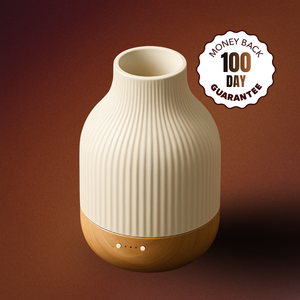
Handcrafted ceramic essential oil diffuser for bedroom and sleep: quieter than a whisper (27.3 dB, lab-test...
How Long Do Waterless and Cold-Air Diffusers Last?

Waterless diffusers have no tank to fill, so they avoid mineral scale, standing water and the daily emptying that ultrasonic models need. That removes some of the most common causes of decline, but it doesn't make them maintenance-free.
"Waterless" also covers several different mechanisms. Classic nebulizers use an air pump and a glass chamber, cold-air diffusers use an atomizing head that turns undiluted oil into a dry mist, and some models rely on a porous ceramic core. Each has its own wear points: atomizers and nozzles, pumps, seals, tubing and the bottle connection.
Because the oil passes straight through the mechanism, oil choice has a bigger impact than it does in a water-based diffuser. Thick oils and carrier-oil blends are the usual cause of clogging. For cordless waterless models, battery health is the other key factor, since the battery may age before anything else does.
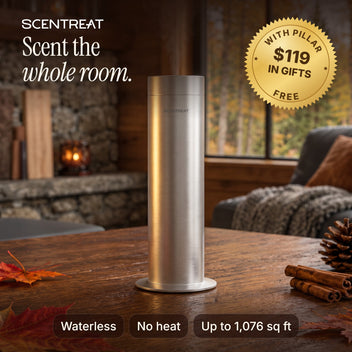
Waterless cold-air diffuser in aluminum: 100 ml oil bottle, covers up to 1,076 sq ft, under 30 dB, app time...
How to Make Your Essential Oil Diffuser Last Longer

You don't need a complicated routine. A few consistent habits prevent most of the problems that make a working diffuser seem worn out.
Clean Your Diffuser Regularly
Wipe the tank after use and give the diffuser a deeper clean on a regular schedule, more often if you use it daily or have hard water. Pay attention to the ultrasonic plate, and clean it gently with a soft cloth or cotton swab. Our diffuser cleaning guide covers the full method for each type.
Empty and Dry Water-Based Reservoirs
After each session, tip out any leftover water and wipe the tank dry. Standing oily water is what builds the film that weakens mist, and damp tanks are where mold gets started. Our article on how to prevent mold in an essential oil diffuser has more on keeping it fresh.
Use Compatible Essential Oils
Stick to 100% pure essential oils and skip carrier-oil blends and fragrance oils with additives. Use the recommended amount, too. Extra drops won't make a water-based diffuser smell much stronger, but they will leave more residue. Our guide to how many drops to put in a diffuser gives amounts by tank size.
Follow the Recommended Operating Instructions
Fill only to the max line and use room-temperature water. Hot water doesn't create more mist, and it can stress the ultrasonic plate. Use the adapter that came with the diffuser, keep it on a flat, stable surface and keep the air outlet clear. If your manual recommends a rest between long sessions, follow it, and never add water to a waterless diffuser unless its instructions say you can.
Store Your Diffuser Properly
Before putting a diffuser away, clean it, empty it and let every part dry completely. Store it somewhere dry and away from heat and direct sunlight. For a rechargeable model, avoid leaving it in a hot parked car for long periods, since heat is hard on batteries.
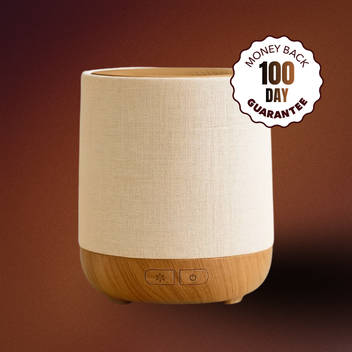
Wood essential oil diffuser that runs up to 10 hours on one 200 ml fill. Quieter than a whisper (27.3 dB, l...
Does a One-Year Warranty Mean a Diffuser Only Lasts One Year?

No. A warranty describes how long the manufacturer commits to covering defects, not how long the product is expected to work. Plenty of diffusers keep running long after their warranty ends, and the warranty period isn't a prediction of failure.
At Scentreat, every diffuser comes with a 1-year warranty against manufacturing faults, on top of a 100-day money-back guarantee. If something goes wrong, email support@scentreat.com with your order number, and check our FAQs for the details of what's covered.
Which Scentreat Diffuser Should You Choose When Replacing an Old One?

A replacement is a good moment to rethink what you need. Your old diffuser may have been fine for a bedroom but too small for an open living area, or you may be tired of filling and cleaning a water tank. Here's how Scentreat's diffusers match different needs.
Scentreat Ceramic Diffuser: For Bedrooms and Gentle Mist
The Scentreat Ceramic Diffuser is an ultrasonic diffuser with a real ceramic cover over a 180 ml tank. It runs about 4–5 hours continuously or 8–10 hours on intermittent mode, with 1, 3 and 8-hour timers, and it's rated for rooms up to about 320 sq ft. Noise was independently measured at 27.3 dB(A) at 1 meter.
Its warm light can be bright, dimmed, breathing or fully off, and it shuts off automatically when the water runs out. It suits someone who prefers a classic water-based mist in a bedroom or study.
Scentreat Wood Diffuser: For Longer Water-Based Sessions
The Scentreat Wood Diffuser has the largest tank in the range at 200 ml. It runs about 4–5 hours continuously or 8–10 hours on intermittent mode, covers rooms up to about 375 sq ft and was measured at 27.3 dB(A) at 1 meter.
The light cycles through 100%, 50%, candlelight and off, and automatic shut-off stops it when the tank is empty. If your old diffuser needed refilling too often, the bigger tank means fewer top-ups for a full evening or night.
Scentreat Pillar Cold-Air Diffuser: For Larger Spaces and Waterless Scenting
The Scentreat Pillar is a waterless cold-air diffuser rated for spaces up to 1,076 sq ft. It runs on any 100% pure essential oil from a 100 ml screw-in bottle, with no water and no pods, and plugs in via USB-C (5 V, 1.5 W) with the adapter included. You can start it with one touch or set timers in the Bluetooth app.
Care is simple: avoid water and thick carrier-oil blends, which can clog the atomizer, keep it upright on a flat surface and wipe the aluminum with a soft, dry cloth. It's the natural step up if your old diffuser couldn't scent a large, open room.
Scentreat CalmRide: For Portable, Rechargeable Diffusion
The Scentreat CalmRide is a waterless, cordless diffuser that screws onto a 10 or 20 ml bottle of 100% pure essential oil. It charges over USB-C in about 4 hours and is rated for up to 60 hours per charge, depending on mist level and use. It offers three mist levels, 1, 2 and 3-hour timers, and coverage of about 108–215 sq ft.
It's sized for a cup holder, so it suits a car, desk, nightstand or hotel room. That 60-hour figure is battery runtime per charge, not the lifespan of the device or how long a bottle of oil lasts.
You can compare every model in our essential oil diffuser collection.
Conclusion
Most essential oil diffusers last several years, but there is no fixed expiration date, and age alone is a poor reason to replace one. Performance and condition tell you far more. Start with the simple checks and a proper clean, ask for support if a fault keeps returning, and stop immediately if you see a safety warning such as a burning smell, a swollen battery or water reaching the base. When it is time to replace, choose for the space you have now. The Scentreat Ceramic and Wood suit bedrooms and everyday water-based mist, the Pillar covers large rooms without water, and the CalmRide brings rechargeable scent on the go.
For more diffuser care tips, follow Scentreat on Facebook and Instagram. If you have a question about your diffuser, visit our contact page or email support@scentreat.com.
Frequently Asked Questions
How many years should an essential oil diffuser last?
Many electric diffusers keep working for several years. Online estimates range from under a year to about five years, but they're rarely backed by testing. Lifespan depends on the type, how often it runs and how well it's cleaned, so judge yours by performance rather than age.
Do essential oil diffusers wear out?
Yes, eventually. Ultrasonic plates, fans, pumps, seals and batteries all wear with use. Many problems that look like wear, especially weak mist, are really buildup that a proper clean will fix, so clean the diffuser and check the basics before deciding a part has failed.
Can an essential oil diffuser last five years or longer?
It can. A well-made diffuser that's cleaned regularly, used with pure essential oils and kept away from heat and spills may keep working for five years or more. There's no guarantee, but there's also no reason to replace one that still runs safely and reliably.
How do I know if my diffuser is dying?
Look for problems that come back after a proper clean: weak mist, repeated shutdowns, recurring leaks or new noises. A burning smell, smoke, a swollen battery or water reaching the base are safety signs. In those cases, stop using the diffuser and contact the manufacturer.
Should I replace my diffuser if it stops misting?
Not straight away. Check the water level and settings, then clean the tank and ultrasonic plate, since buildup is the most common cause. If it still won't mist after a proper clean, contact support, and replace it if the fault can't be fixed safely.
Can an old diffuser become unsafe?
It can if it's damaged. A crack that lets water reach the electronics, a frayed cord, overheating or a swollen battery can make any diffuser unsafe, whatever its age. An older diffuser in good condition is fine to keep using, but inspect the cord, tank and base from time to time.
How long do waterless diffusers last?
There's no universal figure, because waterless diffusers use different mechanisms, from air-pump nebulizers to cold-air atomizers. They avoid mineral scale, but atomizers, pumps and seals still wear, and thick oils can clog them. Compatible pure oils and regular care help them last.
How long do reed diffusers last?
A reed diffuser has no electrical parts, so the glass vessel can be reused for years. What runs out is the oil, which evaporates, and the reeds, which gradually clog. How long a bottle lasts depends on its size, the number of reeds and how warm and airy the room is.
Does cleaning a diffuser make it last longer?
Regular cleaning prevents the scale and oil film that weaken mist and can lead to clogging or mold. It can't guarantee extra years, but it removes the most common avoidable causes of decline and helps you tell a maintenance issue from a real fault.
Is it better to repair or replace an old diffuser?
It depends on the fault. A cracked lid, lost adapter or worn seal may be worth fixing if the manufacturer offers safe replacement parts. Internal electrical faults, a swollen battery or a failed ultrasonic plate usually make replacement the better choice.

