

Why Postpartum Hormones Matter
The weeks and months after birth bring some of the most rapid hormonal shifts the body experiences. Estrogen and progesterone, which had been elevated throughout pregnancy, drop sharply after delivery — sometimes triggering mood swings, low energy, disrupted sleep, and irregular cycles. These changes are normal, but they can still feel overwhelming.
Many new mothers look for gentle, complementary ways to ease this transition. Clary sage essential oil is one of the more studied options in aromatherapy for women's hormonal wellness — though it's worth being precise about what the evidence actually shows and who it applies to. (Source: National Center for Complementary and Integrative Health — overview of aromatherapy research.)
What Is Clary Sage Essential Oil?

Clary sage (Salvia sclarea) is a Mediterranean herb whose flowers and leaves are steam-distilled into an oil with a warm, slightly earthy-floral scent. It has a long history of use in women's herbal traditions — for menstrual comfort, emotional steadiness, and postpartum recovery.
Its most researched active constituent is sclareol, a diterpene alcohol that exhibits mild phytoestrogenic activity — meaning it may interact with estrogen receptors in a way that could provide a gentle effect when estrogen is low. This is why clary sage is discussed in the context of postpartum and perimenopausal wellness, when estrogen levels fluctuate. We explore the broader hormonal picture in our guide to geranium oil for postpartum estrogen and progesterone balance.
How Might Clary Sage Support the Postpartum Body?

Phytoestrogens and Gentle Hormonal Interaction
Clary sage contains sclareol, a diterpene alcohol that has shown weak estrogen-receptor activity in laboratory work. It is worth being precise about the limits of that finding: sclareol is present in the distilled oil only in trace amounts, and no study has shown that inhaling or applying clary sage changes a woman's estrogen levels or balances postpartum hormones. This is not hormone therapy, it is not a substitute for medical treatment, and it should not be expected to act on your hormones at all. What clary sage does offer is a warm, grounding scent that many mothers reach for during a turbulent stretch — and that is reason enough to use it. This is not the same as hormone therapy, and it should not replace any medical treatment. Think of it as a mild, supportive influence rather than a direct hormonal intervention.
Stress and Cortisol — What May the Research Say?
Inhaling clary sage is thought to influence the limbic system — the brain's emotional hub — which plays a key role in regulating cortisol output. A small number of studies have looked at clary sage inhalation and cortisol, with some reporting lower cortisol readings; none has shown a change in estrogen. Feeling less wound up tends to support deeper rest and steadier mood, and in the postpartum period that is worth having on its own — but it is a stress effect, not a hormonal one. Lower cortisol supports deeper rest, more stable mood, and better recovery — all of which are valuable in the postpartum period.
For more on managing postpartum fatigue and mood alongside aromatherapy, see our postpartum recovery 101 guide.
Uterine Comfort and Abdominal Massage
Traditional aromatherapy practice suggests clary sage may support uterine tone as the uterus returns toward its pre-pregnancy size. Gentle abdominal massage with a properly diluted clary sage blend may encourage circulation and ease mild cramping in the early postpartum weeks.
Dilution is essential: Always dilute clary sage to 1–2% in a carrier oil before topical application — that's roughly 1–2 drops per teaspoon (5 ml) of a neutral carrier such as fractionated coconut oil or jojoba oil. Never apply undiluted essential oils directly to skin.
For anyone who lives with a cat, the door needs to stay ajar: cats metabolize essential oil compounds far more slowly than people do, so being able to leave the room is the real safeguard. Dogs tolerate diffused scent more readily, but keep the bottles out of reach and never put oil straight onto a pet — licking it back off is what does the real harm.
 Pair it with 100% Pure Clary Sage Essential Oil
$14.99
Pair it with 100% Pure Clary Sage Essential Oil
$14.99
What Does the Research Actually Show?

The research most often cited on clary sage and hormones is a small inhalation study that reported a reduction in cortisol, a stress marker. It is worth being precise about what that does and does not show: it was a single small study, cortisol is a stress hormone rather than a reproductive one, and no trial has demonstrated that clary sage changes estrogen or progesterone levels in women. Treat it as an early signal about stress and relaxation, not as evidence of hormonal action.
Smaller studies and clinical observations do support clary sage's general relaxation and stress-reducing effects — including reduced heart rate and lower perceived stress during aromatherapy sessions. While more large-scale trials are needed — especially in new mothers — the existing literature and centuries of traditional use support clary sage as a reasonable complementary approach alongside proper postpartum care.
And since sleep is so central to postpartum hormone recovery, you may also want to read our overview of essential oils for sleep and nervous system relaxation.
How Long Until You May Notice a Difference?

Timeframes vary between individuals. Many mothers notice a calmer, more settled feeling within minutes of inhalation, which reflects how rapidly scent activates the limbic system. With consistent use over 2–6 weeks, users often report steadier mood and improved stress resilience.
Timeframes for hormonal recovery are set by your body, not by aromatherapy. When regular cycles return after birth is driven by your own hormones and by how much you are breastfeeding — it can take anywhere from a few weeks to well over a year, and no essential oil has been shown to speed that up. Clary sage has no demonstrated effect on cycle timing, so use it for the calm it brings in the moment. Lifestyle factors like sleep quality, nutrition, and hydration have a significant influence on how quickly that recalibration happens — and aromatherapy works best as part of that broader picture, not as a standalone fix.
 Pair it with 100% Pure Geranium Essential Oil
$14.99
Pair it with 100% Pure Geranium Essential Oil
$14.99
Safe Ways to Use Clary Sage After Birth (4 Methods)
When used thoughtfully, clary sage may help you feel calmer and more settled — it is a mood and stress tool, not a hormonal one. Below are the four main methods, with safety notes for each — pick whichever fits the moment; they are alternatives, not a sequence to work through in order. One rule applies to all of them: your newborn shares this air. Babies under 2 should not be in a room with an active diffuser, and eucalyptus and peppermint oils — whose 1,8-cineole and menthol can trigger reflex breathing problems at that age — are best kept out of the house entirely while you have an infant. Diffuse while your baby is in another room, keep the door open so the air clears, and check with your pediatrician before you start if your baby was premature or has any respiratory condition.
| # | Method | Instructions | Best For |
|---|---|---|---|
| 1 | Diffusion | Add 3–5 drops to a diffuser; diffuse 15–20 minutes in a ventilated room. Keep the room aired out and take breaks between sessions. | Mood, stress relief, sleep prep |
| 2 | Topical (diluted) | Dilute to 1–2% in a carrier oil (1–2 drops per 1 tsp / 5 ml of coconut or jojoba oil). If you are breastfeeding, stay at 1% or less — 1 drop per 5 ml. Massage the lower abdomen or feet gently. Patch-test first. Avoid the chest and nipple area entirely if breastfeeding, and wash your hands before you next pick up your baby. | Uterine comfort, grounding |
| 3 | Bath ritual | Pre-mix 2–3 drops with a carrier oil or a tablespoon of Epsom salt before adding to warm (not hot) bathwater. | Full-body relaxation |
| 4 | Inhalation | Place 1 drop on a tissue or use a personal inhaler for quick calm when you can't diffuse. | On-the-go stress support |
For diffusing clary sage at home, calming essential oils pair well with this routine. If you're building a longer self-care ritual, our guide to chamomile and nighttime relaxation is a good companion read.
Clary Sage vs. Other Postpartum-Friendly Oils

Clary sage is not the only option. Many postpartum mothers find the most support by layering complementary oils — each with a different primary effect. The table below gives a quick comparison.
| Essential Oil | Main Benefit | Postpartum Use Case | Best Application | Safety Notes |
|---|---|---|---|---|
| Clary Sage | Stress relief and mood steadiness; no proven hormonal effect | Hormonal transition, mood steadiness | Diffusion, diluted massage | Avoid during pregnancy; use with caution while breastfeeding; consult provider |
| Lavender | Calming, may aid sleep | Anxiety, insomnia, general relaxation | Diffusion, bath, pillow spray | Generally gentle; avoid eye contact |
| Geranium | Emotional balance | Mood swings, irritability | Diffusion, skincare blends | Use diluted; possible skin sensitivity |
| Frankincense | Grounding, nervous system support | Overwhelm, meditation, deeper breathing | Inhalation, diluted massage | Patch-test; potent aroma — use sparingly in small rooms |
| Rose | Emotional uplift | Low mood, feeling disconnected | Diffusion, bath (very low dose) | Highly concentrated; use very sparingly |
Potential Risks & Precautions
- Pregnancy (IMPORTANT): Do not use clary sage during pregnancy. It may stimulate uterine contractions. Only consider it under the direct supervision of a midwife, and only near or during labor.
- Breastfeeding: Some sources flag possible effects on milk supply. Favor diffusion and low dilutions; avoid chest application. Discuss with your lactation consultant.
- Skin sensitivity: Always dilute (1–2% in carrier oil) and patch-test on a small area; discontinue if irritation or redness occurs.
- Estrogen-sensitive conditions: If you have a history of estrogen-sensitive conditions (e.g., certain fibroids or hormonal cancers), consult a healthcare professional before use.
- Complementary use only: Aromatherapy may support well-being but is not a substitute for medical care, including for postpartum depression or significant hormonal conditions.
The Bottom Line
Clary sage essential oil may offer postpartum mothers a gentle, supportive tool for navigating the hormonal and emotional shifts that follow birth. Its aroma may help ease perceived stress via the limbic system, and its traditional use in women's recovery is well established. The sclareol it contains has shown weak estrogen-receptor activity in the laboratory, but that has never been shown to alter hormone levels in the body — so the hormonal half of clary sage's reputation remains unproven, while the calming half is the part you can reasonably expect.
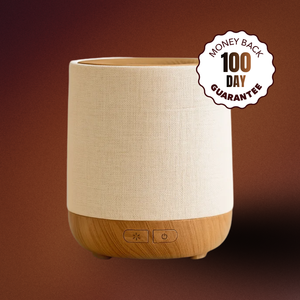
What the current research does not yet show is strong direct evidence in postpartum populations specifically. So approach it as a thoughtful complement to good sleep, nutrition, social support, and medical care — not a standalone solution. Used safely, consistently, and with the right precautions (especially if breastfeeding), 100% pure essential oils like clary sage can become a valued part of your postpartum self-care. Scentreat's Minimalist Wood Diffuser is 116 × 116 × 130 mm and weighs 0.64 kg — small enough to move between rooms as the day changes.
Related reads:
- Aromatherapy for Fertility Visualization and Manifestation
- 3 Evidence-Based Essential Oils That Support Fertility
- Lavender Oil: Calming Anxiety, Sleep Aid for Postpartum and Fertility
FAQs on Clary Sage & Postpartum Hormone Balance


