

How do essential oils help the body relax? Certain scents travel through the olfactory nerve directly to the amygdala and hippocampus — the brain's emotional and memory centers — without first passing through the thalamus, the relay station that sight, sound, and touch all go through. This direct pathway is why a familiar calming aroma can shift how a space feels almost instantly, helping the nervous system ease away from tension. Essential oils don't force relaxation, but used consistently they may help create an environment the body learns to associate with winding down.
For the specific oils behind this effect, see our sleep and relaxation guide.
In this guide, you will learn how scent affects the nervous system, which aroma types are often linked with relaxation, why a scent you stop noticing is a good sign, why consistency matters, and what safety guidelines to keep in mind. We also cover this in Ask a Fragrance Expert.
Why Essential Oils Can Help the Body Relax

Throughout the day, the body naturally accumulates physical and mental tension.
Many people notice this as:
- tight shoulders
- a busy or racing mind
- difficulty fully unwinding
Relaxation often begins when that tension gradually softens. Certain scents can support this process by helping the mind shift away from constant activity. When a scent feels comfortable and familiar, the body may respond by settling into a calmer state.
The change is indirect: the scent alters what the room is signaling, and the body responds to that signal rather than to the oil itself.
How Does Scent Actually Affect the Body and Mind?

Smell is the only sense with a direct line to the brain's emotional center. Scent signals travel through the olfactory nerve to the amygdala and hippocampus — the limbic system's core — without first passing through the thalamic relay that sight, sound, and touch all require.
Research shows that these smell signals are processed in brain regions involved in emotion and memory, which helps explain why a familiar aroma can influence how a space feels almost instantly (PMC).
In practical terms:
- The smell of baked food may recall warmth and home
- A familiar soap may bring back childhood calm
- The scent of plants or soft florals may feel naturally settling
When a scent appears repeatedly during quiet moments, the brain may begin to treat that setting as a signal to stand down — a learned association rather than a measured change in the body's chemistry. Essential oils have not been shown to reliably alter stress hormone levels, so this is best understood as a cue the brain builds over time through repetition, not something a single use produces.
For this reason, essential oils help shape the emotional atmosphere of a space rather than directly sedating the body. See also: Can Scents Really Affect Your Mood? for a deeper look at the mood–scent connection.
Which Scents Help the Body Relax Most?

When people discuss essential oils for a sleep diffuser, the scent profile often matters more than the specific bottle. Certain aroma styles naturally feel calmer and less stimulating.
Soft Floral Scents — Lavender
Light floral aromas often feel gentle and familiar. They are typically soft in intensity, smooth, and easy to blend into the background.
Lavender is the most studied example. Its primary compound, linalool, may modulate calming receptors in the brain. Some studies suggest lavender aromatherapy may support relaxation and improve sleep quality in adults, according to a review published on PubMed.
Deep Earthy Scents — Vetiver
Earthy aromas tend to feel grounding and stable. Many people describe them as steady, calming, and less stimulating than citrus or minty profiles.
Vetiver is a common example — its thick, smoky-earth character is often used in bedtime blends to anchor a diffuser mix.
Warm Resin-Like Scents — Frankincense
These scents are often connected with quiet, reflective environments such as meditation or evening relaxation. They are typically balanced, slightly woody, and subtle rather than sweet.
Frankincense is frequently used in slow wind-down rituals.
Rich Floral Scents — Ylang Ylang
Some floral scents feel deeper and emotionally soothing, especially after stressful days. Ylang ylang is the classic example — sweet, heavy, and far more intense than a light floral like lavender. Because it is strong, it is best used at a lower concentration or blended with lighter oils.
Across all scent types, the most helpful aroma is usually the one that feels familiar and comfortable to you. The goal is not to find a "perfect oil," but to create a calm sensory environment the body learns to trust.
 Pair it with 100% Pure Lavender Essential Oil
$14.99
Pair it with 100% Pure Lavender Essential Oil
$14.99
Why Scent "Disappearing" Is a Good Sign

Interestingly, the most relaxing scents are often the ones you stop noticing.
When a scent first appears, the brain pays attention. After a short time, if the aroma feels safe and familiar, the brain deprioritizes it — a process called olfactory adaptation. This is actually a good sign:
- The brain stops analyzing the input
- The environment feels predictable and safe
- The body can relax more easily
Because of this, relaxing scents usually work best when they remain subtle and stable, rather than strong or constantly changing. The goal is not to keep noticing the scent, but to let it quietly become part of the environment. For more on how bedroom scent works, see Why Does Your Bedroom Never Smell Fresh?
 Pair it with 100% Pure Chamomile Essential Oil
$14.99
Pair it with 100% Pure Chamomile Essential Oil
$14.99
Why Consistency Matters More Than Intensity

Many people expect essential oils to work instantly, so when the effect feels subtle the instinct is to add more oil. Intensity is rarely the missing piece. Scent works through gradual association built over repeated evenings, and a stronger dose on a single night does little to build that association — a gentle scent used every evening tends to do more than a heavy one used occasionally.
When the same aroma appears repeatedly during calm moments, the brain may begin linking that scent with relaxation. Over time, this association can help the body settle more easily — almost like a cue that the day is done.
Consistency usually means:
- Using the same scent each evening
- Introducing scent during similar moments (dimming lights, putting away your phone)
- Avoiding frequent changes between oils
Many people find that one gentle oil used consistently works better than rotating between many different ones.
If you're looking for a good place to start, the Deep Sleep Ritual set includes six calming essential oils curated specifically for evening use — a straightforward way to build the habit without guesswork. If sleep is only part of the picture, the wider range of essential oil kits also covers daytime calm and mood.
Pair it with 100% Pure Lavender Essential Oil
$14.99
Safety Notes and When to Talk to a Doctor
Important safety guidelines for using essential oils for sleep:
- Dilute before skin contact. All 100% pure essential oils must be diluted with a carrier oil (such as jojoba or sweet almond) before applying to skin — typically 1–2 drops per teaspoon of carrier oil for adults.
- Never diffuse in a room your cat cannot leave. Cats lack the liver enzyme needed to process many essential oil compounds. Diffusing in a room where your cat sleeps — especially eucalyptus, tea tree, or citrus — may cause toxicity. If you do diffuse, keep the concentration low, keep the room well ventilated, and always leave a door open so your cat can walk away.
- Essential oils are not a substitute for medical treatment. If sleep difficulties are persistent, affecting daily functioning, or accompanied by other symptoms (such as snoring, gasping, or excessive daytime tiredness), consult your doctor or a sleep specialist. The Sleep Foundation recommends professional evaluation for ongoing insomnia.
If you have a chronic health condition, are pregnant, or are using essential oils around infants, consult your healthcare provider before beginning any aromatherapy routine.
Conclusion
Essential oils can support relaxation by shaping the emotional atmosphere of a space. The mechanism is real — scent signals reach the amygdala and limbic system directly, bypassing the thalamic relay that every other sense has to pass through. Compounds like linalool in lavender may modulate calming pathways. But this works best when applied gently and consistently, allowing the brain to build a conditioned association between the aroma and winding down.
When used safely and regularly, essential oils can become one small, meaningful part of an evening routine that helps the body ease toward rest. If you want to see how to pair oils with the right diffuser, our guide on the best diffuser for sleep covers the hardware side in detail.
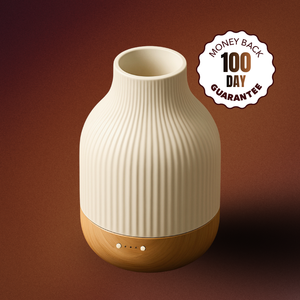
For a different kind of breathing relief, you may also find our post on using an essential oil diffuser for congestion useful. For the room this is actually happening in: Scentreat rates the Ceramic & Rubber Wood Diffuser at up to 30 m² (320 sq ft) from a 180 ml tank.
FAQs
Do essential oils actually relax the body?
Essential oils may support relaxation by influencing how calm and comfortable an environment feels. Scent signals travel directly to the amygdala and limbic system, the brain's emotional centers, which can influence the nervous system's response to a space. They don't sedate the body directly, but used consistently they may help create a calming association.
Which scent is best for relaxation?
Many people find soft floral or earthy aromas most calming — lavender is the most researched, with its compound linalool linked to calming receptor activity. Vetiver, frankincense, and ylang ylang are also commonly used for winding down. The best scent is ultimately the one that feels comfortable to you personally.
Are stronger scents better for sleep?
Not usually. Subtle scents that fade into the background are often more effective than strong ones. When a scent stops being consciously noticed (olfactory adaptation), the brain treats the environment as safe and familiar — which makes it easier to relax. Overpowering scents can be distracting or cause headaches.
How long does it take for scent to support relaxation?
Some people notice a calmer feeling within minutes of diffusing a scent they already find familiar. Any stronger effect is thought to come from association — the aroma becoming a cue that the evening is winding down — and that association is built through repetition rather than on a fixed schedule. There is no established timeline for it, so treat it as a habit you are building rather than a result you are waiting on. Using the same oil at the same time each evening is the simplest way to build that habit.
Should essential oils be used every night?
Yes, consistency is the key factor. Using the same scent regularly during your evening routine helps the brain associate that aroma with winding down. Occasional use tends to have less noticeable effect than a daily habit.
Is it safe to diffuse essential oils around pets?
Cats are particularly sensitive — they lack the liver enzyme that metabolizes many essential oil compounds, so diffusing near them can cause toxicity. Dogs are more tolerant but still sensitive to high concentrations. Always ensure good ventilation and give pets a way to leave the room. When in doubt, consult your vet before diffusing around animals.

