

Key Takeaways
BEST BUY PICKS
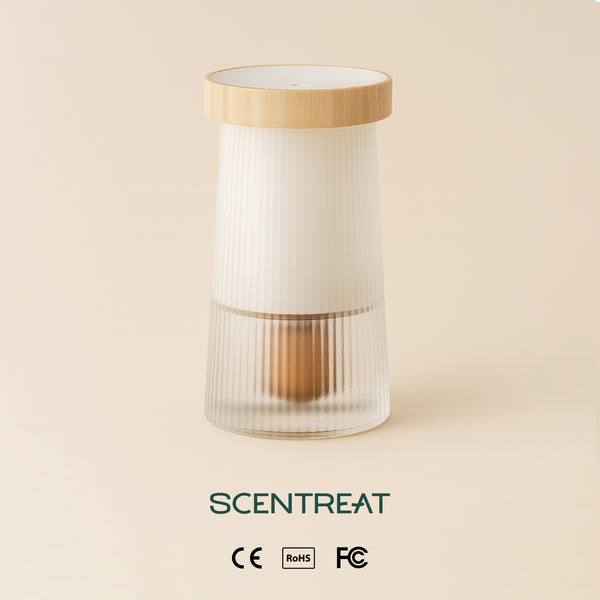
The best diffuser for sleep runs at under 30 dB, lets you shut off the LED completely, and holds a steady mist for 3–6 hours so you never have to get up to refill it. Pair it with 3–5 drops of lavender or chamomile in 100–300 ml of water, and you have a bedtime environment that fades into the background rather than demanding your attention. We cover this further in When to Use a Diffuser Before Bed.
Sleep onset is a neurophysiological transition — not a decorative moment. According to the Sleep Foundation, the body gradually shifts from alertness into deeper non-REM stages before restorative sleep begins. When light flickers, sound shifts, or scent fluctuates, the nervous system remains subtly alert. Even gentle variability can delay parasympathetic activation.
A sleep-friendly diffuser supports this transition by reducing sensory change. At night, predictability matters more than intensity.
Choosing & Using a Diffuser for Better Sleep
The best bedtime diffuser fades into the background: it runs quietly (under 30 dB), glows softly (or not at all), and gives you simple control over mist level and run time so your room feels calm rather than crowded. Many people find that a quieter, lower-light diffuser supports a more relaxing wind-down, and a gentle layer of a favorite essential oil may help set the mood for rest. This hub pulls together everything to look at before you buy, plus how to dial in your setup once it's on your nightstand.
Start with our guide to quiet diffusers for sleep, then fine-tune your routine with the best diffuser settings for sleep and learn when to use a diffuser before bed. Ready to shop? Compare our picks for the top diffusers for sleep and the best diffusers for the bedroom to match your space.
Why Most Diffusers Aren't Designed for Sleep

Most diffusers are created for daytime ambiance, not nighttime physiology.
They prioritize:
- Visible mist plumes
- Decorative LED lighting
- Color cycling
- Bright control panels
- Strong scent projection
These features work well in living rooms or open spaces. Bedrooms operate differently. At night, even subtle stimulation can delay sleep onset.
Common nighttime disruptions from standard diffusers include:
- Clicking sounds when mist cycles change
- Buzzing as water levels drop
- Indicator lights that cannot be fully disabled
- Intermittent bursts of scent
Individually, these may seem minor. But sleep is highly sensitive to change.
A sleep-focused diffuser is not built for display — it is built for disappearance.
Yet most consumer diffusers are optimized for visual impact and scent throw, not for sleep-stage stability. Bedrooms require a different design philosophy — one centered on nervous system regulation rather than aesthetic presence. For a closer look, read about Do Essential Oil Diffusers Really Help You Sleep?.
Why Overstimulation Makes Falling Asleep Harder

Falling asleep requires a neurological shift from sympathetic ("alert") to parasympathetic ("rest") dominance. This transition affects heart rate, muscle tone, cortisol levels, and melatonin release. Even small disruptions can interfere with this shift and delay sleep.
1. Sound Variability and Micro-Arousals
Quiet but inconsistent sounds can briefly activate the brain, even if you don't fully wake up. These subtle interruptions make it harder to move into deeper stages of sleep.
A diffuser that changes pitch, clicks between modes, or releases mist in pulses introduces ongoing environmental shifts. The brain naturally pays attention to signals that vary. When sound is steady and predictable, it can fade into the background. When it is irregular, the mind stays slightly alert.
2. Light and Circadian Signaling
Sound isn't the only factor. Light also plays a powerful role in how easily you fall asleep. Melatonin production is highly sensitive to light, especially blue and white wavelengths.
Research summarized by Harvard Health explains how even small amounts of blue-toned light at night can delay melatonin release and disrupt circadian timing.
Even small LEDs can delay melatonin release, increase the time it takes to fall asleep, and reduce perceived sleep depth.
A "soft glow" is still light. For optimal sleep conditions, darkness should be complete — not dimmed, not ambient. Off.
A sleep-friendly diffuser should support your circadian rhythm rather than interfere with it.
3. Sensory Load and Cognitive Monitoring
As you prepare for sleep, your brain continues monitoring the environment. Visible vapor, shifting light, or fluctuating scent intensity all add sensory input. The more stimulation present, the more the nervous system remains engaged.
When the environment feels consistent and uneventful, the body can disengage more easily. Effective sleep design prioritizes consistency over stimulation.
Key Features of the Best Diffuser for Sleep

Instead of asking which model is most popular, ask which features support nervous system regulation.
1. Quiet Operation & Minimal Light
At bedtime, even subtle mechanical noise can feel amplified in a dark, quiet room. Look for a diffuser rated under 30 dB — that's quieter than a whisper, genuinely undetectable once you're settled. A sleep-friendly diffuser should operate without drawing attention to itself:
- Near-silent motor function (under 30 dB)
- No clicking between modes
- No fluctuating or pulsing sound patterns
Light exposure matters just as much. Since melatonin is light-sensitive, nighttime devices should minimize visual stimulation. Choose a diffuser that:
- Allows full LED shut-off
- Avoids flashing or color-cycling modes
- Eliminates bright blue or white display lights
Darkness and quiet both signal safety to the nervous system.
2. Controlled, Low-Intensity Mist Output
Stronger is not better at bedtime. A 100–300 ml tank running on low mist lasts 3–6 hours — enough to carry you through the night without needing a refill. Sudden bursts of scent or heavy visible vapor can increase awareness instead of easing it.
A diffuser designed for sleep should provide:
- Gentle, steady mist
- Even aroma dispersion
- A subtle background presence
When scent remains consistent, the brain doesn't need to continually adjust. Stability supports relaxation.
3. Timer & Automatic Shut-Off
Bedtime rituals feel calming when they don't require ongoing attention. The goal is to set it and forget it. Helpful features include:
- Built-in timer options
- Automatic shut-off when water runs out
- Simple, intuitive controls
When a diffuser behaves predictably, it removes one more thing for your brain to manage — and that mental quiet matters.
4. Simple, Low-Stimulation Design
Design affects the atmosphere of a room. In a bedroom, a diffuser should blend into the background rather than become a focal point. Minimal, neutral designs support a calm environment. Dramatic mist plumes, glowing panels, or decorative light effects can subtly pull attention outward.
If you barely notice the diffuser once it's on, it's doing its job.
When these elements work together — quiet mechanics under 30 dB, full darkness, and stable 3–6 hour diffusion — the diffuser becomes less of a device and more of a background condition for rest. Browse our sleep & relaxation collection to compare models built for exactly this.
What Are the Best Oils for Sleep?
The diffuser is only half the equation. The right oil matters just as much. Three oils consistently come up in sleep research: lavender, chamomile, and bergamot — and the compound that links them is linalool, a naturally occurring terpene that may interact with GABA receptors in the brain to promote calm.
The Sleep Foundation notes that systematic reviews have found inhaled lavender may improve perceived sleep quality in adults. Chamomile and bergamot carry similar aromatic profiles and are often used as gentler alternatives or in blends.
Lavender — the go-to for a reason
Lavender's linalool content is well-studied for its calming effect on the nervous system. Use 3–5 drops per 100 ml of water on a low mist setting. It's the most forgiving oil for first-time diffuser users and sits well in any bedroom style. Try SCENTREAT lavender oil — 100% pure, no fillers.
Roman chamomile — softer and floral
Roman chamomile is milder than lavender with a warm, apple-like scent. It's a good choice for those who find lavender too sharp. Like lavender, it contains linalool and related esters that may gently encourage the body toward rest. Start with 3 drops in a 200 ml tank.
Bergamot — citrus-calm for light sleepers
Bergamot is citrus-forward but calming rather than energizing — the opposite of peppermint. Its high linalool and linalyl acetate content give it a rounded, settling quality. Use bergamot-free (FCF) bergamot if you have sensitive skin, though for diffusion in a bedroom that distinction matters less. A few drops blended with lavender is a popular evening combination.
A simple blend to start with
3 drops lavender + 2 drops chamomile in 150 ml of water on low mist for 60–90 minutes before sleep. Adjust the drops down if the scent feels strong — in a bedroom, subtlety is the goal. Browse our full oil collection to find all three.
Oils to Avoid Before Bed
Not every essential oil supports sleep. Some are stimulating by nature and can interfere with the parasympathetic shift your body needs at night. Avoid these in an evening diffuser:
- Peppermint — high menthol content is alerting; better for morning or focus work
- Rosemary — stimulates the nervous system; research suggests it may increase alertness and heart rate
- Eucalyptus — invigorating and good for congestion, but activating rather than calming at night
- Lemon & grapefruit — bright citrus oils are mood-lifting, which works against sleep onset
- Clary sage (in large amounts) — mild sedative in low doses, but heavy diffusion can be overwhelming
If you are pregnant, nursing, have asthma, or are diffusing near young children or pets, consult your healthcare provider or pediatrician before using any essential oil at night. When in doubt, keep diffusion short (30–60 minutes), ventilate the room, and start with the smallest amount.
How to Choose Based on Sleep Sensitivity

Sleep isn't one-size-fits-all. The way your nervous system responds at night determines whether a diffuser feels soothing or stimulating.
Light sleepers tend to notice subtle changes in sound, light, or scent. For them, lower mist settings, complete darkness, and a consistent oil choice help reduce sensory input and support faster relaxation.
Others benefit from repetition. Using the same scent each night can train the brain to associate that aroma with rest. Over time, this predictability makes falling asleep easier — as long as the experience remains steady.
For a quick reference:
| Best For | Prioritize |
|---|---|
| Light Sleepers | Ultra-quiet operation (<30 dB), lowest mist, LED off |
| Sensitive Noses | 3–4 drops in 200 ml; chamomile over lavender |
| Minimalist Bedrooms | Simple design, no visible glow |
| Ritual Builders | Stable 3–6 hr output, automatic shut-off, same oil nightly |
In the end, the best diffuser for sleep is the one that creates calm without drawing attention to itself.
How a Diffuser Fits Into a Calming Night Ritual

A diffuser works best as part of a consistent evening rhythm. Used gently and predictably, aroma can become a subtle cue that the day is ending.
Ask yourself:
- Does it behave the same way every night?
- Can it run without adjustment?
- Does it soften the room rather than stimulate it?
For sleep, diffusion should support a broader wind-down routine:
- Lower lights 60–90 minutes before bed
- Add 3–5 drops of a calming oil (lavender, chamomile, or bergamot) to 100–200 ml of water
- Set to low mist, turn off all LEDs
- Keep bedtime consistent
Turn it on before getting into bed. Then let the room settle. No brightness. No fluctuations. No sensory surprises.
Over time, the environment itself becomes the signal. A whisper-quiet ultrasonic diffuser supports this transition quietly — through consistency, not intensity. See the Quiet Ceramic & Rubber Wood Ultrasonic Diffuser for a model built around exactly these principles.
When a Diffuser May Not Be the Right Solution

Sleep health is built on simplification, not accumulation. Environmental tools can support sleep, but chronic insomnia often requires behavioral and cognitive approaches beyond product solutions.
The National Sleep Foundation notes that persistent sleep difficulties are best addressed through consistent sleep habits and evidence-based behavioral strategies. If you have ongoing trouble sleeping, speak with a healthcare provider — a diffuser is a complement, not a substitute, for professional care.
Even a well-designed sleep diffuser may not feel supportive if you experience:
- Headaches or nasal irritation
- Respiratory sensitivity
- Heightened bedtime anxiety
- Overwhelm from too many sleep interventions
Some users initially find themselves monitoring the device instead of relaxing — adjusting mist levels, noticing scent strength, checking the light. When intensity is reduced and settings remain consistent, the experience often changes. The scent becomes subtle enough to fade into the background, allowing the body to disengage naturally.
The difference is rarely the diffuser itself — it is the consistency of use. Sometimes better sleep comes from reducing inputs rather than adding them.
Quick Checklist: Choosing the Best Diffuser for Sleep
Choose a diffuser that offers:
- Near-silent, stable sound (under 30 dB)
- Complete LED shut-off
- No color cycling
- Low, steady mist output
- 100–300 ml tank with 3–6 hr runtime on low
- Adjustable intensity
- Automatic shut-off
- Minimal visible vapor
- Reliable nightly consistency
If you notice it constantly, it may not support rest. Pair it with the right oil — lavender, chamomile, or bergamot — and you have everything you need.
Conclusion

Sleep begins when the brain no longer feels the need to monitor its surroundings. When light is fully off, sound stays under 30 dB, and a few drops of lavender or chamomile diffuse gently through 100–300 ml of water over 3–6 hours, the nervous system can transition naturally from alertness into rest.
A well-designed sleep diffuser does not perform at night — it recedes into the background, maintaining a predictable environment that requires no attention. When chosen thoughtfully, it doesn't add stimulation to your bedtime routine; it removes friction from the process of falling asleep.
In a culture built around constant input and sensory overload, simplifying the sleep environment may be one of the most meaningful upgrades you can make. Explore our sleep & relaxation diffuser collection or browse essential oils for sleep to build your evening ritual.
More Diffusers for Sleep Guides
- Best Diffuser for Bedroom: What Actually Works for Sleep
- Best Diffuser Settings for Sleep: Mist Level, Timing & Airflow Guide
- 5 Best Essential Oil Diffusers for Sleep and Relaxation
- 5 Best Essential Oil Diffusers for Bedroom Sleep 2026 Buyer Guide
- Quiet Diffuser for Sleep: What Actually Works
- When to Use a Diffuser Before Bed: Best Timing for Better Sleep
Frequently Asked Questions
Is a stronger diffuser better for sleep?
No. Stronger output can increase sensory awareness. Low, steady diffusion — 3–5 drops in 100–200 ml on the lowest mist setting — is generally more supportive for sleep onset.
Should I run a diffuser all night?
Not necessarily. Many people prefer a 1–2 hour timed session to fall asleep, then let it shut off automatically. Running it all night in a small room can over-saturate the air.
Can diffuser light affect sleep?
Yes. Bright or blue-toned lights may interfere with melatonin release. A diffuser with full LED shut-off is ideal — even a faint glow is enough to disrupt circadian signaling.
Are ultrasonic diffusers better for sleep?
Ultrasonic diffusers typically run under 30 dB with no heat, making them quieter and safer than heat-based or nebulizing diffusers. That combination makes them the best fit for bedrooms.
What essential oil is best for sleep?
Lavender is the most studied. Its active compound, linalool, may interact with GABA receptors to promote calm. Roman chamomile and bergamot are close alternatives with similar aromatic profiles. Avoid peppermint, rosemary, or eucalyptus at bedtime — those are stimulating, not sedating.
Can a diffuser help if I have trouble falling asleep?
A diffuser may support a calmer sleep environment, but it is not a treatment for insomnia. Persistent sleep difficulties should be addressed through healthy sleep habits and professional guidance. If sleep problems are ongoing, speak with your healthcare provider.
Does diffuser mist affect indoor air quality at night?
In moderate, controlled use, ultrasonic diffusion primarily disperses micro-droplets of water and essential oil. However, excessive mist in small, unventilated rooms may increase humidity levels. Balanced, low-intensity diffusion — 100–300 ml tank on low mist — is generally preferable for sleep environments. If you want to go deeper, see our guide to Essential Oil Diffuser for Sleep.