

Stuffy air and blocked sinuses make every room feel heavier than it needs to. An essential oil diffuser won't clear congestion the way a decongestant does — it isn't a medical treatment — but diffusing certain oils may help you feel like you can breathe more easily, making your space feel lighter and more comfortable while your body recovers. For persistent congestion, please consult a doctor.
Output strength varies a lot by technology — compare the diffuser types before picking one for a stuffy room.
In this guide, Scentreat will walk through which oils are most commonly used, how many drops to use, the best blends and drop ratios, and how to use everything safely.
How Does a Diffuser Help with Congestion?

A diffuser doesn't treat the underlying cause of congestion. What it does is disperse aromatic compounds — like the 1,8-cineole found in eucalyptus or the menthol that gives peppermint its cooling bite — into the air. According to NCCIH, research suggests inhaled eucalyptus may help support a more comfortable breathing sensation.
The result is an environment that feels lighter and easier to breathe in — not a cleared airway in the clinical sense, but a noticeably more comfortable one.
Ultrasonic diffusers add a light mist that helps counter dry air — especially helpful in air-conditioned rooms where dryness can make stuffiness feel worse.
Which Essential Oils Work Best for Congestion?

| Oil | What it does for stuffy air | Drops per 100 ml | Caution |
|---|---|---|---|
| Eucalyptus | Sharp, cooling (1,8-cineole) — the strongest sense of open airflow | 2 | Not around children under 2, or cats |
| Peppermint | Menthol cooling, immediate but intense | 1–2 | Not around children under 2, or cats; pair with softer oils |
| Tea tree | Clean, slightly medicinal; balances stronger oils | 1 | Keep away from cats and dogs |
| Rosemary | Herbal and sharp; helps when congestion comes with fog | 1–2 | Short sessions |
| Lemon | Light citrus that brightens heavier oils | 1–2 | Citrus needs caution around cats |
| Lavender | Not a clearing oil — softens evening blends so you can rest | 1–2 | — |
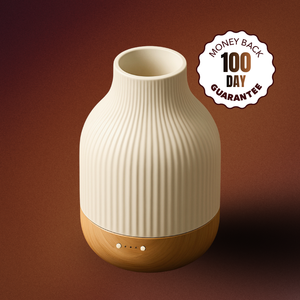
Totals stay at 3–5 drops per 100 ml of water: Scentreat's Ceramic & Rubber Wood Diffuser holds 180 ml, so 5–9 drops fills it at the same strength. The blends further down give exact combinations.
Certain oils have fresh, cooling, or herbaceous aromatic profiles that help the air feel cleaner and more open. The key is choosing oils you can actually breathe comfortably — not just the strongest ones.
Eucalyptus
The go-to oil for congestion. Its sharp, cooling aroma — largely from the compound 1,8-cineole — creates a strong sensation of clearer airflow. It works best in small amounts; too much in a closed room can feel overpowering. Start with 2 drops.
Peppermint
Peppermint's menthol-like compounds give an immediate cooling sensation when inhaled, which can help the air feel less stuffy. Because of its intensity, it pairs best with softer oils rather than being used alone at full strength. 1–2 drops is usually plenty.
Tea Tree
A clean, slightly medicinal scent that helps freshen the environment. Useful in blends to balance stronger oils like eucalyptus or peppermint without adding more cooling intensity.
Rosemary
A herbal, slightly sharp aroma that can support a clearer, more alert feeling — especially useful when congestion comes with mental fog or fatigue.
Lavender
Not a clearing oil, but plays an important role when congestion disrupts sleep. Lavender helps create a calmer environment that makes it easier to wind down and rest despite feeling stuffed up.
Lemon
A light, citrusy scent that brightens blends and makes stronger oils feel more balanced. Good for daytime use when you want freshness without heaviness.
Safety — eucalyptus & peppermint around young children and cats: Eucalyptus and peppermint are not recommended for use around children under 2 years old (and should be used with caution around children under 5). Their strong aromatic compounds can be too intense for young airways. Keep diffusion sessions short and ensure the room is well-ventilated. Cats are far more sensitive than people: they lack the liver enzyme (glucuronyl transferase) that clears the phenols and monoterpenes in essential oils, so tea tree and citrus oils like lemon — both used in blends on this page — need the same caution as eucalyptus and peppermint. Only diffuse in a well-ventilated room your cat can leave at will; never run a diffuser behind a closed door, and keep the oil bottles and the water tank out of reach so nothing gets licked. If in doubt, consult your pediatrician or vet before diffusing.
Choosing the Right Oils Matters
The quality and consistency of essential oils affects how your blends actually perform. Oils that are too harsh or inconsistently concentrated can make the air feel overwhelming instead of comfortable. SCENTREAT 100% pure essential oils are formulated to blend smoothly — important when dealing with congestion or respiratory sensitivity.
 Pair it with 100% Pure Eucalyptus Essential Oil
$14.99
Pair it with 100% Pure Eucalyptus Essential Oil
$14.99
Effective Diffuser Blends for Congestion (With Drop Ratios)

Using a single oil can help, but combining oils creates a more balanced, comfortable experience. Here are the most effective blends — with exact drop counts so you don't have to guess.
General rule: 3–5 drops total for most diffusers. The counts below are for a standard 100–200 ml tank. Scale down for smaller tanks.
Recommended Congestion Blend (Most Popular)
- Eucalyptus — 2 drops
- Peppermint — 1 drop
- Lemon — 1 drop
Add to 100 ml of water. Run for 30–45 minutes, then take a break. Repeat 2–3 times throughout the day as needed. This is the go-to starting point — cooling, fresh, and not overwhelming.
Cooling Relief Blend
Eucalyptus (2) + peppermint essential oil (2) + Tea Tree (1)
Strong and sharp. Best for short 20–30 minute sessions when you need a quick reset. Open a window slightly before running this blend in a small room.
Gentle Breathing Blend
Lavender (2) + Eucalyptus (2)
A softer evening option. The lavender takes the edge off eucalyptus's sharpness, making this easier to run while you rest or try to sleep.
Fresh Air Blend
Lemon (2) + Eucalyptus (2) + rosemary essential oil (1)
Lighter than mint-based blends. Ideal for daytime use or when you want freshness without the intensity of peppermint.
Balanced Daily Blend
Eucalyptus (2) + Lavender (1) + Lemon (2)
Designed for longer sessions. Fresh and comfortable without being too sharp — works well in living spaces during the day.
Stronger Focus Blend (Short Use Only)
Peppermint (2) + Rosemary (2) + Eucalyptus (1)
Sharper and more stimulating. Best in short bursts — 15–20 minutes — when congestion feels heavy and distracting. Not ideal for evening use.
Scentreat Signature Relief Blend
Eucalyptus (2) + Lemon (2) + Lavender (1)
Clear, light, and balanced without the harsh intensity of heavier mint combinations. Eucalyptus provides the opening sensation, lemon adds freshness, and lavender softens the overall experience for better comfort. Ideal for everyday use, especially in bedrooms or personal spaces.
Tips for Better Results
- Use 3–5 drops total — more drops don't improve the effect
- Run for 30–45 minutes, then pause — short sessions outperform continuous diffusion
- Adjust for tank size, not room size — keep the ratio at 3–5 drops per 100 ml of water and fill the tank fuller for a bigger room, rather than over-dosing a small fill
- Keep scent light, especially in small or closed spaces
How to Use a Diffuser for Congestion — Step by Step

The biggest mistake people make is using too much oil for too long. Here's a setup that actually works.
Step 1: Start Light
3–5 drops total is enough for most diffusers. More oil doesn't improve results — it usually makes the air feel heavier, which is the opposite of what you want when congested.
Step 2: Use 30–45 Minute Sessions
Run your diffuser for 30–45 minutes, then pause for at least 30 minutes before running again. Short sessions keep the scent fresh and effective. Running continuously can cause scent fatigue — where you stop noticing the aroma — and may be too intense for sensitive airways. For everyday use with a large room, adjust your drop count upward rather than extending session time.
Step 3: Position the Diffuser Correctly
Place it at table height, a few feet away from where you're sitting or sleeping — not directly next to your face. Avoid corners where airflow is poor, as scent can concentrate uncomfortably.
Step 4: Allow Light Ventilation
Crack a window or door slightly. This keeps air circulating and prevents the scent from becoming too concentrated — especially important with strong oils like eucalyptus and peppermint.
Step 5: Be Consistent
Using the same blend regularly makes the experience feel more natural and easier to settle into over time, rather than distracting.
Step 6: Use a Diffuser Built for Balance
The diffuser matters too. A whisper-quiet ultrasonic diffuser delivers a soft, even mist that lets you control scent strength without constant adjustment — especially important when dealing with congestion or any sensitivity to strong aromas.
See our guide on essential oil diffuser recipes for more blend ideas beyond congestion.
When to Avoid Using Essential Oils

Essential oils can help create a more comfortable breathing environment, but there are situations where extra caution — or skipping diffusion entirely — is the right call. We cover this further in Essential Oils for Anxiety Diffuser.
- Avoid strong, concentrated oils if you're sensitive to scent or prone to headaches
- Don't diffuse in small, sealed spaces without ventilation — scent builds up fast
- Use caution if you have asthma or chronic respiratory conditions — some oils may feel too intense
- Cats: cats can't metabolize the phenols and monoterpenes in essential oils, so tea tree and citrus — including the lemon in several blends above — call for the same caution as eucalyptus and peppermint; diffuse only in a ventilated room your cat can walk out of, never behind a closed door Dogs: less sensitive than cats, but undiluted tea tree is neurotoxic to dogs — keep bottles and the diffuser tank out of reach so nothing gets licked, and never apply oils to a pet's coat
- Children under 2: eucalyptus and peppermint are not recommended; for young children, always consult your pediatrician before diffusing
- Do not use essential oils as a substitute for medical treatment if congestion is severe, persistent, or accompanied by fever — see a doctor
If you're using a diffuser overnight, check out Is It Safe to Sleep With a Diffuser on All Night? for guidance on safe overnight use.
Which Diffuser Works Best for a Stuffy Bedroom?
For congestion the diffuser matters almost as much as the oil, because the goal is a gentle, steady mist you can breathe through the night — not a burst of concentrated scent.
- Bedroom, overnight: a water-based ultrasonic model. The cool mist adds a little moisture to dry winter air along with the oil. Scentreat's Ceramic & Rubber Wood Diffuser runs a 180 ml tank at 27.3 dB(A) and covers 320 sq ft — 8–10 hours on intermittent mode, so it lasts the night without waking you.
- Living room or open kitchen: the Minimalist Wood Diffuser's 200 ml tank covers 375 sq ft, so one unit reaches the whole space during a daytime session.
- Desk, bedside or car, short bursts: a waterless diffuser such as the Waterless Ceramic Diffuser & Night Light (up to 40 hours on one oil bottle) or the CalmRide (10–20 ml bottle, up to 60 hours per charge) atomizes neat oil — stronger and faster, which suits a 15–20 minute reset but not an all-night run in a small room, and never in a room a cat shares.
Whichever you use, keep the room ventilated and the sessions to the 30–45 minutes described above; if breathing feels worse rather than easier, stop and air the room.
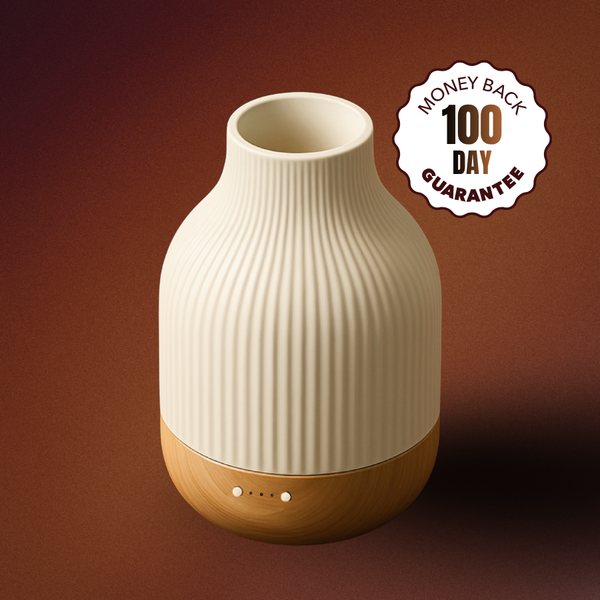
Whisper-quiet at 27.3 dB(A), made for sleep
Quiet Ceramic Essential Oil Diffuser for Bedroom & Sleep★★★★★ 4.92/5 · Verified reviews
Limited Offer — Free Oils + eBooks View full product detailsA Comfortable Breathing Environment — The Scentreat Way

When you're congested, both oil quality and diffuser performance matter more than usual. A setup that delivers too much scent at once — or uses low-quality oils with inconsistent strength — can make the air feel worse, not better.
The Scentreat Essential Oil Diffuser delivers a soft, even ultrasonic mist that gives you real control over scent intensity. Key features:
- Balanced ultrasonic diffusion — gentle, consistent mist
- Better scent control without sudden strong bursts
- Quiet operation — ideal for rest and recovery
- Simple, low-maintenance design for daily use
Scentreat Essential Oils
Effective blends start with oils that are clean, consistent, and easy to combine. Essential oils from SCENTREAT are 100% pure — no fillers, no synthetics — so a two- or three-oil blend stays balanced instead of tipping sharp or heavy on you.
Why the Combination Matters
Diffuser performance and oil quality work together. With the right setup, you get a more stable, breathable scent environment — fresher and more comfortable — especially when you need it most. Try it risk-free with our diffuser with 100-day money-back guarantee.
Conclusion
Using an essential oil diffuser for congestion is about creating a comfortable, balanced environment — not stronger scent. Start with 3–5 drops, run 30–45 minute sessions, and choose oils with the right aromatic profile for how you're feeling. The blend recipe above (Eucalyptus 2 + Peppermint 1 + Lemon 1 in 100 ml) is a reliable starting point. And if congestion is persistent or getting worse, see a doctor — diffusion is supportive, not a substitute for care.
Frequently Asked Questions
Can a diffuser help with congestion?
It does not treat congestion directly but helps create a more comfortable breathing environment — making the air feel lighter and easier to breathe in while your body recovers. It is not a medical decongestant or treatment.
What essential oils are best for sinus relief?
Eucalyptus, peppermint, and lemon are the most commonly used for their fresh, cooling, and clearing aromatic profiles. Tea tree and rosemary also work well in blends. Start with a small number of drops — 3–5 total — and adjust from there.
How many drops should I use for congestion?
Usually 3–5 drops total is enough for most diffusers (100–200 ml tank). For the recommended congestion blend: Eucalyptus (2) + Peppermint (1) + Lemon (1) in 100 ml water. More drops don't improve the effect and can make the air feel too heavy.
How long should I run a diffuser when I'm congested?
Run for 30–45 minutes at a time, then pause for at least 30 minutes before the next session. Two to three sessions spread throughout the day is a good rhythm. Avoid running the diffuser continuously all day — this can cause scent fatigue and may be too intense for sensitive airways, reducing the benefit over time.
Can I diffuse oils overnight for congestion?
Short sessions are generally more comfortable and effective than continuous overnight diffusion. If you want to use a diffuser while sleeping, run it for 30–45 minutes as you wind down rather than leaving it on all night. See our full guide: Is It Safe to Sleep With a Diffuser on All Night?
Is it safe to use essential oils when sick?
Yes, when used in moderation and with proper ventilation. Avoid eucalyptus and peppermint around children under 2 years old or around cats. If symptoms are severe, persistent, or include a high fever, see a doctor — diffusion is supportive care, not medical treatment.

