

The short answer: diffusing lavender, bergamot, or frankincense may support a calmer headspace — but aromatherapy is a complementary tool, not a treatment for anxiety disorders. If anxiety is persistent or disruptive, please consult a mental-health professional. For those using it as part of a daily self-care routine, consistency matters more than intensity.
In this guide, Scentreat walks you through how calming diffuser blends work, which oils are most commonly used, drop ratios that actually make sense, and how to build a routine that feels natural rather than forced. If the machine comes first for you, start with choosing the best essential oil diffuser.
How Essential Oils Affect Anxiety

While essential oils may seem simple, their effects are closely linked to how the brain processes scent and emotion. The connection lies in the way our sense of smell is directly wired to the brain's emotional center.
When you inhale essential oil molecules, they travel through the nasal passage and stimulate the olfactory system. This system sends signals straight to the limbic system — the part of the brain responsible for emotions, memory, and stress response.
Within seconds, this process can influence how your body feels:
- • The amygdala (stress response center) is one of the regions that receives those scent signals — which may be part of why a familiar calming scent can take the edge off a heightened "alert" state
- Stress signals may begin to ease, supporting a calmer internal response
- Breathing patterns can feel more relaxed, which contributes to an overall sense of comfort
What the research says: Early studies suggest that inhaled lavender — particularly its active compound linalool — may help support a calmer nervous system response, though most of those trials are small and the findings are far from settled. The National Center for Complementary and Integrative Health (NCCIH) describes aromatherapy as a widely used relaxation practice, but says there isn't enough rigorous evidence to know whether it works for most health conditions, and advises against using complementary approaches in place of conventional care. Use it as supportive self-care, not a substitute for professional treatment.
Rather than acting as a direct treatment, essential oils help shape the environment and sensory experience around you. Over time, consistent use can make certain scents feel familiar and calming, helping your body associate them with relaxation and rest.
This is why simple, consistent diffuser routines often feel more effective than strong or occasional use.
 Pair it with 100% Pure Lavender Essential Oil
$14.99
Pair it with 100% Pure Lavender Essential Oil
$14.99
Best Calming Essential Oils

Choosing the right calming essential oils is the foundation of a good diffuser setup. While many oils smell pleasant, a smaller set is consistently used in aromatherapy for relaxation because of how their scent compounds interact with the nervous system.
The most effective calming oils usually fall into three groups: floral (soothing), citrus (balancing), and woody (grounding).
Lavender — The Core Calming Oil
Lavender is one of the most studied and widely used oils for relaxation. Its soft floral scent — driven by the compound linalool — is known for helping reduce tension and supporting a calmer state of mind.
Starting point: 3–4 drops per 100 ml of water. This is the recommended starting ratio; increase gradually based on comfort. It pairs well with almost every other oil and creates a stable, familiar base for most anxiety blends.
Chamomile — Gentle Emotional Soothing
Chamomile has a slightly sweet, soft aroma that feels naturally calming and comforting. It's often used when stress feels more emotional or overwhelming rather than purely mental.
Use 2–3 drops per 100 ml. Compared to lavender, chamomile feels lighter and more delicate — ideal for evening use or sensitive environments.
Bergamot — Calm + Uplift Balance
Bergamot is a unique citrus oil because it feels both uplifting and calming at the same time. Unlike sharper citrus oils, its scent is softer and more rounded, helping reduce tension without feeling too stimulating.
Use 2–3 drops per 100 ml. This makes it especially useful during the day when you want to feel calm but still functional.
Frankincense — Deep Grounding Effect
Frankincense has a warm, slightly resinous scent that feels grounding and steady. It's often used in meditation or mindfulness practices because it helps slow down the overall sensory experience.
Use 1–2 drops per 100 ml. It works best when paired with lighter oils like lavender or bergamot to avoid feeling too heavy.
Ylang Ylang — Comforting and Relaxing
Ylang ylang has a rich floral scent that creates a sense of comfort and emotional softness. It's commonly used when anxiety feels connected to tension or restlessness.
Use 1 drop per 100 ml maximum. Because of its intensity, it's best added in small amounts to balance a blend rather than used alone.
Citrus Oils (Lemon, Orange) — Light Mood Support
Citrus oils like lemon or sweet orange are not deeply calming on their own, but they play an important role in lifting mood and preventing blends from feeling too heavy.
They add brightness and freshness, helping create a more balanced and breathable environment. 2–3 drops per 100 ml is the usual range.
In practice, the most effective diffuser setups combine:
- A calming base (lavender, chamomile)
- A balancing layer (bergamot, citrus)
- A grounding note (frankincense, wood oils)
This layered approach creates a scent that feels natural, stable, and comfortable over time. We cover how to extend this into a full evening ritual in our guide on diffuser timing before bed.
Choosing the Right Oils Matters
Not all essential oils perform the same when diffused. Oils that are too sharp, inconsistent, or overly strong can make the environment feel more stimulating instead of calming.
SCENTREAT 100% pure essential oils are designed to blend smoothly, helping create a softer and more balanced scent — especially important when building a calming diffuser routine.
Oils That May Increase Alertness — Use Sparingly for Anxiety
Not every oil belongs in an anxiety-relief blend. Some oils are genuinely useful for focus and energy — but in higher amounts, that stimulating effect can work against relaxation and, for some people, heighten feelings of restlessness or edginess.
Use these at low doses or avoid them in anxiety blends:
- Peppermint — its menthol compounds are invigorating and stimulating; 1 drop is usually the ceiling if you include it at all in a calming blend
- Rosemary — supports mental clarity and alertness; better suited to focus routines than wind-down moments
- High-dose citrus (lemon, grapefruit) — brightening in small amounts, but large doses (5+ drops) can feel sharp and agitating rather than balancing
- Eucalyptus — cooling and clearing, which can be stimulating; works well for congestion blends but may not suit everyone's anxiety routine
The takeaway: for most adults these oils aren't "bad" — they're just the wrong tool for this particular moment. One exception isn't about mood at all: keep peppermint and eucalyptus out of any diffuser running in a room with a child under 2, because menthol and 1,8-cineole can trigger reflex breathing problems at that age. Otherwise, save peppermint and rosemary for your focus and energy collection, and keep anxiety blends anchored to the softer notes.
Anxiety Relief Diffuser Blends

The most effective anxiety diffuser blends aren't the strongest — they're the most balanced. A good blend should feel smooth, stable, and easy to stay with over time, rather than sharp or overwhelming.
Instead of mixing too many oils, the best results usually come from combining just a few well-matched notes: a calming base, a light balancing layer, and a grounding finish. All ratios below are for a 100 ml water tank.
Deep Calm Blend (Evening Reset)
Lavender (3 drops) + Chamomile (2 drops) + Frankincense (1 drop)
Designed for slowing down both mentally and physically. The soft floral notes ease tension while the warm base creates a deeper sense of calm — ideal before sleep or during quiet moments.
Soft Balance Blend (Daytime Calm)
Bergamot (3 drops) + Lavender (2 drops) + Ylang Ylang (1 drop)
A smoother, more balanced blend that reduces tension without making you feel heavy or sleepy. Well suited for workspaces or daytime routines where you still need clarity and focus.
Grounding Blend (Stress Reset)
Frankincense (2 drops) + Cedarwood (2 drops) + Orange (2 drops)
Steady and centered. The woody base creates a sense of stability, while a hint of citrus keeps the scent from becoming too dense or overwhelming.
Clean Comfort Blend (Simple & Daily)
Lavender (3 drops) + Lemon (2 drops)
Minimal but effective. Light, fresh, and calming at the same time — perfect for everyday use when you want something easy and consistent.
Scentreat Signature Calm Blend
Lavender (3 drops) + Bergamot (1 drop) + Frankincense (1 drop)
This signature blend is designed to feel effortless and balanced from the first use. It combines softness, brightness, and grounding into one smooth scent that works across different moments — morning, work, or evening wind-down.
Start with 3–5 drops total and adjust gradually. The best blends are the ones you can stay with comfortably — not the ones you notice the most.
If you'd rather skip the mixing, the Quiet Mind™ Daily Calm set comes with 6 pre-selected calming oils that work well together straight out of the box. If evenings are your focus instead, the other Ritual Kits include sleep and wind-down sets.
Daily Diffuser Routines for Anxiety Support

Creating a calming routine with a diffuser doesn't have to be complicated. Small, intentional moments throughout the day can make a noticeable difference in how your space feels and how your body responds to stress.
Instead of diffusing randomly, try pairing scent with simple daily activities. This helps your mind associate certain aromas with relaxation, making the effect feel more natural over time.
- Start your morning gently. Use a light, uplifting blend like bergamot and lavender while getting ready — it creates a calm, steady start instead of a rushed one.
- Reset during work or study breaks. Run your diffuser for 30 minutes with a soft, balanced blend to reduce tension and clear your mind without making you feel sleepy.
- Create a wind-down ritual in the evening. Use calming oils like lavender or chamomile while reading, stretching, or simply slowing down before bed.
- Pair scent with relaxation activities. Diffuse while journaling, listening to music, or doing light meditation to reinforce a sense of calm.
- Keep sessions short and consistent. 30–60 minutes at a time is enough — continuous diffusion isn't necessary and can feel too heavy over time.
No matter how you use it, the goal is a routine that's simple and repeatable. Even a few minutes of consistent use can make your space feel calmer and more supportive. For more ideas on the evening side, see our post on essential oil diffuser recipes.
Tips for Best Results
Getting the most out of your diffuser isn't about using more oil — it's about balance and consistency. A few simple habits make the biggest difference:
- Use a small number of drops to avoid overwhelming the space — lighter scents are more breathable
- Choose well-balanced blends instead of sharp or overly strong combinations
- Run your diffuser in short sessions rather than continuously to prevent scent buildup
- • Keep your space lightly ventilated and leave the door open — it helps the aroma spread evenly, and it lets pets walk out if they want to. This matters most for cats: they can't metabolize the compounds in citrus, eucalyptus, peppermint and tea tree oils, so never run a diffuser in a closed room a cat can't leave, and never apply oils to their fur
- Clean your diffuser regularly to maintain consistent mist and prevent oil residue buildup

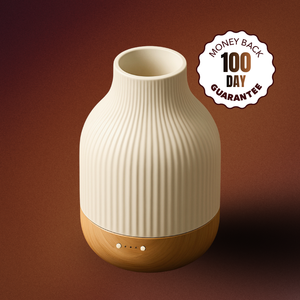
Handcrafted ceramic essential oil diffuser for bedroom and sleep: quieter than a whisper (27.3 dB, lab-test...
Why Scentreat Diffuser Outperforms Traditional Diffusion Methods

A calmer scent experience starts with how it's delivered. The Ceramic & Rubber Wood Diffuser is designed to provide a soft, consistent mist — helping essential oils feel more comfortable and easier to use in everyday spaces.
Understanding how to use essential oils for anxiety also means understanding the machine: the way a diffuser turns oil into scent decides how a blend lands in a room. Here is how the main types differ:
- Strong-output diffusers — deliver intense scent quickly, but can feel overwhelming and difficult to control in smaller or personal spaces.
- Waterless diffusers — run on undiluted oil instead of water, so the scent carries further and there is no tank to top up; the trade-off is a concentrated output, which suits short timed cycles better than running all evening.
- Heat diffusers — simple and affordable, but can alter oil quality and produce inconsistent scent over time.
- Basic diffusers — common and easy to use, though some models may produce uneven mist and unstable scent distribution.
The SCENTREAT diffuser stands apart with balanced ultrasonic mist, smooth scent distribution, quiet operation, and low-maintenance design — creating a calm, controlled environment that supports everyday relaxation.
If you're looking to create a calmer space with less effort, browse the non-toxic essential oil diffuser range or pair it with relaxing diffuser oils to build a routine that actually fits your day.
A Note on Persistent Anxiety
Aromatherapy and diffuser routines can be a gentle, enjoyable part of a self-care practice — and for many people, they help create a sense of calm in everyday moments. But they are not a treatment for anxiety disorders.
If you experience persistent, recurring, or severe anxiety, please reach out to a qualified mental-health professional. Therapy, counseling, and medical support are the appropriate tools for ongoing anxiety — scent can complement that care, but it can't replace it.
Conclusion
Essential oils for anxiety work best with consistency, not intensity. A simple diffuser routine — anchored by lavender, bergamot, or frankincense at sensible drop ratios — can help create a calm, balanced environment that supports relaxation as part of your daily life. Keep the blends soft, the sessions short, and the routine repeatable.
Frequently Asked Questions
Do essential oils help with anxiety?
They don't treat anxiety directly, but they can support a calmer environment. When used consistently, certain scents may help you feel more relaxed and less tense. If anxiety is persistent or severe, consult a mental-health professional.
What oils are best for anxiety in a diffuser?
Lavender, chamomile, bergamot, and frankincense are the most commonly used. Blending a few oils usually works better than using just one — try a soft base (lavender), a balancing layer (bergamot), and a grounding finish (frankincense).
How many drops should I use?
About 3–5 drops total per 100 ml of water is a good starting point. For individual oils: lavender at 3–4 drops, bergamot at 2–3 drops, frankincense at 1–2 drops. Start on the lower end and adjust based on comfort.
How long should I diffuse?
30–60 minutes per session is usually enough. Continuous use isn't necessary and can feel too strong over time — short, consistent sessions are more effective.
Can I use essential oils every day?
Yes, daily use is fine when kept light and consistent. Simple routines often work best. If you notice any irritation or sensitivity, reduce the number of drops or take a break for a day.
Are there oils I should avoid for anxiety?
Some oils are stimulating and may increase alertness rather than calm it — peppermint, rosemary, and high-dose eucalyptus or citrus can have this effect. Peppermint, rosemary and eucalyptus are the stimulating ones — they may increase alertness rather than calm it, so keep them out of your anxiety blends, or use no more than 1 drop if you want a hint of freshness. Citrus is a different case: lemon, orange and bergamot sit comfortably at the 2–3 drops used in the blends above, and only turn sharp and agitating at high doses (5+ drops). Peppermint and eucalyptus should also be left out completely when a child under 2 is in the room.

