

Introduction
Quick answer: Lavender essential oil — inhaled via diffuser or direct inhalation — may help ease anxiety, support calmer sleep, and reduce the stress load that commonly disrupts postpartum recovery. Research suggests inhaled lavender may improve perceived sleep quality and reduce situational anxiety. In practice, most people describe feeling calmer within 10–20 minutes of inhaling it, and notice steadier sleep after 1–2 weeks of nightly use — these are commonly reported timelines rather than results measured in a trial. It is a complementary support, not a replacement for medical care. If you are pregnant, breastfeeding, or trying to conceive, consult your healthcare provider before adding any essential oil to your routine.Lavender essential oil is among the most researched natural remedies for easing anxiety and improving sleep. For women navigating the postpartum period or hoping to conceive, these two domains — stress and rest — often determine how smoothly the body and mind recover. Sleep deprivation, hormonal shifts, and emotional stress can impede recovery after birth or affect hormonal rhythms during preconception.
This article presents an evidence-informed overview of lavender's core actions, expected timelines for benefits, and safe, practical routines suitable for a busy mother's life. For a broader foundation, see our Postpartum Recovery 101 guide. And if you want to go deeper on oil safety in general, read about Safe Essential Oils for Pets & Kids.
By understanding lavender's mechanisms, practical uses, and safety considerations, you can integrate it as a complementary tool alongside medical guidance.
Why Stress & Sleep Matter in Postpartum and Fertility

The postpartum period and fertility journey are both highly sensitive phases of life. High stress and poor sleep can disrupt the endocrine system, affecting mood regulation and energy levels:
-
Stress hormones (e.g., cortisol) can inhibit reproductive signaling and interfere with recovery.
-
Restorative sleep supports hormonal repair, immune resilience, and emotional stability.
-
Targeted relaxation practices enhance adherence to healthy routines and improve coping strategies.
In postpartum women, sudden drops in estrogen and progesterone combined with night-time awakenings intensify irritability, anxiety, and fatigue. For women trying to conceive, chronic stress may create conditions that are harder on the body — which is one reason relaxation practices are widely recommended. Strategies that lower cortisol and enhance restorative sleep are valuable for both maternal recovery and general well-being. We cover this further in our Geranium Oil guide.
How Lavender Works (Mechanisms of Action)

Lavender contains linalool and linalyl acetate, aroma compounds that act directly on the limbic system — the brain's emotional hub. The mechanisms include:
-
Olfactory–limbic activation: Inhalation of lavender stimulates olfactory pathways, which communicate with the limbic system, modulating emotional tone and mental clarity.
-
Autonomic balance: Lavender encourages parasympathetic (rest-and-digest) dominance, reducing heart rate and muscle tension.
-
Cortisol modulation: Relaxing scent cues may help ease the body's stress response, which is how many people describe the effect. The research measuring this is still early and small, so treat lavender as support for relaxation rather than a proven way to change hormone levels.
Topical use, when properly diluted, can further provide a gentle grounding effect, enhancing the sense of safety and calm. For a focused look at how sleep-specific oils compare, see our guide to the best essential oils for sleep and nighttime calm.
Benefits of Lavender Oil for Postpartum & Fertility

Lavender oil offers multi-layered support for women in postpartum recovery or during preconception:
-
Anxiety relief: May reduce racing thoughts and nervous tension, supporting calmer caregiving and self-care.
-
Sleep enhancement: Research suggests inhaled lavender may improve sleep onset, continuity, and perceived sleep depth — all important for hormonal repair and emotional well-being.
-
Mood support: Promotes steadier emotional tone and may reduce reactivity.
-
Relaxation support during preconception: By helping reduce everyday stress and supporting rest, lavender may help create a calmer environment for the body. It is not a proven fertility treatment and does not directly stimulate ovulation; always speak with your provider about preconception care. See our overview of oils commonly used during pregnancy and preconception for more context.
 Pair it with 100% Pure Lavender Essential Oil
$14.99
Pair it with 100% Pure Lavender Essential Oil
$14.99
Evidence & Timelines: How Fast Does It Work?
Scientific reviews support lavender's calming properties, particularly in stress and sleep regulation, including postpartum contexts. According to the National Center for Complementary and Integrative Health (NCCIH), research suggests aromatic use of lavender may support relaxation and perceived sleep quality. Similarly, Sleep Foundation notes that certain scents, including lavender, have been associated with improved sleep in observational settings.
| Outcome | Timeline |
|---|---|
| Immediate calming | 10–20 minutes after inhalation |
| Short-term sleep gains | 1–2 weeks with nightly diffusion or pillow application |
| Emotional steadiness | 3–4 weeks of consistent routine |
Safe Use: Step-by-Step Methods

| Step | Method | Instructions | Best For |
|---|---|---|---|
| 1 | Diffusion | Add 3–5 drops per 100 ml of water — about 6–8 drops in a 180 ml tank for a light scent — 30 minutes before bedtime, and run it in 30–60 minute intervals rather than continuously; keep the room well ventilated. If your baby sleeps in the same room, keep the diffuser well away from the crib, stop at once if you notice coughing, wheezing or unusual fussiness, and check with your pediatrician first — infants under 2 are far more sensitive to aromatic compounds than adults. | Sleep onset, nighttime calm |
| 2 | Inhalation | Place 1–2 drops on a tissue or use a personal inhaler for 1–2 minutes of slow breaths. | On-demand anxiety relief |
| 3 | Topical (diluted) | Mix 1 drop with 1 tsp (5 ml) carrier oil; apply to neck, wrists, or soles. | Grounding, pre-sleep routine |
| 4 | Bath ritual | Pre-mix 3–4 drops with carrier oil or Epsom salt; add to warm bath and soak 10–15 minutes. | Full-body relaxation |
- Rotate methods to avoid scent fatigue (e.g., diffuse at night, inhale during the day).
- Keep doses low — more is not always better with aromatic compounds.
- Breastfeeding note: low-intensity diffusion is the gentlest way to use lavender while nursing — follow the timing and ventilation guidance in Step 1 above rather than running the diffuser continuously. Skin-contact cautions while nursing are covered in the Safety & Precautions section below.
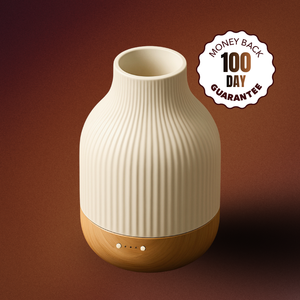
If you are looking for a diffuser that can carry a bedroom through the night, the Ceramic & Rubber Wood Diffuser is designed for exactly this kind of overnight routine — whisper-quiet, with a handcrafted ceramic cover on a rubber wood base. Its 180 ml tank runs 4–5 hours continuously, or 8–10 hours on the intermittent setting, which is the mode we would choose for sleep: it mists in short cycles with pauses in between rather than scenting the room without a break until morning.
If a cat shares the room, the safest setup is a cracked door and a short run time, because cats clear essential oil compounds over hours rather than minutes. Dogs cope better, but no essential oil belongs on an animal's fur or skin — not diluted, not as a calming rub, and never by mouth.
 Pair it with 100% Pure Chamomile Essential Oil
$14.99
Pair it with 100% Pure Chamomile Essential Oil
$14.99
Comparison Table: Lavender vs. Other Oils

| Essential Oil | Main Benefit | Onset | Best Application | Safety Notes |
|---|---|---|---|---|
| Lavender | Stress relief, sleep support | Minutes (calm); 1–2 weeks (sleep) | Diffusion, inhalation, diluted topical | Generally gentle; avoid eyes; dilute for skin |
| Clary Sage | May support relaxation and hormonal comfort | 2–6 weeks | Diffusion, diluted massage | Avoid during pregnancy; low dilution while breastfeeding |
| Roman Chamomile | Mild sedative, soothes irritability | 15–30 minutes | Diffusion, bath | Patch-test for sensitive skin |
| Bergamot | Mood elevation, tension release | 15–20 minutes | Diffusion, inhalation | Use bergapten-free (FCF) if applying near sun exposure |
Clary sage is a frequent pairing with lavender in postpartum blends. For a deeper look, read how clary sage supports postpartum hormone balance. Independent laboratory testing puts Scentreat's Ceramic & Rubber Wood Diffuser at 27.3 dB(A) at 1 m — quiet enough that the lavender is the only thing you notice.
Safety & Precautions
- Pregnancy: Favor inhalation; avoid heavy topical use and always consult a clinician before starting any aromatherapy routine.
- Breastfeeding: Diffuse at low intensity; avoid direct chest application. Consult your lactation consultant if uncertain.
- Skin: Always dilute (1–2% in carrier oil); perform a patch test and discontinue if irritation occurs.
- Medical conditions: Seek advice if you have asthma, fragrance sensitivities, or complex mood disorders.
- Oils to use with extra caution or avoid during pregnancy/nursing: Clary sage (avoid during pregnancy), rosemary, sage, thyme, and wintergreen. When in doubt, diffusion at low intensity is safer than topical application.
- Complementary role: Lavender supports well-being and does not replace medical diagnosis or treatment. If symptoms are severe or worsening, contact your healthcare provider.
FAQs on Lavender for Postpartum & Fertility

How soon will lavender help me feel calmer?
Many people feel a reduction in tension within 10–20 minutes of inhalation. Pair with slow, deliberate breathing for quicker onset and better carryover into sleep.
When will my sleep improve if I use it nightly?
Sleep continuity and quality often improve within 1–2 weeks of consistent bedtime diffusion or pillow use, with further gains over 3–4 weeks of regular practice.
Is lavender safe while breastfeeding?
Lavender used via low-intensity diffusion is generally considered one of the gentler options for breastfeeding mothers. Avoid undiluted skin use and keep diffusion time to 30–60 minute intervals. Monitor infant sensitivity and consult your lactation consultant or provider if you have any concerns.
Does lavender directly boost fertility?
Lavender does not directly stimulate ovulation and is not a proven fertility treatment. Its value lies in helping reduce everyday stress and supporting rest — both of which matter during preconception. Consult your provider for personalized fertility guidance.
What does lavender blend well with?
Lavender pairs well with Clary Sage (may support relaxation and hormonal comfort), Roman Chamomile (soothing), and Frankincense (grounding). Skip clary sage if you are pregnant or think you might be — it is generally avoided during pregnancy and kept for labor under a clinician's supervision. Keep dilutions at 1–2% for skin use.
Conclusion
Lavender essential oil offers a practical, gentle, and evidence-informed way to reduce anxiety, support better sleep, and stabilize mood during the postpartum period or preconception. Through olfactory-limbic calming, autonomic balance, and cortisol modulation, lavender supports the systems most affected by stress and sleep deprivation.
Consistent and safe use of lavender — via diffusion, inhalation, topical massage, or bath — can complement medical guidance, creating a more restful environment for recovery and well-being. If you're building a postpartum self-care kit, the sleep & relaxation collection brings together oils curated for exactly this season of life.
Related read:
- Aromatherapy for Fertility Visualization and Manifestation
- 3 Evidence-Based Essential Oils That Support Fertility
- How Clary Sage Supports Postpartum Hormone Balance

