

Fragrance oil and essential oil can both make a space smell good, but they are fundamentally different products. Essential oils are aromatic materials obtained from plants, while fragrance oils are formulated to create a specific scent and may contain natural aromatic materials, synthetic fragrance ingredients or both. In this guide, Scentreat compares their composition, aromatherapy use, scent performance, safety, cost and diffuser compatibility, then helps you decide which one fits your needs and which oils make sense for the type of diffuser you use.
Fragrance Oil vs Essential Oil: Quick Comparison

Choose essential oil when you want botanical aromas and a diffuser designed for pure essential oils. Choose fragrance oil when you want a formulated scent profile and an application specifically designed for fragrance oil.
| Feature | Essential oil | Fragrance oil |
|---|---|---|
| Source | Botanical material | Formulated fragrance |
| Composition | Naturally occurring plant aromatics | Natural, synthetic or combined fragrance materials |
| Scent range | Botanical aromas only | Much broader scent range |
| Consistency | Can vary naturally | Usually more consistent |
| Aromatherapy | Commonly used | Usually fragrance-focused |
| Diffuser use | Common in essential-oil diffusers | Only in compatible scent systems |
| Best for | Botanical scent, blending, aromatherapy routines | Specific fragrance profiles |
Key takeaway: the biggest difference is not simply natural versus synthetic. It is botanical material versus formulated fragrance, and neither category is automatically better. The right choice depends on the scent experience you want and the product or diffuser you plan to use.
What Is an Essential Oil?

An essential oil is a concentrated aromatic material obtained from a botanical source such as flowers, leaves, fruit peels, herbs, woods, roots or resins.
Different plants require different extraction methods. Many essential oils are produced through steam distillation, while citrus oils such as Lemon and Sweet Orange are commonly obtained through mechanical expression of the peel. Common examples include Lavender, Peppermint, Lemon, Eucalyptus, Rosemary, Cedarwood, Frankincense, Tea Tree and Sandalwood.
What makes an essential oil distinct is its botanical identity: Lavender essential oil comes from lavender plant material, and Lemon essential oil comes from lemon peel.
You may also see the phrase "100% pure essential oil." This generally means the bottle contains the essential oil itself rather than a carrier-oil dilution or added synthetic fragrance. However, "pure" does not automatically mean:
- Safe for every person or pet
- Appropriate for every diffuser
- Suitable for ingestion
- Safe for undiluted topical use
- Better than every fragrance product
The useful question is not just "Is it pure?" but "Is it suitable for the way I plan to use it?"
What Is a Fragrance Oil?

A fragrance oil is a formulated aromatic product designed to create a particular scent rather than reproduce one specific botanical source.
That gives fragrance oils far more creative freedom. They can create scent profiles such as:
- Fresh linen
- Vanilla dessert
- Ocean breeze
- Hotel lobby
- Amber and musk
- Coconut
- Bakery scents
- Leather
- Seasonal fragrances
A fragrance oil may contain synthetic aroma compounds, natural fragrance materials, essential oils, isolated aromatic molecules or a combination of these ingredients, so fragrance oil does not automatically mean completely synthetic. Its main advantage is control: a fragrance can be built around a target scent and adjusted to remain more consistent from batch to batch.
The important limitation is that a fragrance oil should be used only for the application it was formulated for. A fragrance made for candles is not automatically appropriate for perfume, reed diffusion or an electric diffuser.
If you are also trying to understand broader labels such as aroma oil or scented oil, see Scentreat's separate guide to aroma oil vs essential oil vs scented oil.
Are Essential Oils Safe? What the Labels Don't Tell You

Essential oils can be used safely in many home routines, but "natural" does not automatically mean harmless.
They are concentrated aromatic substances, so safety depends on the specific oil, amount, exposure and method of use. Using a small amount in a compatible diffuser is very different from applying concentrated oil directly to the skin or accidentally swallowing it.
People also respond differently to strong aromas. If diffusion causes discomfort, coughing, headache, eye irritation or breathing discomfort, stop the diffuser and ventilate the space.
Use extra care around:
- Young children
- Pets
- Birds
- People with fragrance sensitivity
- People with respiratory conditions
Follow your diffuser's guidance for:
- Compatible oils
- Amount of oil
- Runtime
- Ventilation
- Cleaning
Key takeaway: the label tells you what the oil is; the diffuser instructions tell you whether and how it should be used.
Are Fragrance Oils Safe? What the Labels Don't Tell You

Fragrance oil safety depends on the specific formula and intended application, not simply on the words "fragrance oil."
A fragrance developed for soap, perfume, candles, reed diffusers or commercial scent machines can have very different formulation requirements. Before putting fragrance oil into an electric diffuser, check:
- Whether it is intended for that diffuser type
- Whether the diffuser manufacturer approves fragrance oils
- Whether the formula contains carrier oils or thick bases
- Whether it is designed for water-based or waterless use
- Whether the supplier provides specific usage instructions
Synthetic ingredients are not automatically unsafe, just as natural ingredients are not automatically safe.
Key takeaway: use fragrance oil only in the application or scent system it was designed for.
Fragrance Oil vs Essential Oil: 6 Key Differences

Here is how the two categories compare across origin, aromatherapy use, variety, scent performance, applications, safety and cost.
1. Origin and Composition
Essential oils come from plants; fragrance oils are built around a target scent.
Essential oils contain naturally occurring volatile compounds obtained from botanical materials through processes such as distillation or expression. Fragrance oils can combine natural aromatic materials, essential oils, isolates, synthetic aroma compounds or other fragrance ingredients.
For example, Lavender essential oil is tied to lavender plant material. A fragrance called "Lavender Linen" could combine lavender notes with musk, clean-fabric accords, woods and other materials to create a scent that does not exist naturally as one botanical oil.
2. Therapeutic Uses (Aromatherapy)
Essential oils are commonly associated with aromatherapy routines, while fragrance oils are usually selected primarily for scent.
People may choose Lavender for a softer evening aroma, Peppermint for a cool scent, Lemon or Sweet Orange for brighter citrus notes, or Cedarwood for a warmer woody profile. That does not make essential oils medicines. For everyday home use, it is better to think of aromatherapy as using aroma to help shape the atmosphere of a space or routine.
If you want a recognizable botanical aroma, essential oil is the more direct choice. If you want a specific composed fragrance such as fresh linen, vanilla cake or a hotel-inspired scent, fragrance oil offers more flexibility.
3. Variety and Stability
Fragrance oils offer more scent variety and usually greater consistency; essential oils offer authentic botanical aromas with natural variation.
Essential oils are limited to aromatic materials that can be obtained from plants. That still provides a large range of citrus, floral, herbal, woody, minty, spicy and resinous scents, but some scent concepts do not exist as individual essential oils. There is no true single essential oil for clean laundry, ocean breeze or vanilla cake, while fragrance oils can be formulated around those ideas.
Essential oils can also vary slightly with harvest, climate, origin, extraction and storage, while fragrance formulas can be adjusted to maintain a more consistent target profile.
4. Scent Longevity and Throw
Neither fragrance oil nor essential oil is always stronger or longer-lasting; scent performance depends on both the oil and the delivery system.
"Scent throw" describes how noticeable a fragrance is and how effectively it spreads through a space. Performance depends on:
- Oil or fragrance formula
- Concentration
- Diffuser technology
- Output setting
- Room size
- Ventilation
- Temperature
- Session length
A fragrance oil may be designed specifically for strong, persistent scent in a particular application. An essential oil used in a compatible waterless or nebulizing diffuser can also produce a more concentrated aroma than the same oil used in an ultrasonic diffuser.
Key takeaway: compare the entire scenting system, not just the bottle.
5. Practical Applications
Essential oils are most common in botanical scenting and aromatherapy routines; fragrance oils are more common in formulated home-fragrance products.
Essential oils are commonly used for:
- Essential-oil diffusers
- Aromatherapy routines
- Essential-oil blends
- Botanical scenting
- Properly diluted topical applications where appropriate
Fragrance oils are commonly formulated for:
- Candles
- Reed diffusers
- Soap
- Perfume
- Room sprays
- Dedicated scent machines
- Commercial scenting
The word "oil" appears in both names, but that does not make the products interchangeable.
6. Safety and Cost
Neither category is automatically safer or cheaper.
Essential-oil pricing varies according to the botanical source, extraction yield, harvesting requirements and production process. Fragrance-oil pricing varies according to formulation, ingredients, concentration, complexity and intended application.
Safety is equally product-specific. A botanical product is not automatically safer simply because it is natural, and a fragrance formula is not automatically unsafe simply because it includes synthetic aromatic materials.
Key takeaway: compare the actual product, intended use, concentration and instructions, not just the category name.
So Which Should You Choose?

Choose essential oil when botanical origin and aromatherapy-style use matter most; choose fragrance oil when you want a specific composed scent and have a compatible fragrance system.
Essential oil is likely the better fit if you:
- Want botanical aromas
- Prefer recognizable plant scents
- Want to create your own essential-oil blends
- Use a diffuser designed for pure essential oils
- Want scent as part of an aromatherapy-oriented routine
Fragrance oil may be the better fit if you:
- Want scents that do not exist as one botanical extract
- Prefer vanilla, fresh linen, bakery, amber or hotel-inspired profiles
- Want greater fragrance consistency
- Use a system specifically designed for fragrance oil
- Care more about the finished scent than botanical origin
For diffuser users, compatibility comes first:
| Diffuser type | Essential oil | Fragrance oil |
|---|---|---|
| Ultrasonic essential-oil diffuser | Commonly suitable | Check first |
| Waterless essential-oil diffuser | Commonly suitable | Check first |
| Nebulizing essential-oil diffuser | Commonly suitable | Check first |
| Dedicated fragrance scent machine | Check first | Commonly suitable |
| Portable or car diffuser | Check first | Check first |
| Reed diffuser | Check first | Commonly suitable |
"Check first" means suitability depends on the exact device or formulation. This table is intentionally simple; the safest decision still comes from the instructions for the exact machine you own.
Ultrasonic Diffusers
For an ultrasonic diffuser designed for essential oils, compatible essential oil is the safest starting choice.
Ultrasonic diffusers mix water with a small amount of aromatic oil and use high-frequency vibration to create a fine mist. Do not assume that a fragrance oil made for candles, soap, perfume or reed diffusion can be added to an ultrasonic water tank. If your manufacturer specifically approves a fragrance formulation, follow those instructions; otherwise, use the oil type the diffuser was designed for.
Waterless Diffusers
For a waterless essential-oil diffuser, use compatible pure essential oil unless the manufacturer specifies another formulation.
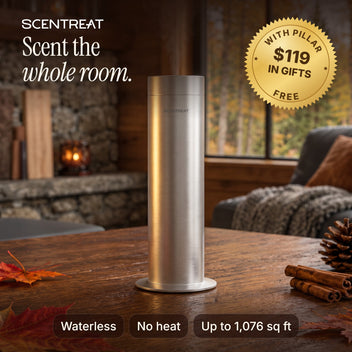
A waterless diffuser simply does not rely on a traditional water reservoir, which does not mean it accepts every type of fragrance. Some machines are designed for pure essential oils, such as Scentreat's waterless and cold-air diffusers, while others are dedicated fragrance scent systems. Always follow the oil requirements for your exact model.
Nebulizing Diffusers
Many nebulizing diffusers are designed for pure essential oils, so formulation and viscosity matter.
Nebulizing systems typically atomize aromatic oil without first mixing it into water. Because the oil passes directly through the atomization system, thick carrier-oil blends or incompatible fragrance formulations may leave residue, alter output or contribute to clogging. If the manufacturer specifies pure essential oils only, follow that requirement.
Portable and Car Diffusers
There is no universal oil rule for portable or car diffusers because their internal systems vary widely.
Some use small essential-oil bottles, water tanks, absorbent pads, waterless atomizers or proprietary fragrance cartridges, so check the exact device before choosing the oil. A portable diffuser designed around pure essential-oil bottles should use compatible essential oils, while a cartridge-based scent system should use the refill designed for that device.

Handcrafted ceramic essential oil diffuser for bedroom and sleep: quieter than a whisper (27.3 dB, lab-test...
Not Sure Where to Start? These Oils Are Worth Trying First

If essential oil is the right choice for your diffuser, start with a scent family you already enjoy rather than choosing an oil only because it is popular.
Scentreat currently organizes its single essential oils into four straightforward collections:
| Collection | Scent style | Oils to try |
|---|---|---|
| Sleep & Relax | Softer floral, woody and evening-friendly aromas | Lavender, Chamomile, Cedarwood, Vetiver, Sandalwood |
| Calm & Balance | Warmer floral, citrus, woody and resinous profiles | Frankincense, Bergamot, Ylang Ylang, Clary Sage, Geranium |
| Focus & Energy | Bright citrus, herbal or cool minty scents | Peppermint, Rosemary, Lemon, Sweet Orange, Eucalyptus |
| Fresh & Clean | Crisp, green and citrus-forward aromas | Tea Tree, Lemongrass, Eucalyptus, Grapefruit, Lime |
Want to compare everything first? Explore all Scentreat essential oils.
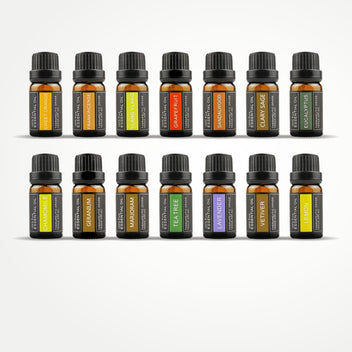
The Signature Ritual™ is our complete 14-oil collection — the full Scentreat library for every mood and rit...
Why Scentreat?

Scentreat focuses its essential-oil range on straightforward single oils designed for people who want to choose, combine and diffuse botanical aromas themselves.
- 100% pure single oils. Each bottle contains one essential oil rather than a premixed fragrance formula.
- No added synthetic fragrance. The current single-oil range is positioned around pure botanical oils.
- A broad scent range. Choose from citrus, floral, herbal, woody, minty, spiced and resinous profiles.
- Easy mood-based collections. Oils are grouped into Sleep & Relax, Calm & Balance, Focus & Energy and Fresh & Clean.
- Flexible blending. Single oils make it easy to use one aroma or combine several oils into your own blend.
- Built around essential-oil diffusion. Scentreat offers essential oils alongside compatible diffuser options.
This does not make essential oil universally better than fragrance oil; they solve different scenting needs. If you want a formulated vanilla, fresh-linen or hotel-style scent, a compatible fragrance system may suit you better. If you want botanical aromas and the freedom to blend them yourself, pure essential oils are the better fit for that goal.
Waterless cold-air diffuser in aluminum: 100 ml oil bottle, covers up to 1,076 sq ft, under 30 dB, app time...
Conclusion
Essential oil and fragrance oil are different because one begins with botanical material while the other begins with a target fragrance.
Essential oils make sense when you want recognizable plant aromas, custom blends or aromatherapy-oriented scent routines. Fragrance oils make sense when you want a specific composed fragrance and are using a product or scent system designed for that formula. Neither is automatically better, safer, stronger or longer-lasting.
Key takeaway: for diffuser users, choose the oil your machine is designed to accept first, then choose the scent you enjoy.
If pure essential oil is right for your setup, explore the Scentreat Essential Oil Collection. Questions about a Scentreat oil or diffuser? Contact support@scentreat.com.
Frequently Asked Questions
Is Fragrance Oil the Same as Essential Oil?
No. Essential oils are obtained from botanical materials, while fragrance oils are formulated to create a target scent. A fragrance formula may contain natural aromatic materials, synthetic aroma compounds, essential oils or a combination of these ingredients.
Is Essential Oil Better Than Fragrance Oil?
Not universally. Essential oil is usually a better fit when you want botanical aromas or use a diffuser designed for pure essential oils. Fragrance oil may be more suitable when you want a specific composed scent such as vanilla, fresh linen or a hotel-style fragrance.
Can You Use Fragrance Oil in a Diffuser?
Only if the diffuser is designed to use that fragrance formulation. Some scent machines accept fragrance oils, while many ultrasonic, waterless and nebulizing essential-oil diffusers are designed for compatible pure essential oils.
Can I Put Fragrance Oil in an Ultrasonic Diffuser?
Only if the manufacturer specifically approves it. Many ultrasonic diffusers are designed for water plus compatible essential oils, so fragrance oils made for candles, perfume, soap or reed diffusion should not automatically be added to the reservoir.
Can You Use Fragrance Oil in a Waterless Diffuser?
Sometimes. Some waterless machines are designed for pure essential oils, while others are built for dedicated fragrance formulations. "Waterless" describes how the device operates; it does not determine which oil is compatible.
What Happens If You Put Fragrance Oil in a Nebulizing Diffuser?
An incompatible fragrance oil can interfere with atomization. If the formula contains carrier oils, thick bases or ingredients the device was not designed to handle, it may leave residue, reduce output, change the spray pattern or contribute to clogging. If the nebulizer specifies pure essential oils only, follow that requirement.
Can I Use Essential Oil in a Nebulizing Diffuser?
Yes, in many models, but check the instructions first. Many nebulizing diffusers are designed specifically for compatible pure essential oils. Avoid thick carrier-oil blends unless the manufacturer confirms they are suitable.
Which Lasts Longer, Fragrance Oil or Essential Oil?
There is no universal winner. Longevity depends on the specific oil or fragrance formula, concentration, diffuser technology, output level, room size, airflow, temperature and runtime.
Why Does Fragrance Oil Sometimes Smell Stronger Than Essential Oil?
Some fragrance oils are formulated specifically for strong scent projection and consistency. However, concentration, diffuser output, aromatic materials, room conditions and individual perception also affect how strong a scent seems.
Are Fragrance Oils Synthetic?
Not always. Some fragrance oils rely mainly on synthetic aroma compounds, while others combine synthetic and natural aromatic materials. Some may also contain essential oils.
Are Essential Oils Safe to Diffuse?
They can be when used appropriately. Follow the diffuser manufacturer's instructions, use a suitable amount, ventilate the room as needed and take extra care around children, pets, birds and people with fragrance sensitivity.
Are Scentreat Oils Fragrance Oils?
No. Scentreat's current single-oil collection consists of pure essential oils rather than formulated fragrance oils.
Can I Use Scentreat Essential Oils in a Waterless Diffuser?
Yes, when the diffuser is designed for compatible pure essential oils. Always follow the instructions for the exact model, because bottle size, setup, viscosity requirements, cleaning and operation can differ between devices.

