

If you have ever wondered whether aroma oil, essential oil and scented oil are the same thing, you are not alone. The names sound interchangeable. They describe different things.
The easiest way to tell them apart is to look at what is inside the bottle, how the scent is created, and what the oil was formulated for. That distinction matters most when you are choosing oil for an ultrasonic, waterless or nebulizing diffuser.
Aroma Oil vs Essential Oil vs Scented Oil: Quick Comparison
| Essential oil | Aroma oil | Scented oil | |
|---|---|---|---|
| What is it? | Concentrated aromatic material from a plant | Broad commercial term | Broad fragrance-focused term |
| Plant-derived? | Yes | Sometimes | Sometimes |
| May contain fragrance materials? | Not in a pure single oil | Possibly | Possibly |
| May contain carrier oil? | Not in a pure single oil | Possibly | Possibly |
| Scent range | Botanical | Very broad | Very broad |
| Diffuser use | Depends on the machine | Depends on the formula | Depends on the formula |
The key difference: essential oil identifies a specific botanical product. Aroma oil and scented oil are broader marketing terms, so the label alone does not tell you what is inside.
What Is an Essential Oil?

An essential oil is a concentrated aromatic extract obtained from plant material, commonly through steam distillation or, for citrus oils, mechanical expression.
Its defining feature is botanical identity. Lavender essential oil comes from lavender plant material. Lemon essential oil comes from lemon peel. Common examples include Lavender, Peppermint, Lemon, Eucalyptus, Sweet Orange, Rosemary, Bergamot, Cedarwood, Frankincense and Sandalwood.
What does "100% pure" mean?
When a single essential oil is labelled 100% pure, it generally means the product has not been diluted with a carrier oil. Pure does not automatically mean:
- Suitable for every diffuser
- Safe for everyone
- Stronger or better
- Appropriate for use around every pet or child
Purity and diffuser compatibility are separate questions. Even two pure essential oils can behave very differently — a pure Vetiver is far more viscous than a pure Lemon, which matters in a waterless machine. Our guide to the best essential oils for a diffuser covers which oils suit which system.
Pros
- Clearly identifies a botanical source
- Lets you create your own blends
- Works with many essential-oil diffusers
- Wide range of natural botanical aromas
Cons
- Not every scent concept exists as a plant oil
- Some oils are much stronger than others
- Quality, sourcing and testing vary between brands
- Pure does not mean universally compatible
What Is an Aroma Oil?
Aroma oil is not a standardised formula. Different brands use the term for different products. An aroma oil can contain essential oils, fragrance materials, a combination of both, a carrier or base, or other formulation ingredients. Two products labelled "aroma oil" can be completely different.
The main advantage is flexibility. Formulated aroma oils can recreate scent profiles that do not exist as individual botanicals — fresh linen, vanilla, ocean air, bakery scents, hotel-style fragrances.
Pros
- Very broad range of scent profiles
- Creates fragrances plants cannot produce
- Consistent aroma from batch to batch
Cons
- The name does not tell you the formula
- May contain carrier or base ingredients
- May not suit an essential-oil diffuser
- You have to read the ingredient list

Handcrafted ceramic essential oil diffuser for bedroom and sleep: quieter than a whisper (27.3 dB, lab-test...
What Is a Scented Oil?
"Scented oil" is another broad term, generally used for an oil formulated to deliver a particular fragrance. The aroma may come from essential oils, natural aromatic extracts, synthetic fragrance materials, or a combination.
This is why scents such as vanilla, fresh laundry, coconut, ocean breeze or hotel fragrance are usually available as scented oils rather than single essential oils. The important point: scented oil describes the fragrance purpose, not necessarily the source of the fragrance.
Pros
- Huge variety of fragrance profiles
- Reproduces specific scent concepts
- Often built for one fragrance application
Cons
- May contain synthetic fragrance materials
- May contain carrier or base ingredients
- Not automatically suitable for an electric diffuser
- A scented oil is not necessarily an essential oil
6 Differences That Actually Matter
1. What the name tells you
"Essential oil" refers to a specific type of botanical aromatic product. "Aroma oil" and "scented oil" are broader terms that require more information before you can act on them.
2. Where the scent comes from
Essential oils come from plant material. Aroma and scented oils may use essential oils, natural aromatic materials, synthetic fragrance materials, or combinations.
3. What is actually in the bottle
For a pure essential oil, look for the botanical name and clear ingredient information. For aroma or scented oils, check whether the formula contains fragrance materials, carrier oils or other bases.
4. What the oil was designed to do
Essential oils are commonly used for aromatherapy and compatible essential-oil diffusers. Scented oils are usually formulated around a specific fragrance experience. Aroma oils fall into either camp depending on the formula.
5. Which diffuser can use it
This is the difference that costs people money. An ultrasonic diffuser mixes oil with water. A waterless diffuser works without a water reservoir. A nebulizing diffuser atomizes oil directly. A reed diffuser moves fragrance through capillary action. These systems are not interchangeable, so an oil that works in one does not automatically work in another. If you are not sure which type you own, start with what a waterless diffuser actually is.
6. Viscosity and formulation
For waterless and nebulizing diffusers the formulation matters even more, because the oil is not diluted with water. Carrier oils such as jojoba, coconut, almond or fractionated coconut oil should never be added unless the manufacturer specifically says they are compatible.
Which Oil Should You Use in Your Diffuser?

The right oil depends on the diffuser technology, not simply the scent you prefer.
Ultrasonic diffuser
Ultrasonic diffusers use water and ultrasonic vibration to create a cool mist. Use essential oils the manufacturer lists as compatible — Lavender, Lemon, Eucalyptus and Sweet Orange are common starting choices. For quantity, follow your own machine's instructions; our drops-per-tank chart covers the usual range.
Waterless diffuser
A waterless diffuser does not dilute oil with water, so compatibility becomes especially important. Use the type of oil specified by the manufacturer. If the machine is designed for pure essential oils, avoid adding carrier oils or unknown fragrance bases.
Nebulizing diffuser
Nebulizing diffusers atomize concentrated oil without water. Because the oil moves directly through the atomization system, follow the manufacturer's oil recommendations carefully — viscosity affects how easily an oil moves through the mechanism.
Portable or car diffuser
Portable diffusers vary widely. Some take small essential-oil bottles; others use cartridges, pads, water reservoirs or proprietary refills. Always match the oil to the specific system.
Dedicated fragrance diffuser
Some fragrance machines are built specifically for formulated fragrance oils or proprietary cartridges. Use the manufacturer's fragrance system rather than substituting an essential oil.
When Does Fragrance Oil Make More Sense?
Choosing a fragrance oil is not automatically a bad decision. It serves a different purpose. A formulated fragrance makes sense when:
- You want a scent such as vanilla, fresh linen or a hotel-style fragrance
- You want a very specific and repeatable scent profile
- Your diffuser is designed for fragrance oils
- You prefer a fragrance that cannot be produced from a single botanical
Essential oil makes more sense when you want a specific botanical scent — real lavender, lemon, cedarwood or peppermint — and want to build your own blends. Match the oil to the product's intended use.
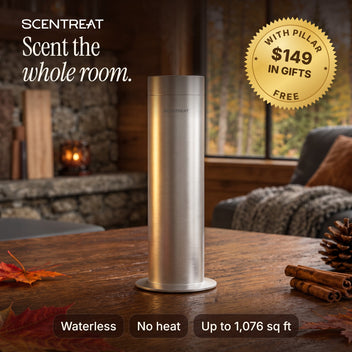
Waterless cold-air diffuser in aluminum: 150 ml oil bottle, covers up to 1,076 sq ft, under 30 dB, app time...
Choosing Essential Oils for Your Diffuser

If you prefer single botanical oils, ingredient clarity is a useful starting point. The Scentreat essential oil collection covers citrus, floral, herbal, mint, woody and resinous families, with single oils including Lavender, Peppermint, Lemon, Eucalyptus, Sweet Orange, Cedarwood, Vetiver, Frankincense and Sandalwood.
That makes it easier to build a routine around individual notes rather than buying a premixed fragrance without knowing what is inside. You can also combine complementary oils to create your own profile:
Lavender + Bergamot
Soft, floral and lightly citrusy.
Lemon + Peppermint
Bright, fresh and energetic.
Cedarwood + Vetiver
Deep, woody and earthy.
Start with small amounts and adjust based on the diffuser and the room. Our blending guide has ratios and more combinations.
Safety Notes
Natural does not automatically mean harmless. Essential oils are concentrated aromatic substances and should be handled accordingly.
- Keep essential oils away from children and avoid accidental ingestion.
- Consider pet safety before diffusing, especially in enclosed spaces — the ASPCA recommends keeping oils out of reach and taking care with diffusers around animals.
- Do not put carrier oils into a waterless or nebulizing diffuser unless the manufacturer specifically approves them.
- Do not assume a fragrance oil is an essential oil simply because it smells like a particular plant.
- Start with a lower setting or a shorter session rather than making the room intensely fragrant.
- Follow the manufacturer's instructions for compatible oils, quantity, runtime and cleaning.
The Bottom Line
Essential oil, aroma oil and scented oil are not interchangeable terms. An essential oil identifies a specific botanical aromatic product. Aroma oil and scented oil are broader terms covering different kinds of fragrance formulation.
For diffuser users the most important question is not which label sounds better. It is: what is inside the bottle, and is that formula compatible with your diffuser? Once you separate those two questions, choosing the right diffuser oil becomes much easier.
Not sure about a specific machine? Message us on Facebook or Instagram, or email support@scentreat.com.
Frequently Asked Questions
Is aroma oil the same as essential oil?
No. Essential oil is a specific botanical product, while aroma oil is a broad term that can describe different formulations.
Is scented oil the same as essential oil?
No. Scented oil may contain essential oils, fragrance materials, or a combination. The ingredient list is the best way to tell.
Can I use aroma oil in a diffuser?
It depends on the formula and the diffuser. Check the ingredients and the manufacturer's compatibility instructions before using it.
Can I use scented oil in an ultrasonic diffuser?
Not automatically. An ultrasonic diffuser is designed for specific oil-and-water formulations, so check whether the scented oil is approved for that type of machine.
Can I use fragrance oil in a waterless diffuser?
Only if the diffuser manufacturer specifically says it is compatible. Waterless does not mean every type of oil can be used.
What oil should I use in a nebulizing diffuser?
Use the type of oil recommended by the nebulizer manufacturer. Avoid carrier oils and unknown formulations unless they are specifically approved.
What is the difference between fragrance oil and essential oil?
Essential oil comes from plant material. Fragrance oil is a formulated product designed to create a particular scent, and may contain natural and/or synthetic fragrance materials.
Can I mix essential oil with fragrance oil?
Do not assume they can be mixed safely or used in the same diffuser. Check both the oil formulation and the diffuser manufacturer's instructions first.
Which is better for a diffuser: essential oil or fragrance oil?
Neither is universally better. The right choice depends on the diffuser, the formulation, and the type of scent you want.
Are Scentreat oils essential oils or aroma oils?
Scentreat's single-oil collection consists of essential oils rather than a general aroma-oil formulation.
Can I use essential oils in a waterless diffuser?
Yes, when the diffuser is specifically designed for compatible essential oils. Always check the manufacturer's instructions for oil type, viscosity and usage.
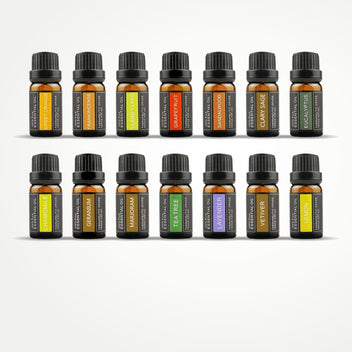
The Signature Ritual™ is our complete 14-oil collection — the full Scentreat library for every mood and rit...

