

Key Takeaways
BEST BUY PICKS
Natural remedies for insomnia can help most people sleep better — but which ones actually work depends on what's driving your sleeplessness. Remedies like consistent sleep timing, calming scents, limiting late-day caffeine, and simple relaxation techniques address the most common causes. For a minority with chronic insomnia, these habits still help, but professional support may be needed alongside them.
For the complete guide, see How to Sleep Better at Night With Simple Habits That Actually Work.
In this guide, Scentreat breaks down the 10 most practical natural sleep remedies, the habits making insomnia worse, and when it's time to seek professional help.
What Is Insomnia?

Insomnia is a sleep condition where you have difficulty falling asleep, staying asleep, or getting restful sleep — even when you have enough time and the right environment to do so. It often leaves you feeling tired, unfocused, or low in energy during the day.
Unlike occasional poor sleep, insomnia is usually linked to underlying factors such as stress, irregular routines, or an overstimulated nervous system. Over time, these disruptions interfere with your circadian rhythm, making it harder for your body to relax and transition into sleep consistently.
Clinical threshold: When difficulty sleeping occurs 3 or more nights per week and persists for 3 or more months, it's generally considered chronic insomnia — a condition that often benefits from professional support, not just lifestyle changes alone.
10 Natural Remedies for Insomnia That Actually Work
Choosing the right natural remedies for insomnia isn't about trying everything at once — it's about finding simple, effective habits that help your body relax and return to a natural sleep rhythm. Below are the most practical approaches for improving sleep without medication.
1. Herbal Teas (Chamomile, Valerian Root)

Herbal teas are one of the most widely used natural sleep remedies due to their calming properties.
Chamomile is known for its gentle, soothing effect on the nervous system — specifically through an antioxidant called apigenin, which binds to receptors in the brain that may reduce anxiety and promote drowsiness. Valerian root is another option often used to support deeper relaxation. Drink a warm cup 30–45 minutes before bed.
2. Magnesium and Nutrition Support

Magnesium plays a key role in regulating sleep and calming the nervous system.
Low magnesium levels are often linked to poor sleep quality and restlessness. Supporting your diet with magnesium-rich foods — dark leafy greens, nuts, seeds, and legumes — or a supplement may help improve relaxation and promote more consistent sleep.
3. Limiting Caffeine and Sugar

Caffeine has a half-life of roughly 5–6 hours — meaning a coffee at 3 pm can still be half-active in your system at 8 pm. Most sleep specialists recommend cutting off caffeine by 1–2 pm, or at least 6 hours before your target bedtime.
Sugar can also create energy spikes that make it harder for your body to settle down at night. Reducing both in the afternoon and evening can significantly improve sleep quality over time.
4. Gentle Evening Movement or Stretching

Light stretching or slow movement in the evening helps release physical tension built up throughout the day.
This not only relaxes your muscles but also signals your body to transition into rest mode, making it easier to fall asleep. Aim for 10–15 minutes of gentle yoga or slow walking, finishing at least an hour before bed.
5. Breathing and Relaxation Techniques

Simple breathing exercises can calm your nervous system quickly.
Techniques like the 4-7-8 method (inhale 4 counts, hold 7, exhale 8) or slow diaphragmatic breathing help reduce heart rate and mental tension — both common causes of insomnia. Even 5 minutes before bed can make a noticeable difference.
6. Reducing Screen Time Before Bed

Exposure to screens at night can delay melatonin production — the hormone your brain releases as a sleep signal. Blue light from phone and laptop screens suppresses melatonin, pushing your sleep window later.
Limiting screen use 30–60 minutes before bed allows your body to naturally prepare for sleep without interference.
7. Creating a Consistent Sleep Schedule

Going to bed and waking up at the same time every day helps regulate your circadian rhythm — your body's internal 24-hour clock.
Consistency is one of the most effective natural sleep remedies, as it trains your body to recognize when it's time to sleep and wake. Even on weekends, aim to stay within 30 minutes of your usual schedule.
If maintaining a regular bedtime is something you struggle with, our guide How to Fix Your Sleep Schedule shares practical strategies for building a more consistent sleep routine.
8. Journaling or Mental Unloading

Writing down your thoughts before bed can help reduce overthinking.
By clearing your mind of unfinished tasks or worries, you create space for your brain to relax instead of staying active at night. A simple "brain dump" of tomorrow's to-do list takes 5 minutes and can quiet the mental loop that keeps many people awake.
9. Improving Your Sleep Environment

Your environment plays a major role in how well you sleep.
A comfortable room with low light, minimal noise, and a calm atmosphere helps your body feel safe and ready for rest. Target a bedroom temperature around 65–68°F (18–20°C) — slightly cool is consistently linked with better sleep onset.
10. Using Calming Scents (Essential Oils)

Scent is one of the most overlooked natural sleep remedies. Your olfactory system connects directly to the limbic system — the brain region governing emotions and stress — which is why certain scents produce an almost immediate calming effect.
Essential oils like lavender, chamomile, and sandalwood may help reduce stress and create a consistent signal for relaxation. Research suggests that inhaled lavender may improve perceived sleep quality. When used regularly with a diffuser, your body begins to associate that scent with sleep, making it easier to unwind each night.
If you're exploring scent-based approaches, our guide to the best essential oils for sleep and relaxation highlights the most popular oils used in bedtime routines.
Essential Oils & Relaxation for Better Sleep
When it comes to natural remedies for insomnia, scent is one of the simplest ways to help your body shift into a slower state. Unlike other methods that require effort, scent works automatically — helping your system slow down without needing to "try" to sleep.
How Scent Affects the Brain (Limbic System)

Your sense of smell is directly linked to the part of the brain that controls emotions and stress.
Scent molecules travel from your nose to the amygdala and hippocampus — parts of the limbic system — faster than any other sensory input. That's why certain scents can quickly shift you out of an alert state and into a more restful one, without any conscious effort on your part.
Best Essential Oils for Insomnia (How to Choose)

The best oil depends on what's affecting your sleep:
- For an active, racing mind → light, calming scents like lavender or chamomile
- For physical tension → deeper, grounding scents like sandalwood or frankincense
- For inconsistent sleep → pick one scent and use it every night to build a conditioned sleep cue
You don't need a large collection. One 100% pure essential oil used consistently is more effective than rotating through many.
Why Diffusing Helps You Relax Faster

A diffuser releases scent gently and continuously into the air.
This creates a soft, stable environment instead of strong, sudden smells — helping your body relax gradually rather than being overstimulated. Ultrasonic diffusers are ideal for the bedroom because they also add a small amount of moisture to the air.
Creating a Consistent Sleep Cue

Scent becomes more powerful over time.
When used every night, your brain starts to associate that smell with rest through conditioned association — the same mechanism that makes a familiar lullaby feel sleepy. This makes it easier to unwind and fall asleep without effort, turning scent into a reliable sleep signal.
Which Natural Sleep Habits Should You Avoid?

Not all "sleep habits" actually help. Some common routines can disrupt your sleep cycle and make insomnia worse over time — even if they seem harmless at first.
Late-Night Screen Use
Using your phone or watching screens before bed delays your body's natural sleep signals.
Blue light suppresses melatonin production while the mental stimulation keeps your brain active. Over time, this habit can push your sleep window later and later — a pattern known as sleep phase delay.
Irregular Sleep Timing
Going to bed and waking up at different times each day confuses your internal clock.
Even small changes — like sleeping in 2 hours on weekends — can create what researchers call social jet lag, disrupting your circadian rhythm and making it harder to fall asleep on weeknights.
Caffeine Late in the Day
Caffeine doesn't just keep you awake — it can reduce sleep quality even if you manage to fall asleep.
With a half-life of 5–6 hours, a 3 pm coffee is still half-strength at 8 pm. It can suppress deep, restorative sleep stages even when you're not consciously aware of its effects.
Trying to Force Sleep
Lying in bed and trying to "make yourself sleep" often has the opposite effect.
This creates pressure and frustration, which keeps your mind active instead of helping it unwind. Over time, your brain may start associating your bed with wakefulness rather than rest — a pattern sleep specialists call conditioned arousal.
This is a common experience for people who feel exhausted but still can't sleep. If that sounds familiar, read our post on can't sleep due to stress for a closer look at what may be happening and how to break the cycle.
Overstimulating Your Night Environment
Bright lights, loud sounds, or strong, inconsistent sensory input can keep your system alert.
Instead of helping you relax, these signals tell your brain to stay awake — making it harder to transition into sleep naturally.
Building a Natural Sleep Routine That Lasts

Improving sleep isn't about quick fixes — it's about creating a routine your body can recognize and follow consistently.
Instead of adding more techniques, focus on keeping your routine predictable. Going to bed and waking up at similar times each day helps your body stabilize its internal clock. Over time, this reduces resistance when falling asleep and improves overall sleep quality.
Your environment also plays a key role. A calm, low-stimulation space with softer lighting, minimal noise, and a comfortable temperature allows your body to relax more naturally. Small adjustments like these often make a bigger difference than complex routines.
Consistency matters more than intensity. You don't need to do everything perfectly — just repeating the same signals each night helps your body relearn when it's time to rest. This is what turns short-term improvements into long-term results.
For more on how stress disrupts this process, see our guide on why stress keeps you awake — and what to do about it. If you've found a routine that works, the best essential oils for nighttime calm can be a simple, effective layer to add.
When Natural Remedies Aren't Enough
Natural remedies work well for occasional sleeplessness or stress-related disruptions. But if you've tried these consistently for several weeks without meaningful improvement, it may be time to talk to a healthcare provider.
Cognitive Behavioural Therapy for Insomnia (CBT-I) is the first-line clinical treatment — and research consistently shows it is more effective than sleep medication over the long term, with no dependency risk. It typically takes 6–8 weeks and can be done with a therapist or through a structured online program.
According to the Mayo Clinic and the Sleep Foundation, CBT-I is the recommended first approach for chronic insomnia before considering medication.
See a doctor if:
- Difficulty sleeping occurs 3 or more nights per week for 3 or more months (chronic insomnia)
- Daytime fatigue is affecting your work, relationships, or safety (e.g. drowsy driving)
- You rely on alcohol or sleep aids to fall asleep regularly
- You wake frequently gasping, snoring loudly, or your partner notices pauses in your breathing (signs of sleep apnoea)
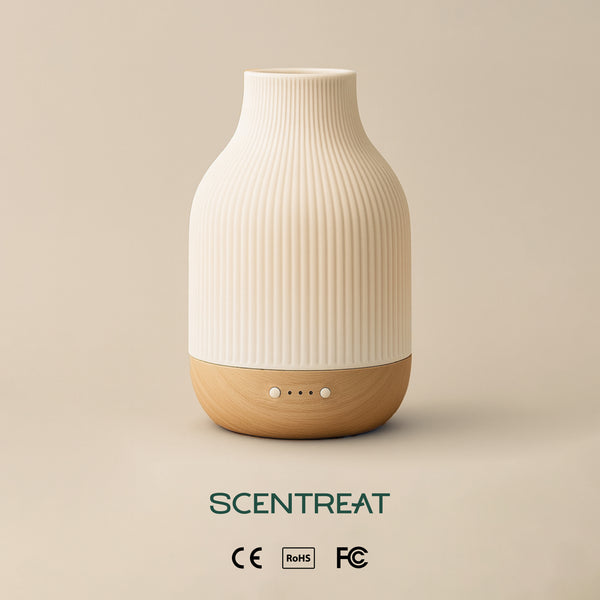
Minimalist Wood Essential Oil Diffuser by Scentreat

The Scentreat Scentreat's minimalist wood diffuser is designed to support a calmer, more consistent sleep routine. Instead of relying on quick fixes, it helps create an environment your body can recognize as a signal to slow down — making it easier to fall asleep naturally.
With its soft, continuous mist, the diffuser gently fills your space with calming scent without overwhelming your senses. This subtle approach helps your mind unwind gradually, rather than forcing relaxation. Over time, it becomes part of a predictable routine that supports better sleep consistency.
What Makes It Effective for Sleep
- Creates a clear "wind-down signal": using the same scent each night helps your brain recognize when it's time to rest
- Supports relaxation without overstimulation: the scent stays soft and balanced, avoiding the sharp or heavy feeling of strong fragrances
- Works with your natural sleep rhythm: instead of forcing sleep, it helps your body transition into rest more smoothly
- Fits easily into any night routine: no complex setup — just a simple step that reinforces consistency every night
- Builds long-term sleep habits: the more regularly you use it, the more effective it becomes as a sleep cue
Designed for everyday use, this diffuser blends naturally into your space while helping you build a more stable and relaxing nighttime routine. Pair it with essential oils for sleep and relaxation to build a complete wind-down ritual.
Conclusion
Natural remedies for insomnia work best when they're simple, consistent, and aligned with your body's rhythm. Instead of relying on quick fixes, focusing on routine, environment, and calming signals like scent can help your body relax more naturally. For persistent insomnia — especially if it's been going on for more than a few months — CBT-I and a conversation with your doctor are the right next steps. With a supportive daily approach, better sleep becomes something you build over time, not force in the moment.
For more tips and ideas, follow Scentreat on Facebook and Instagram. If you have any questions about Scentreat's products or promotions, please feel free to contact us at support@scentreat.com. Our dedicated team is available 24/7 and always happy to assist you.
Frequently Asked Questions
What are the most effective natural remedies for insomnia?
Consistent sleep timing, reducing stimulation at night, relaxation techniques, and calming environments are among the most effective approaches. Limiting caffeine by 1–2 pm and using a calming scent as a sleep cue can also make a significant difference.
How long do natural sleep remedies take to work?
Most people notice improvements within a few days to a couple of weeks with consistent routines. Building a stable sleep schedule typically takes 2–4 weeks for the body to fully adjust.
Do essential oils really help with insomnia?
They can support relaxation and help create a consistent sleep cue, making it easier to fall asleep naturally. Research suggests that inhaled lavender may improve perceived sleep quality, according to the Sleep Foundation. They work best as part of a broader routine, not as a standalone cure.
Can lifestyle changes improve insomnia without medication?
Yes — for most people, small changes like reducing screen time, managing stress, and improving your sleep environment can significantly improve sleep quality. For chronic insomnia (3+ nights/week for 3+ months), CBT-I is the evidence-based first-line treatment and is more effective than medication long-term.
What is the fastest way to improve sleep naturally?
Stabilizing your wake-up time and building a simple night routine are the most effective starting points. Cutting off caffeine by early afternoon and dimming lights 30–60 minutes before bed can help your body shift into sleep mode faster.