

Key Takeaways
BEST BUY PICKS
You can reset your sleep cycle naturally — but it takes consistency, not one lucky night. The two most reliable anchors are a fixed morning wake time (even after poor sleep) and 10–20 minutes of outdoor light within 30 minutes of getting up. Most people notice a shift in 3–5 days; a full reset typically takes 1–2 weeks.
For the complete guide, see How to Sleep Better at Night With Simple Habits That Actually Work.
In this Scentreat guide, we'll explain what affects your sleep cycle, why it gets disrupted, and practical daily habits that support a more natural, relaxed sleep rhythm over time.
What Is a Sleep Cycle?

A sleep cycle is your body's natural pattern of cycling through different stages of sleep over a 24-hour period. This internal timing system is controlled largely by your circadian rhythm — a biological clock that regulates when you feel alert, sleepy, and ready to rest.
Your circadian rhythm responds to environmental cues: light exposure, darkness, meal timing, and stress levels. When your schedule stays consistent, your body learns when to release melatonin (the hormone that triggers sleepiness) and when to hold it back.
Sleep itself cycles through repeating stages — light sleep, deep (slow-wave) sleep, and REM sleep. Each stage plays a different role: deep sleep handles physical recovery and immune function; REM supports memory consolidation, mood regulation, and mental clarity.
When the rhythm is disrupted, even one or two nights of poor sleep can make the whole cycle feel off. That's why many people search how to reset a sleep cycle after travel, shift changes, stress, or a stretch of late nights.
Why Does Your Sleep Cycle Get Disrupted?

Sleep cycles break down more easily than most people expect. The most common culprit is inconsistent sleep timing — going to bed and waking at different hours each day. Even a few late nights can shift your circadian rhythm and make falling asleep at your usual time feel much harder.
Light exposure at night is the second major disruptor. Phones, tablets, and bright indoor lighting suppress melatonin production. The brain reads that light as "daytime," delaying the onset of sleepiness even when you're genuinely tired.
For some people, this creates a frustrating loop: exhausted but unable to sleep. If that sounds familiar, our guide on can't fall asleep even when tired explores several common causes behind that experience.
Other contributors include stress, anxiety, jet lag, shift work, heavy meals in the evening, and caffeine consumed too late in the day. Caffeine has a half-life of roughly 5–6 hours — a coffee at 3 pm can still be partly active at 9 pm, making it harder for the nervous system to settle into sleep.
Can You Reset Your Sleep Cycle Naturally?

Yes — in most cases you can. Your circadian rhythm is flexible because it's designed to respond to daily environmental cues. The key is feeding it consistent signals, day after day, until the body re-anchors to the new timing.
Timeline: For most people, consistent morning wake times for 3–5 days produce the first noticeable shift in sleep onset. A full, stable reset typically takes 1–2 weeks. Gradual adjustments tend to hold better than drastic overnight changes.
The single most effective anchor is keeping a fixed wake time, even after a poor night. Waking at the same hour builds sleep pressure (adenosine) throughout the day, which helps drive you toward sleep at an earlier, more consistent bedtime.
Natural light, reduced evening stimulation, cooler bedroom temperatures, and calming pre-sleep habits all support that process. For a step-by-step schedule plan — including how to shift bedtime in 15–30 minute increments — see our companion guide on how to fix your sleep schedule.
Choosing the right evening scent can also help reinforce a calmer bedtime atmosphere. Our guide to the best essential oils for sleep and relaxation covers the most commonly used options and how to pair them.
What Habits Help Reset Your Sleep Schedule Faster?

Small daily habits, repeated consistently, are more effective than one dramatic change. Here are the ones with the clearest impact:
- Fix your wake time — even on weekends. This is the single most powerful lever for stabilizing your internal clock. Sleeping in on Saturday can shift your rhythm backward, undoing progress made during the week.
- Get 10–20 minutes of natural daylight within 30 minutes of waking. Morning sunlight is the primary signal that anchors your circadian clock. Even on a cloudy day, outdoor light is substantially brighter than indoor light. This one habit consistently appears in CBT-I (Cognitive Behavioral Therapy for Insomnia) protocols and circadian research recommendations.
- Set a caffeine cutoff — roughly 1–2 pm. Given caffeine's half-life, cutting it off by early afternoon reduces the chance it's still circulating when you're trying to wind down at 10 pm.
- Dim lights and screens 60–90 minutes before bed. Warm, low-level lighting in the evening helps signal to the brain that darkness is coming. If you want to go deeper on the science, see our guide on how blue light affects your sleep.
- Keep your bedroom cool — around 65°F (18°C). Core body temperature needs to drop for sleep onset to occur. A cooler room supports that natural drop.
- Avoid long naps after 3 pm. Short naps (20–30 min) earlier in the day are fine; long or late naps reduce sleep pressure and can push back your natural sleep onset.
Relaxing bedtime environments support these habits. Many people pair softer lighting, reduced screen exposure, and gentle aromatherapy to reinforce the mental shift from active day to restful evening.
Does Your Sleep Environment Affect Circadian Rhythm?

Yes — the bedroom itself is a cue. A room that still feels like an active, stimulating space makes it harder for the nervous system to begin its evening downshift, no matter how tired you are.
Light is the biggest factor. Bright overhead lighting, televisions, and phones at night can suppress melatonin production and push back sleep onset. Darker, warmer-toned light after sunset helps the body recognize that nighttime is arriving.
Temperature matters too. Keeping the bedroom around 65°F (18°C) — or whatever feels comfortably cool — supports the natural drop in core body temperature that sleep onset requires. A room that's too warm can fragment sleep even after you fall asleep.
Scent and sensory calm can also play a role. Research suggests that inhaled lavender may help promote perceived relaxation before sleep, according to the Sleep Foundation. A calm, low-stimulation sensory environment — quieter sounds, softer textures, familiar calming scents — helps the brain associate the bedroom with rest rather than activity.
Many of the best essential oil diffusers for bedroom sleep are designed with exactly this in mind — quiet operation, ambient mist, and a design that doesn't add visual clutter to the room.
How to Create a Better Nighttime Routine Naturally

Many people focus on bedtime itself — but the hour before sleep is what really sets the tone. The goal is to give the nervous system a clear, repeated signal that the day is winding down.
Some habits that help:
- Dim the lights 60–90 minutes before your target bedtime
- Swap screens for something lower-stimulation: reading, light stretching, journaling
- Keep bedtime and wake time consistent, even when it feels artificial at first
- Take a warm shower or bath about an hour before bed — the subsequent drop in skin temperature can help trigger sleepiness
- Add a gentle aromatherapy element: lavender, cedarwood, or chamomile in a quiet diffuser can help create a sensory marker that it's time to rest
The power of a nighttime routine is repetition. After a few weeks, the sequence itself becomes a sleep cue — the brain starts winding down when you dim the lights, because it's learned that sleep usually follows.
When It May Be More Than a Habit Issue
If you've been consistent with sleep habits for 2–4 weeks and your sleep timing has shifted by more than 2 hours and stubbornly resists correction, it may be worth talking to a doctor.
Conditions like Delayed Sleep Phase Disorder (DSPD) — where the internal clock is shifted significantly later than the norm — and shift work sleep disorder involve the same circadian system but don't respond well to habit changes alone. A healthcare provider can assess whether light therapy, melatonin timing, or other interventions are appropriate for your situation.
The Sleep Foundation's overview of circadian rhythm sleep disorders is a useful starting point if you want to understand the difference between a disrupted rhythm and a clinical circadian condition.
If sleep issues are accompanied by persistent low mood, significant daytime impairment, or have lasted more than a month despite consistent effort, a conversation with your doctor or a sleep specialist is the right next step.
For a broader look at sleep-and-diffuser pairing, you may also find our guide on essential oils for sleep diffuser useful — it covers which oils pair well with evening routines and why.
Scentreat Recommendations for Relaxing Bedtime Routines

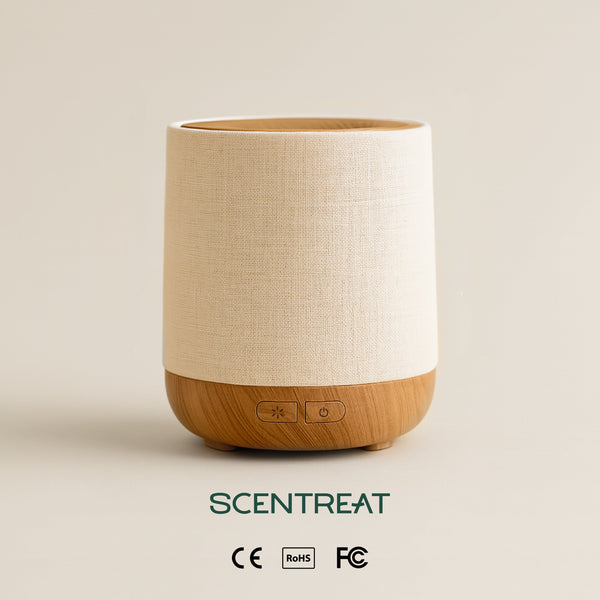
If you want a simple, low-stimulation addition to your evening wind-down, the Quiet Ceramic & Rubber Wood Ultrasonic Diffuser is designed for exactly that context. It runs quietly, disperses mist evenly, and sits on a nightstand without looking out of place.
Ultrasonic diffusion produces a steady, ambient scent rather than strong fragrance bursts — which is helpful when you want the aromatherapy to fade into the background rather than dominate the room.
Popular evening pairings include lavender (linalool), cedarwood (cedrol), bergamot, and chamomile — oils that research suggests may support perceived relaxation. None of them reset a sleep cycle on their own, but a calmer sensory environment can make it easier to follow through on the habits that do.
Works well for:
- Bedtime wind-down routines after busy days
- Reading and quiet nighttime habits
- Creating a calmer bedroom atmosphere
- Softer aromatherapy before sleep
- Meditation and evening relaxation spaces
- Reducing overstimulating nighttime environments
Why people choose it:
- Whisper-quiet ultrasonic diffusion — suitable for use while sleeping
- Rubber wood and ceramic construction — no plastic in contact with the oils
- Balanced mist distribution throughout the room
- Low visual footprint — fits a calm bedroom aesthetic
- Easy daily setup and cleaning
- Pairs well with essential oils for sleep or any calming single-note oil
If you want to explore more, you can browse SCENTREAT diffusers designed for relaxing bedroom spaces, or discover our essential oil collection — 100% pure single-note oils commonly used for evening wind-down routines.
Conclusion
Resetting your sleep cycle naturally comes down to consistency: a fixed wake time, morning daylight within 30 minutes of rising, a caffeine cutoff around 1–2 pm, and a calm, low-stimulation evening. Most people see the first real shift in 3–5 days; a stable reset usually settles in by 1–2 weeks. Small repeated habits, not dramatic interventions, are what the circadian system responds to.
If you'd like to make your bedroom environment part of that reset, Scentreat diffusers and calming essential oils can help create a sensory routine that signals rest — gently, every evening.
For more tips and inspiration, follow us on Facebook and Instagram. If you have any questions about Scentreat's products or promotions, please feel free to contact us at support@scentreat.com. Our dedicated team is available 24/7 and always happy to assist you.
Frequently Asked Questions
How long does it take to reset a sleep cycle naturally?
Most people notice the first meaningful shift in sleep timing after 3–5 days of consistent wake times. A full, stable reset — where falling asleep and waking feel natural at the new times — typically takes 1–2 weeks of daily consistency.
Can aromatherapy help support bedtime routines?
Aromatherapy doesn't reset your circadian rhythm on its own, but a calming, consistent sensory environment can make it easier to follow through on the habits that do. Many people use lavender or cedarwood in a quiet diffuser as part of a nightly wind-down to help the brain associate a sensory cue with rest.
What disrupts sleep cycles the most?
Inconsistent sleep and wake times are the biggest driver. After that: evening light exposure (especially blue light from screens), caffeine consumed after 1–2 pm, late-day stress or heavy meals, and irregular schedules caused by shift work or travel.
Can diffusers help create a better sleep environment?
A quiet ultrasonic diffuser running a calming oil adds a low-stimulation sensory layer to the bedroom — which supports the winding-down process. It works best as part of a consistent nighttime routine rather than as a standalone fix.
What is the best habit for improving sleep naturally?
A fixed morning wake time — held even after a poor night — is consistently the most effective single habit for stabilizing circadian rhythm. Pair it with 10–20 minutes of outdoor morning light and you have the two most evidence-backed anchors for a natural sleep reset.