

Key Takeaways
BEST BUY PICKS
Falling asleep fast can be difficult even when you feel tired. In many cases, it's not just about lack of sleep—it's an overactive mind, inconsistent habits, or an environment that keeps your body from fully relaxing.
For the complete guide, see How to Sleep Better at Night With Simple Habits That Actually Work.
Quick answer: Most people can fall asleep faster by cooling their bedroom to around 65°F (18–19°C), stopping caffeine at least 6 hours before bed, and using a structured breathing technique like 4-7-8 (inhale 4 counts, hold 7, exhale 8). If sleep still doesn't come within 20 minutes, get up briefly — lying awake and frustrated makes it harder, not easier.
The good news is that small, simple adjustments can make a real difference. In this guide, Scentreat explains how to fall asleep fast, what may be keeping you awake, and practical ways to help your body relax and transition into sleep more naturally.
Why You Can't Fall Asleep Fast

Falling asleep fast isn't just about feeling tired—it's about whether your body is ready to relax. In most cases, difficulty falling asleep comes from a combination of mental activity, daily habits, and environmental signals that keep your system slightly alert.
Understanding these factors is the first step to improving how you fall asleep. Instead of forcing sleep, it becomes easier when you remove what's keeping your body in "awake mode."
1. An Overactive Mind
One of the most common reasons people struggle to fall asleep fast is mental activity that doesn't slow down at night.
Your brain may:
- replay conversations or events
- plan the next day
- stay stuck in repetitive thoughts
Even if your body feels tired, your mind can keep your nervous system alert. This is one reason some people can't fall asleep even when tired. Racing thoughts at night are especially common — if that sounds familiar, see our guide on how to quiet racing thoughts at night.
2. Inconsistent Sleep Habits
Your body relies on a consistent rhythm to regulate sleep. When your schedule changes frequently, your internal clock becomes less reliable.
This can lead to:
- delayed sleep signals
- difficulty feeling sleepy at the right time
- longer time to fall asleep
Without consistency, your body doesn't get a clear signal for when to wind down. Learning how to fix your sleep schedule can help restore that rhythm over time.
3. Evening Stimulation
Many common evening habits keep your brain active longer than expected.
This includes:
- screen exposure
- bright lighting
- work or stimulating content
Caffeine is often underestimated here. Research suggests it takes about 6–8 hours for caffeine to clear your system — so an afternoon coffee at 3 pm can still be affecting you at 9 pm.
These signals tell your brain to stay alert, making it harder to fall asleep quickly—even when you feel tired.
4. A Non-Supportive Sleep Environment
Your environment plays a key role in how easily you fall asleep. Even small disruptions can delay sleep.
Common factors include:
- light or noise
- uncomfortable temperature — most sleep researchers point to ~65°F (18–19°C) as the sweet spot
- an inconsistent sleep setup
When your surroundings aren't calm and stable, your body remains partially alert instead of fully relaxing.
The 10–60–120 Second Sleep Method

If you're trying to figure out how to fall asleep fast, this method offers a simple, structured way to help your body relax step by step. Instead of forcing sleep, it focuses on calming your body, slowing your breathing, and clearing your mind—three key signals your brain needs to transition into rest.
In 10 seconds: Release physical tension
Start by relaxing your face, dropping your shoulders, and letting go of any tension in your body. Even small areas of tightness can keep your nervous system slightly alert.
This first step helps your body shift out of "active mode" and prepares it for rest.
In 60 seconds: Slow your breathing with 4-7-8
Use the 4-7-8 breathing technique to slow your heart rate and activate your parasympathetic nervous system:
- Inhale quietly through your nose for 4 counts
- Hold your breath for 7 counts
- Exhale slowly through your mouth for 8 counts
- Repeat 3–4 cycles
This pattern signals your nervous system that it's safe to unwind. As your breathing becomes deeper and more steady, your body begins to relax naturally.
In 120 seconds: Quiet your thoughts
Once your body is relaxed, focus on your mind. Techniques like cognitive shuffle—thinking of random, unrelated words or images—can help interrupt overthinking.
This prevents your brain from staying in a loop of thoughts and allows it to gradually drift into sleep.
Why this method works
This approach is effective because it targets three essential areas at the same time:
- your body (releasing tension)
- your nervous system (slowing down through breathing)
- your mind (reducing mental activity)
When these three are aligned, falling asleep becomes easier and more natural—without needing to force it.
17 Proven Ways to Fall Asleep Fast

If you're trying to understand how to fall asleep fast, the goal isn't to force sleep—it's to reduce what's keeping your body in "awake mode." When your body relaxes, your mind quiets, and your environment supports rest, sleep happens more naturally.
Body & Nervous System
The first step is calming your body. Physical tension often keeps your nervous system slightly alert—even when you feel tired.
- 4-7-8 breathing — inhale 4, hold 7, exhale 8; repeat 3–4 cycles to lower heart rate
- Military sleep method — systematically relax each body part from face to toes, then picture a calm scene
- Release tension through progressive muscle relaxation (tense, then release each muscle group)
- Keep your room at ~65°F / 18–19°C — a slight drop in body temperature is one of your body's natural sleep-onset signals
- Take a warm shower 1–2 hours before bed to trigger the cooling effect that aids sleep onset
Habits & Routine
Your daily habits shape how easily you fall asleep at night. Small inconsistencies can delay your body's natural sleep signals.
- Go to bed and wake up at the same time each day
- Reduce screen exposure before bed to limit blue-light stimulation
- Stay physically active during the day to build sleep pressure
- Avoid caffeine at least 6 hours before your target bedtime — it stays active in your system longer than most people expect
- Keep evening meals light to avoid discomfort at night
Mind & Mental Reset
Even when your body is ready to rest, your mind can stay active. These techniques help break that cycle.
- Use cognitive shuffle to interrupt overthinking
- Write down thoughts or tomorrow's to-do list to clear mental clutter before bed
- Apply the 20-minute rule: if you've been lying awake for roughly 20 minutes without sleep coming, get up, go to another room, and do something quiet (reading, gentle stretching) until you feel drowsy — then return to bed. Staying in bed while frustrated teaches your brain to associate the bed with wakefulness.
Environment Optimization
Your surroundings constantly signal your brain whether to stay alert or relax. Small adjustments can make a noticeable difference.
- Keep your room dark to support melatonin production
- Reduce sudden noise or use soft, consistent sound
- Create a calm, familiar, and distraction-free space
For people who use aromatherapy at night, choosing the best quiet diffuser for sleep can help maintain a calmer environment.
Sleep Trigger (What Most People Miss)
- Build a consistent signal your brain recognizes as "time to sleep"
This could be dimming the lights, slowing your routine, or introducing a calming scent before bed. Over time, your brain begins to associate this pattern with rest—making it easier to fall asleep without effort. Scent is one of the most direct ways to build this signal — explore the science behind why scent helps you sleep.
Sleep Trigger System (The Missing Key)

Most people focus only on techniques when trying to fall asleep fast—breathing, relaxation, or reducing screen time. These help, but they're only part of the solution.
What actually makes a long-term difference is building a consistent sleep trigger system. Your brain learns through repetition and association. When you repeat the same signals each night, your body begins to recognize them as a cue for rest.
This can be a combination of simple actions—slowing your breathing, dimming the lights, or introducing a familiar scent. On their own, these are small steps. But together, and repeated over time, they become a pattern your brain responds to automatically.
Without this system, falling asleep often depends on effort—you try to relax, try to stop thinking, try to force sleep. With it, your body already knows what to do. The transition into sleep becomes smoother, more natural, and far less effortful.
Natural Sleep Aids (Including Essential Oils)

Beyond habits and techniques, certain natural elements can support your body in relaxing more easily at night. These don't replace good sleep routines—but they can make it easier for your body to transition into rest.
Some of the most commonly used options include:
- Lavender — contains linalool, a compound that acts on GABA receptors in the brain; systematic reviews have found that inhaled lavender may improve perceived sleep quality
- Chamomile for gentle relaxation and emotional ease
- Sandalwood for a deeper, grounding sense of calm
These natural scents don't force sleep. Instead, they help reduce mental tension and create a more relaxed state, allowing sleep to come more naturally. According to the Sleep Foundation, research suggests certain aromas may support relaxation and help ease the transition into sleep when used consistently.
When used consistently—especially with a diffuser—they can become part of a simple nightly routine that signals your body it's time to unwind. The sleep & relaxation oils collection is a good place to start if you're new to aromatherapy for sleep.
Why Scent Helps You Fall Asleep Faster

Creating a simple bedtime routine helps—but what makes it effective is the signals your brain responds to. Among these, scent is one of the most powerful and often overlooked.
Smell is directly connected to the brain's limbic system — the region that governs emotion, memory, and stress response. Because of this, certain scents can influence how your body feels almost immediately—without needing conscious effort.
This is why scent can:
- reduce stress and mental tension
- calm your nervous system by reducing cortisol activity
- support a faster transition into relaxation
When used consistently, scent becomes more than just something you notice—it becomes a signal. Your brain starts to associate that familiar smell with rest, making it easier to unwind each night.
A simple routine can help reinforce this effect:
- turn on your diffuser 20–30 minutes before bed
- dim the lights and reduce stimulation
- allow your body and mind to slow down naturally
Over time, this repetition trains your brain to recognize when it's time to sleep. Instead of forcing rest, your body begins to follow the signal automatically—making it easier to fall asleep faster in a calm, consistent way.
How Scentreat Helps You Sleep Better

If you're trying to fall asleep fast, relaxation is the missing piece—not just tiredness. Your body may be ready to rest, but your mind often needs a clear signal to slow down.
That signal often comes from your environment. A well-designed essential oil diffuser helps create a consistent, low-stimulation space that supports relaxation—without requiring effort or attention.
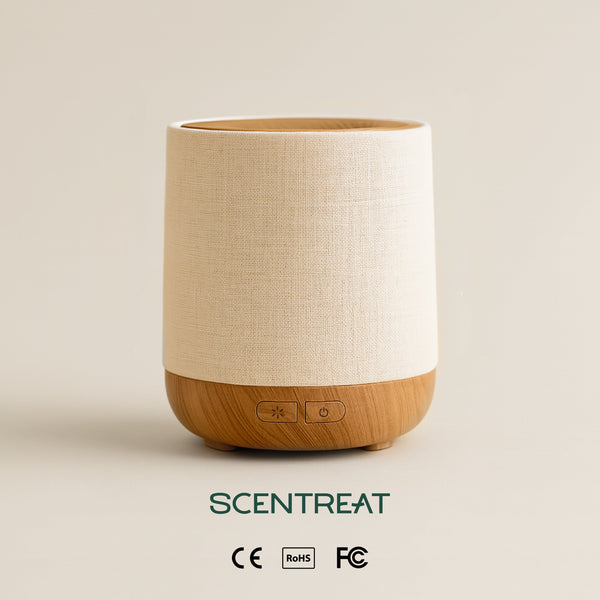
The Scentreat Minimalist Wood Ultrasonic Sleep Diffuser is designed for this purpose. It runs quietly, releases a steady mist, and helps maintain a calm atmosphere that your body can respond to night after night.
Many of the best ultrasonic essential oil diffusers are designed with these same qualities in mind.
Essential oils, like chamomile, work as a supporting layer. When used with a diffuser, they add a gentle scent that helps deepen relaxation and make the transition into sleep feel smoother. You can explore 100% pure essential oils for sleep to find a scent that fits your routine.
Why It Supports Falling Asleep Faster
- Creates a calm, low-stimulation sleep environment
- Signals your brain that it's time to slow down
- Supports a more consistent and repeatable sleep routine
- Works quietly in the background without distraction
- Can be paired with calming oils for enhanced relaxation
Over time, your brain begins to associate that environment with rest—turning your space into a natural sleep trigger, rather than something you have to force.
Simple Night Routine (Recommended)
- Dim the lights and reduce stimulation
- Turn on your diffuser 20–30 minutes before bed
- Add a few drops of calming oil (optional, but recommended)
- Use a simple method like the 4-7-8 breathing technique or 10–60–120 body scan
- Go to bed once your body starts to relax
This creates a repeatable system—so your body learns when to rest, instead of relying on random effort each night.
If you're looking to fall asleep faster, creating a calm and consistent sleep environment can make a real difference. You can explore the Scentreat Essential Oil Diffuser For Sleep Collection or discover relaxing blends in the ceramic & wood ultrasonic diffusers to support a smoother, more restful sleep routine.
When Falling Asleep Is Consistently Hard
Occasional difficulty falling asleep is normal — stress, travel, or a change in routine can temporarily disrupt sleep. But if you regularly take more than 30–45 minutes to fall asleep, and this has been happening most nights for several weeks, it may be worth speaking with a doctor.
Persistent sleep-onset trouble is one of the hallmarks of insomnia. The Mayo Clinic notes that CBT-I (Cognitive Behavioral Therapy for Insomnia) is the first-line recommended treatment — it addresses the underlying thought patterns and habits driving poor sleep, and often outperforms sleep medication over the long term.
A doctor can rule out other contributing factors such as sleep apnea, restless legs syndrome, anxiety, or medication side effects. Early guidance makes a significant difference.
Conclusion
Falling asleep fast isn't about trying harder—it's about creating the right conditions for your body to relax. Concrete tools like the 4-7-8 breathing method, a bedroom cooled to ~65°F, and cutting caffeine 6+ hours before bed give your body real signals to work with. Add a consistent routine and simple environmental cues like scent, and sleep starts to feel far less effortful over time.
For more tips and inspiration, follow us on Facebook and Instagram. If you have any questions about Scentreat's products or promotions, please feel free to contact us at support@scentreat.com. Our dedicated team is available 24/7 and always happy to assist you.
Frequently Asked Questions
How can I fall asleep fast naturally?
Cool your bedroom to around 65°F (18–19°C), stop caffeine at least 6 hours before bed, and use a structured technique like 4-7-8 breathing (inhale 4, hold 7, exhale 8 — repeat 3–4 cycles). A consistent pre-sleep routine — same time each night, dim lights, and a calming scent — helps your brain learn when to wind down automatically.
Why can't I fall asleep even when tired?
Because your brain may still be active due to stress, screen use, or irregular sleep habits.
What is the fastest sleep technique?
4-7-8 breathing is one of the most widely cited quick sleep-onset techniques: inhale through your nose for 4 counts, hold for 7, exhale slowly through your mouth for 8. Repeat 3–4 cycles. It activates your parasympathetic nervous system, slowing your heart rate and signalling your body to relax. The military sleep method — systematically relaxing every muscle from face to toes, then visualising a calm scene — is another option that many people find works within 2 minutes of practice. If you still can't sleep after about 20 minutes, apply the 20-minute rule: get up, do something quiet in dim light, and return to bed only when you feel drowsy.
Do essential oils help you fall asleep faster?
Research suggests certain oils — particularly lavender, which contains linalool — may improve perceived sleep quality when inhaled. They work best as part of a consistent routine: diffusing a calming scent 20–30 minutes before bed helps train your brain to associate that smell with rest, making the wind-down feel more automatic over time.
Should I use a diffuser every night?
Yes—consistent use helps your brain associate scent with sleep, improving results over time.