

A diffuser timer controls how long the device runs, intermittent mode alternates between misting and resting, mist intensity controls how much scent is released, and auto shut-off is a safety feature that stops certain diffusers when the water runs low. This guide from Scentreat explains what each diffuser setting does and which one to use for sleep, work, large rooms, kids, pets and everyday home fragrance.
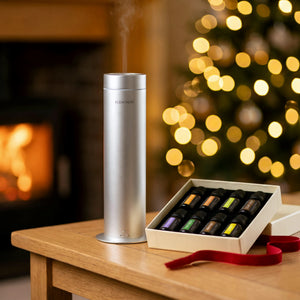
Covers 1,500 sq ft
Waterless Cold-Air Diffuser for Large Rooms, 1,500 sq ftUnderstanding Your Diffuser’s Settings

The four settings do different jobs. A timer decides when the session ends, intermittent mode changes how the diffuser runs during that session, mist intensity changes output, and auto shut-off protects the machine when a condition such as low water is detected.
| Setting | What it does | Best for |
|---|---|---|
| Timer | Stops after a set time | Sleep, work, short sessions |
| Intermittent | Alternates mist and pause | Longer, gentler scenting |
| Mist intensity | Changes scent output | Matching output to room size |
| Auto shut-off | Stops automatically | Low-water protection and safety |
Key takeaway: the most common beginner mistake is treating these settings as interchangeable. You can use a 3-hour timer and intermittent mist at the same time, and a diffuser may also have auto shut-off even when no timer has been selected.
Timer Presets (1H, 3H, 6H and Continuous)
A timer preset tells the diffuser how long to operate before switching off. Common choices include 1 hour, 3 hours, 6 hours and continuous mode, although the exact options depend on the diffuser.
| Timer | Good for |
|---|---|
| 1 hour | Shorter routines such as reading, meditation or winding down before bed |
| 3 hours | A work block, an evening at home or a longer relaxation session |
| 6 hours | Background scent for much of the day; more common on larger or long-runtime diffusers |
| Continuous | Keeps operating until you stop it or another safety feature activates |
Scentreat’s Ceramic Diffuser, for example, uses 1-, 3- and 8-hour timer choices plus continuous operation rather than a 6-hour preset. A timer is useful when you already know how long you want the room scented, but it does not necessarily control how much mist comes out during that period.
Continuous vs Intermittent Mode
Continuous mode produces mist without planned rest periods, while intermittent mode alternates between misting and pausing. Intermittent mode is useful when you want fragrance to last longer without the room becoming heavily scented, and it can make the same water tank last significantly longer.
Scentreat’s Ceramic and Minimalist Wood ultrasonic diffusers run about 4–5 hours on continuous mist and about 8–10 hours on intermittent mode from one fill.
Good to know: do not assume the diffuser is broken when the mist suddenly disappears during intermittent mode; the pause is intentional. If a diffuser appears to stop and start, switch briefly to continuous mode. If mist returns normally, the machine is probably working as designed.
Mist Intensity Levels
Mist intensity controls how strongly the diffuser releases scent. On an ultrasonic diffuser, a stronger mode may increase the amount of water-and-oil mist produced. On a waterless diffuser, higher intensity often means longer atomizing periods, shorter rest periods or both. That usually means:
- More noticeable scent
- Faster oil use
- Greater chance of overwhelming a small room
Start low when you first use a diffuser or try a new oil. A small bathroom or bedroom rarely needs the same output as a large open-plan living room.
Commercial cold-air diffusers often control intensity through work-and-pause cycles. One documented commercial system, for example, increases scent output by lengthening work cycles and shortening pauses rather than simply running continuously. For home use, the same principle applies: stronger settings are not automatically better settings.
Auto Shut-Off (Waterless Protection)
Auto shut-off is a safety feature, not a scenting mode. On a water-based ultrasonic diffuser, it commonly switches the machine off when the water level becomes too low for normal operation. This is sometimes described as dry-run or low-water protection, and it should not be confused with a waterless diffuser, which is designed to operate without water in the first place.
Scentreat’s Ceramic and Wood ultrasonic diffusers automatically stop when their water runs out. Other models use timers or programmed schedules instead: Pillar, for example, follows the work-and-pause schedule set in its app, and CalmRide has 1-, 2- and 3-hour timer settings.
Key takeaway: auto shut-off is useful protection if you forget the diffuser. It is not a reason to deliberately leave every diffuser running indefinitely.
Recommended Diffuser Settings by Situation

The best diffuser setting depends on the room, the people or animals in it and how strong the diffuser is.
| Situation | Starting setting |
|---|---|
| Sleep and bedtime | 30–60 min timer, or low intermittent on a diffuser designed for overnight use |
| Work and focus | 20–60 min on low or medium, then a fragrance break |
| Relaxation | 30–60 min on low or medium, usually on a timer |
| All-day home fragrance | Several scheduled or intermittent sessions with breaks |
| Kids and babies | Short session, low output, well-ventilated room |
| Pets | Lower output, shorter sessions, a room the pet can leave |
| Large or open-plan rooms | A diffuser sized for the space, started below maximum |
| Bathrooms and small spaces | 15–30 min or a short intermittent cycle |
| Businesses | A schedule matched to opening hours |
For Sleep and Bedtime
For bedtime, start with a low scent level and a limited session rather than maximum continuous output all night. A 30–60 minute session before sleep is enough for many people, or use a low intermittent mode if your diffuser is designed for longer overnight operation.
Scentreat’s Minimalist Wood Diffuser is a useful example. Its 200 ml tank lasts about 4–5 hours continuously or 8–10 hours intermittently, and the unit automatically stops when the water runs out. If you prefer the scent to stop after you fall asleep, choose a timer; if you want a lighter background scent for longer, choose intermittent mode. For more detail, see our guide to the best diffuser settings for sleep.
Do not increase the intensity simply because you stop noticing the fragrance after lying in the room for a while. Nose fatigue can make the scent seem weaker even when the diffuser is still working.
For Work and Focus
For a desk or home office, shorter scheduled sessions usually work better than leaving a strong diffuser running all day. Try a 20–60 minute session on low or medium output, then take a fragrance break. This keeps the scent noticeable without letting your nose adapt to it as quickly.
A timer is especially useful for work because you can align it with a task block. If you work for several hours, intermittent mode is a better choice than increasing the oil or using maximum continuous output. Keep the diffuser slightly away from your face rather than placing it directly beside the keyboard.
For Relaxation and Unwinding
A 30–60 minute session on low or medium intensity is a simple starting point for reading, stretching, yoga or an evening routine, and timer mode is usually the easiest setting here. You want the scent to support the routine, not become the main thing you notice.
If you use an ultrasonic diffuser, continuous mode can work for a short session. If you want the aroma to last through a longer evening, switch to intermittent.
For All-Day Home Fragrance
All-day fragrance is better handled through scheduled or intermittent scenting than continuous maximum output. Instead of running one long session from morning to night, use several scent periods with breaks between them.
A programmable waterless model is especially useful here because you can decide when the diffuser works and rests. Pillar and Spire both use app timers, while other cold-air systems use configurable work-and-pause cycles for exactly this purpose. This also helps reduce oil consumption: if nobody is home from 9 a.m. to 5 p.m., there is little reason to diffuse through those eight hours.
For Kids and Babies
For babies and young children, use a much more conservative approach than you would for an adult living room. Nationwide Children’s recommends using diffusers only for short periods in well-ventilated spaces around children and stopping if coughing, wheezing, headache, nausea or other irritation develops. It also advises checking with a healthcare provider when a child has asthma, allergies or another relevant condition.
Important: for a baby, do not treat a long overnight timer as the default setting just because the diffuser can run that long. A short session at low output in a ventilated room is the safer starting point, and parents should check the oil itself before use. Keep both the diffuser and concentrated oil bottles completely out of reach.
For Homes with Pets
Use lower output, shorter sessions and normal ventilation when pets share the room. Dogs and cats have a much stronger sense of smell than people, so a setting that feels light to you may be intense to them.
The ASPCA says short diffuser use in a secured area is unlikely to be a problem for many healthy dogs and cats, but animals should not have direct access to concentrated oils and pets with breathing problems may be better off without diffusion. Make sure the animal can leave the room. Avoid active essential-oil diffusion in homes with birds unless an appropriate veterinarian specifically advises otherwise; the ASPCA highlights their particularly sensitive respiratory systems.
For Large or Open-Plan Rooms
Large rooms usually need more output, better placement or a diffuser designed for larger coverage. Do not automatically compensate for an undersized diffuser by adding excessive oil; a small 100–200 ml ultrasonic unit is better suited to an enclosed room than a large open kitchen-living area.
For open spaces, waterless cold-air systems give you more control over scent strength and work/pause cycles. Scentreat currently lists Pillar for open rooms up to 1,500 sq ft and Spire for spaces up to 1,300 sq ft, with app scheduling on both. Start below maximum intensity and increase only if the scent does not reach the whole space. Airflow and ceiling height matter as much as square footage.
For Bathrooms and Small Spaces
Use less scent and shorter sessions in small rooms. A bathroom becomes heavily fragranced much faster than a living room, so a 15–30 minute session or a short intermittent cycle may be enough. If the room has poor ventilation, lower the output further.
Do not use fragrance to hide a moisture, mold, drain or cleaning problem. Fix the odor source first, then use the diffuser if you still want fragrance.
For Businesses (Commercial Scent Machines and Scheduling)
Commercial scenting works best with schedules, not continuous maximum output. Hotels, shops, reception areas and showrooms usually need fragrance only during operating hours. A commercial waterless diffuser may allow several daily work periods plus separate work/pause intervals, and some systems let the operator change intensity by adjusting how many seconds the machine atomizes versus rests.
A simple business schedule might start shortly before opening and stop around closing time. Use lower output during quiet periods and increase it only when foot traffic, room size or airflow requires more. Large commercial spaces should be sized around the machine’s actual coverage and HVAC conditions rather than choosing the longest timer available.

Whisper-quiet for sleep
Quiet Ceramic Essential Oil Diffuser for Bedroom, 180 mlHandcrafted ceramic essential oil diffuser for bedroom and sleep: quieter than a whisper (27.3 dB, lab-test...
Recommended Settings by Diffuser Type and Tank Size

Timer settings should match the technology inside the diffuser. Water-based ultrasonic models, waterless cold-air systems and heated plug-ins do not behave the same way.
Ultrasonic Diffusers
For an ultrasonic diffuser, intermittent mode is usually the best setting when you want a longer session from one tank. Continuous mode works well for shorter scenting, timer presets are useful when you want a predictable end time, and low-water auto shut-off acts as the final safety backup. Scentreat’s current ultrasonic range shows the difference clearly:
| Scentreat model | Settings | Best use |
|---|---|---|
| Ceramic 180 ml | 1H / 3H / 8H / continuous | Bedroom, office |
| Wood 200 ml | Continuous / intermittent | Bedroom, living room |
| Lantern 80 ml | 30 sec on/off / 1H / 2H | Nightstand, small room |
The Ceramic and Wood models use automatic low-water shut-off, and their tanks last about 4–5 hours continuously or 8–10 hours intermittently. For a first session, choose a timer before choosing continuous mode.
Waterless (Nebulizing) Diffusers
Waterless diffusers work better with intensity and scheduling than with the idea of “emptying a tank.” They atomize oil directly and can smell much stronger than a water-based diffuser. The useful settings are:
- Session schedule
- Work time
- Pause time
- Intensity
- App timer
Scentreat Pillar uses an app timer for large rooms, Spire adds cordless app-controlled use, Roam Mini uses an app timer for smaller spaces, and CalmRide has simple 1-, 2- and 3-hour timers.
Key takeaway: for waterless models, start with longer pause periods rather than immediately increasing the atomizing time. The oil reaches the room undiluted, so small changes in the work/pause cycle can make a noticeable difference.
Heat and Plug-in Diffusers
Heat and plug-in diffusers are usually simpler. Some have only an on/off switch; others include intensity levels or timer presets. Because heat or evaporation continues whenever the unit is operating, a timer is especially useful when you do not want fragrance released continuously. If the device has no timer, pair its use with a routine you can remember rather than leaving it on by default.
Never assume that a heat diffuser has low-water protection; many do not use water at all. Follow the actual device instructions.
How Long a Full Tank Lasts (100ml, 200–300ml, 500ml+)
Tank capacity alone does not determine runtime. Mist output, intermittent settings and timer behavior matter just as much.
| Tank size | Typical use | What affects runtime most |
|---|---|---|
| About 100 ml | Small room / desk | Mist output and timer |
| 200–300 ml | Bedroom / living room | Continuous vs intermittent |
| 500 ml+ | Large room / long sessions | Output rate and mode |
A 100 ml ultrasonic diffuser might run only a few hours continuously but much longer on a low intermittent cycle. Scentreat’s 180–200 ml ultrasonic models provide a useful real-world example: about 4–5 hours continuous versus 8–10 hours intermittent. For a 500 ml or larger diffuser, do not assume twice the tank size means exactly twice the runtime; if the larger machine also produces much more mist per hour, the water may still disappear relatively quickly.
A simple estimate: runtime ≈ tank capacity ÷ mist output per hour, then adjust for intermittent pauses. For waterless diffusers, bottle capacity is not directly comparable to an ultrasonic water tank; oil consumption depends on the work/pause schedule and intensity instead.
Can You Leave a Diffuser On All Day or All Night?

A diffuser may be capable of running all day or all night, but that does not mean continuous maximum diffusion is the best setting.
For adults using an ultrasonic diffuser, a timer or intermittent mode is usually the more practical option. For overnight use, choose a model with reliable auto shut-off and use a low or intermittent setting if the manufacturer supports it.
Scentreat’s Ceramic and Wood models automatically stop when the water runs out, while Pillar follows the schedule programmed in its app and CalmRide stops according to its 1-, 2- or 3-hour timer.
All-day home fragrance is better handled with work/rest cycles, and all-night scent is better handled with a timer or low intermittent mode than maximum continuous output. Around babies, children, pets or anyone with asthma or fragrance sensitivity, use shorter sessions and more caution rather than the maximum runtime the device allows.
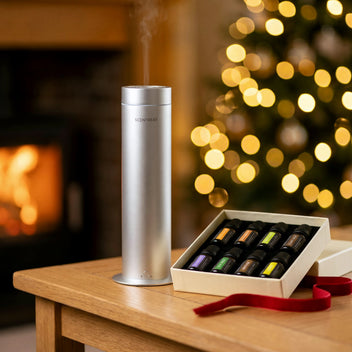
Covers 1,500 sq ft
Waterless Cold-Air Diffuser for Large Rooms, 1,500 sq ftWaterless cold-air diffuser in aluminum: 100 ml oil bottle, covers up to 1,500 sq ft, under 30 dB, app time...
7 Signs You’re Over-Diffusing

Too much diffusion usually shows up as discomfort before it shows up as a problem with the machine.
Watch for:
- Headache
- Nausea or dizziness
- Burning or irritated eyes
- Nose or throat irritation
- Coughing or wheezing
- A scent that feels heavy when you enter the room
- A pet repeatedly leaving the room or showing unusual respiratory discomfort
If this happens, switch the diffuser off and ventilate the space. Do not solve over-diffusion by switching to another strong oil immediately; reduce the intensity, shorten the timer or increase the pause periods before the next session.
Important: children’s health guidance specifically recommends stopping essential-oil diffusion when symptoms such as coughing, wheezing, headache or nausea appear. For pets, breathing difficulty or suspected essential-oil exposure deserves veterinary advice rather than simply changing the timer.
Troubleshooting Diffuser Timer and Auto Shut-Off Problems

A diffuser that stops early is often following a timer, intermittent cycle or low-water safety feature rather than malfunctioning.
The Timer Button Doesn’t Work
Start by confirming that the diffuser is actually in mist mode. Some models let the light operate independently, so a glowing lamp does not necessarily mean the mist function is active. Press the timer or mist button in the order described in the manual and check whether the indicator changes. If nothing happens:
- Disconnect power.
- Reconnect the correct adapter.
- Check the water level if it is an ultrasonic model.
- Restart the diffuser.
- Test continuous mist before testing timed mode.
Scentreat specifically recommends checking the selected timer and water level when an ultrasonic model appears to stop unexpectedly.
Settings Reset After a Power Outage
Many basic diffusers do not remember their timer after losing power. When electricity returns, the unit may remain off or restart at its default setting, which is not necessarily a fault. Check the manual to see whether your diffuser has memory.
App-controlled scent machines may also need the internal clock, Bluetooth connection or saved schedule checked after an extended power loss. For business scenting, confirm the local time and working periods before assuming the atomizer has failed.
Diffuser Shuts Off Too Early
On an ultrasonic model, check the water first. A low-water sensor can stop the diffuser before the timer ends if there is not enough water for safe operation. Also check:
- Whether the wrong timer was selected
- Whether the unit is in intermittent mode
- Whether the tank was underfilled
- Whether the tank was overfilled
- Whether the ultrasonic plate needs cleaning
- Whether the diffuser is sitting on a flat surface
Water quality, temperature and oil type can also affect mist output and apparent runtime on some ultrasonic models. If the machine repeatedly shuts off with the correct water level and no timer selected, follow the manufacturer troubleshooting steps.
Diffuser Doesn’t Turn Off When the Timer Ends or the Tank Is Empty
Turn the diffuser off manually and unplug it. Do not keep using a water-based diffuser if its low-water protection appears to have failed.
Check whether you selected a true timer or only an intermittent mist mode; intermittent mode controls the mist cycle, but it does not necessarily set an end time. If the timer has definitely expired and the unit keeps running, reset it once according to the manual.
Important: if low-water auto shut-off also fails, stop using the diffuser until the manufacturer or support team has checked it. Safety features should not be treated as optional.
Scentreat Essential Oil Diffusers: Ultrasonic and Waterless Options for Every Space

Scentreat offers both ultrasonic and waterless diffusers, so you can choose the type of control that suits the room instead of relying on one timer system for every space.
Why choose Scentreat: the ultrasonic models make timer and intermittent settings easy for bedrooms and everyday home use, while the cold-air range adds app scheduling, stronger coverage and waterless operation for larger spaces. Scentreat currently backs its diffusers with a 100-day return policy and a 1-year limited warranty.
Scentreat Waterless Diffuser
Scentreat’s waterless range runs directly from compatible pure essential oil, with no water tank and no intentional heat. The models are built around different spaces rather than one machine trying to cover everything.
| Model | Best for | Main control |
|---|---|---|
| Pillar | Large open rooms | App timer |
| Spire | Room-to-room use | App timer |
| Night Light | Bedside | Automatic / timed use |
| CalmRide | Car and travel | 1H / 2H / 3H |
| Roam Mini | Desk and bedside | App timer |
Pillar is the large-room option, currently listed for open spaces up to 1,500 sq ft with a 150 ml bottle. Spire is cordless and rated up to 1,300 sq ft with a 120 ml bottle. Roam Mini is the smaller 20 ml app-controlled option for a desk or bedside, and CalmRide is simpler still: choose a 1-, 2- or 3-hour session and let it stop automatically.
The main benefit of these waterless settings is control over work and rest rather than simply choosing how many hours a water tank lasts. For large rooms, start with a lower scent level and expand the schedule only if needed.
Scentreat Ultrasonic Diffuser
Scentreat’s ultrasonic models are better suited to bedrooms, offices and smaller living spaces where quiet mist and straightforward timers matter more than large-room output.
The Ceramic & Rubber Wood Diffuser uses a 180 ml tank, covers about 320 sq ft and offers 1-, 3- and 8-hour timer choices plus continuous operation. The Minimalist Wood Diffuser uses a 200 ml tank and covers about 375 sq ft; its continuous mode lasts roughly 4–5 hours, while intermittent mode stretches the same fill to about 8–10 hours. Both automatically shut off when the water runs out.
These models are a good fit when you want a simple routine:
| When you want | Use |
|---|---|
| A defined session | The timer |
| Shorter fragrance | Continuous mist |
| A lighter scent for longer | Intermittent mode |
| A safety backup | Auto shut-off, rather than the main way you end every session |
Pair Your Scentreat Diffuser with Scentreat 100% Pure Essential Oils
Timer settings control how long the diffuser runs. The oil controls what the room smells like. Scentreat’s pure essential-oil range includes familiar single oils such as Lavender, Peppermint, Eucalyptus, Lemon, Frankincense and Cedarwood.
For ultrasonic diffusers, start with a moderate amount rather than increasing both the oil and the runtime at the same time. Scentreat’s current guide suggests about 8–12 drops for a medium scent in its 180 ml Ceramic Diffuser and about 9–13 drops in the 200 ml Wood Diffuser. For waterless diffusers, do not add water: the oil goes directly into the compatible bottle or reservoir, and scent strength is managed through the diffuser’s intensity and work/pause settings.
Tip: if you are trying a new oil, change one thing at a time: either the intensity, the timer or the oil amount. That makes it much easier to find the setting you actually like.
Conclusion

Use a timer when you want a clear end time, intermittent mode when you want lighter scent for longer, mist intensity to match the room, and auto shut-off as a safety backup.
For Scentreat, choose an ultrasonic Ceramic or Wood Diffuser for simple home timers and intermittent mist, or a waterless model such as Pillar when you want stronger scent with programmable scheduling.
Questions about which setting fits your diffuser? Follow Scentreat on Facebook or Instagram, or email support@scentreat.com.
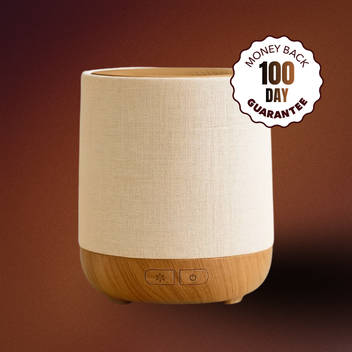
10 hours per fill
Wood Diffuser for Essential Oils, 200 ml, Up to 10 HoursWood essential oil diffuser that runs up to 10 hours on one 200 ml fill. Quieter than a whisper (27.3 dB, l...
FAQs
What Is the Difference Between a Diffuser Timer and Auto Shut-Off?
A timer stops the diffuser after a period you choose. Auto shut-off is a safety feature that stops the machine when a condition such as low water is detected. They can exist on the same diffuser and work independently.
Is Intermittent Mode Better Than Continuous Mode?
Intermittent mode is better when you want lighter scent for longer or want a tank to last longer. Continuous mode is useful for shorter sessions or when you want fragrance to build more quickly. Neither mode is universally better.
What Diffuser Setting Is Best for Sleep?
A timer or low intermittent setting is the easiest starting point for bedtime. Use a lower scent level and let the diffuser stop automatically rather than starting with maximum continuous output all night.
Can I Leave My Essential Oil Diffuser On All Night?
Only if the diffuser is designed for that runtime and has the appropriate safety features. For most home use, a timer or intermittent setting is preferable to maximum continuous diffusion. Use shorter sessions around babies, children, pets or anyone sensitive to fragrance.
Why Does My Diffuser Keep Turning Off?
Check the timer, water level and mist mode first. An ultrasonic diffuser may be activating low-water auto shut-off, while intermittent mode can make the machine look like it has stopped during its programmed pause.
Does Intermittent Mode Save Essential Oil?
It can. On an ultrasonic diffuser, intermittent mode reduces the amount of mist released over time. On a waterless diffuser, longer pause periods reduce how often oil is atomized. Actual oil savings depend on the diffuser’s work/pause cycle and intensity.
What Setting Should I Use in a Large Room?
Use a diffuser sized for the space first, then increase output gradually. For a large open room, a programmable waterless diffuser is usually more practical than running a small ultrasonic diffuser at maximum output continuously.

