

Key Takeaways
BEST BUY PICKS
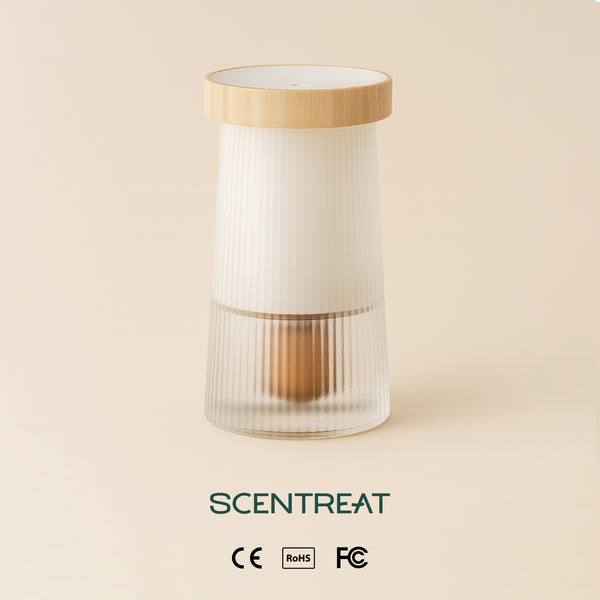
The best ultrasonic essential oil diffuser uses water and ultrasonic vibrations to turn a few drops of oil into a fine, even mist — filling a room with scent gently, without heat and without blasting pure oil directly into the air. Most ultrasonic models run at 20–30 dB (quieter than a whisper) and cover 100–300 sq ft on a single tank fill, making them the practical choice for bedrooms, home offices, and everyday living spaces. Below we break down how the technology works, what separates a good model from a forgettable one, and our seven top picks.
For the complete guide, see The 7 Best Essential Oil Diffusers of 2026, Tested and Reviewed.
In this guide, Scentreat breaks down the best ultrasonic essential oil diffusers, what actually matters when choosing one, and how to find the right fit for your space.
Why Choose an Ultrasonic Diffuser?

How it works: A piezoelectric disc at the base of the water tank vibrates at ultrasonic frequency (roughly 1–2 MHz). Those vibrations break water and oil into a micro-fine aerosol — no heat involved, so the volatile aromatic compounds in the oil stay intact.
Most ultrasonic models run at 20–30 dB — quieter than a library whisper — and cover 100–300 sq ft on a single fill. That combination of quiet operation and gentle output makes them the go-to for bedrooms, nurseries, and workspaces. We cover the plug-in alternatives further in Plug-In vs Ultrasonic Diffuser: Which Is Right for You?
Here's why most people land on ultrasonic:
- Gentler scent output — comfortable for extended sessions without becoming overwhelming
- Even distribution — fine mist suspends in the air longer than heavy droplets
- Whisper-quiet — most models measure under 30 dB, safe for sleep and focus work
- No-heat diffusion — oil chemistry isn't altered by warming, so you get the full aromatic profile
- Light humidification bonus — the water mist adds a small amount of moisture, useful in dry climates
For most users, ultrasonic diffusers strike the best balance between performance, comfort, and ease of daily use.
Ultrasonic vs Nebulizing: Quick Comparison
Not sure which diffuser type you need? Here's the short version before we get to picks:
| Feature | Ultrasonic | Nebulizing |
|---|---|---|
| How it works | Water + oil → fine mist | Pure oil → pressurised vapour |
| Scent strength | Soft, diffused | Strong, concentrated |
| Coverage | 100–300 sq ft | 400–900 sq ft |
| Noise level | 20–30 dB (near-silent) | 40–60 dB (audible hum) |
| Oil consumption | Low (diluted in water) | High (undiluted) |
| Best for | Everyday home use, sleep, focus | Large open spaces, therapeutic intensity |
For everyday home use, ultrasonic is the right starting point for most people. If you want intense scent in a large living room or open-plan space, a nebulizing model may suit you better — but for a bedroom, home office, or daily wellness routine, ultrasonic wins on comfort and cost.
Want to explore whether diffusers are the right choice altogether? Our cross-guide on Are Essential Oil Diffusers Safe? covers what to know before you buy.
Non-Toxic & BPA-Free: What to Look For
Since ultrasonic diffusers heat water (well, vibrate it) in a tank that touches your oils, material quality matters more than it looks on a spec sheet.
- BPA-free water reservoir — standard on most modern diffusers; check the label if you're using the diffuser in a nursery or child's room
- No plastic in the mist path — diffusers with a ceramic or glass interior are less likely to off-gas when oil contacts the tank walls over time
- 100% pure essential oils only — synthetic fragrance oils often contain solvents that can degrade plastic tanks faster; always use oils labelled 100% pure
- Auto shut-off — runs the tank dry safely without overheating the disc
The non-toxic essential oil diffuser in Scentreat's line uses a ceramic resonator and rubber wood exterior — both materials that keep plasticisers out of the mist path entirely. The oils we pair with it are 100% pure with no fillers or synthetic carriers.
Our Top Ultrasonic Picks at a Glance
Here are our top recommendations for the best ultrasonic essential oil diffuser based on different needs and spaces.
- Best for sleep: Rubber Wood & Ceramic Ultrasonic Diffuser (Scentreat)
- Best for large rooms: Ultrasonic Diffuser (AromaTech)
- Best for small spaces: Ultrasonic Diffuser (URPOWER)
- Best for beginners: Ultrasonic Diffuser (InnoGear)
- Best design-friendly: Quiet Low-Light Diffuser (Saje)
- Best budget: Ultrasonic Diffuser (ASAKUKI)
- Best everyday: Minimalist Wood Essential Oil Diffuser (Scentreat)
| Product | Best For | Tank (ml) | Runtime (hr) | Noise (dB) | Coverage (sq ft) | Price |
|---|---|---|---|---|---|---|
| Rubber Wood & Ceramic Ultrasonic Diffuser (Scentreat) | Sleep | 180 | Up to 8 | <30 | ~150 | $89.95 |
| Ultrasonic Diffuser (AromaTech) | Large rooms | 400–500 | Up to 10 | ~35 | 300+ | ~$80–$120 |
| Ultrasonic Diffuser (URPOWER) | Small spaces | 100–150 | 4–6 | <30 | ~100 | ~$20–$35 |
| Ultrasonic Diffuser (InnoGear) | Beginners | 150–300 | 6–8 | <35 | ~150 | ~$30–$60 |
| Quiet Low-Light Diffuser (Saje) | Design-friendly | 90–150 | 4–6 | <30 | ~100 | ~$50–$90 |
| Ultrasonic Diffuser (ASAKUKI) | Budget option | 300–500 | 8–12 | ~35 | ~200 | ~$25–$40 |
| Minimalist Wood Essential Oil Diffuser (Scentreat) | Everyday use | 200 | 6–7 | <30 | ~150 | ~$99 |
The 7 Best Ultrasonic Essential Oil Diffusers
Choosing the best ultrasonic essential oil diffuser depends less on how strong the scent is, and more on how it performs over time in your space.
Some models are better for larger areas with stronger mist output, while others focus on creating a softer, more comfortable scent for everyday use. The options below are selected based on how consistently they perform in real-life conditions.
1. Best Ultrasonic Diffuser for Sleep (Scentreat)

The Scentreat whisper-quiet ultrasonic diffuser combines a ceramic resonator and rubber wood body — no plastic in the mist path — with a gentle 8-hour runtime that pairs naturally with a sleep routine.
| Specification | Details |
|---|---|
| Rating | 9.3 / 10 |
| Price | $89.95 |
| Type | Ultrasonic |
| Capacity | 180 ml |
| Runtime | Up to 8 hours |
| Noise | <30 dB |
| Coverage | ~150 sq ft |
| Materials | Ceramic + rubber wood (BPA-free, no-plastic mist path) |
| Best For | Bedrooms, sleep routines, low-light spaces |
Pros:
- No heat, no plastic — ceramic mist path
- Under 30 dB — you won't hear it at night
- Auto shut-off when tank runs dry
- Natural rubber wood exterior ages beautifully
Cons:
- 180 ml tank is sized for one room, not open-plan
- Only available online
The diffuser we keep on the nightstand — reliable, quiet, and genuinely nice to look at.
2. Best Ultrasonic Diffuser for Large Rooms (AromaTech)

The AromaTech ultrasonic diffuser is built for larger spaces that require stronger and more consistent scent coverage.
| Specification | Details |
|---|---|
| Rating | 9.0 / 10 |
| Price | ~$80–$120 |
| Type | Ultrasonic |
| Capacity | 400–500 ml |
| Runtime | Up to 10 hours |
| Noise | ~35 dB |
| Coverage | 300+ sq ft |
| Best For | Open-plan living rooms, large offices |
Pros:
- Strong coverage for large areas
- Large tank reduces refilling frequency
- Stable, consistent performance
Cons:
- Bulkier footprint
- Higher price point
Works well where smaller diffusers trail off before reaching the far end of the room.
3. Best Ultrasonic Diffuser for Small Spaces (URPOWER)

The URPOWER diffuser is designed for compact environments with a lighter scent output.
| Specification | Details |
|---|---|
| Rating | 8.6 / 10 |
| Price | ~$20–$35 |
| Type | Ultrasonic |
| Capacity | 100–150 ml |
| Runtime | 4–6 hours |
| Noise | <30 dB |
| Coverage | ~100 sq ft |
| Best For | Bedrooms and desks |
Pros:
- Compact and easy to place anywhere
- Gentle, non-overpowering mist
- Very affordable entry point
Cons:
- Short runtime — 4–6 hours before a refill
- Limited to smaller rooms (~100 sq ft)
Great for a desk corner or studio apartment where you need subtle, not saturating.
4. Best Ultrasonic Diffuser for Beginners (InnoGear)

The InnoGear diffuser focuses on simplicity and ease of use without sacrificing runtime.
| Specification | Details |
|---|---|
| Rating | 8.5 / 10 |
| Price | ~$30–$60 |
| Type | Ultrasonic |
| Capacity | 150–300 ml |
| Runtime | 6–8 hours |
| Noise | <35 dB |
| Coverage | ~150 sq ft |
| Best For | New diffuser users, medium rooms |
Pros:
- One-button operation — nothing to learn
- Reliable, predictable performance
- Affordable mid-range option
Cons:
- Basic design — not a statement piece
- Limited mist and timer customisation
A solid entry-level pick if you just want something that works out of the box.
5. Best Design-Friendly Ultrasonic Diffuser (Saje)

The Saje Quiet Low-Light Diffuser is built for calm, uninterrupted sleep routines with a softer aesthetic footprint.
| Specification | Details |
|---|---|
| Rating | 8.8 / 10 |
| Price | ~$50–$90 |
| Type | Ultrasonic |
| Capacity | 90–150 ml |
| Runtime | 4–6 hours |
| Noise | <30 dB |
| Coverage | ~100 sq ft |
| Best For | Sleep and relaxation environments |
Pros:
- Very quiet operation — near-inaudible
- Soft ambient lighting option
- Consistent, gentle scent delivery
Cons:
- Not suited to rooms over ~100 sq ft
- Fewer features than higher-tier models
Designed for comfort rather than power — a good companion for wind-down routines.
6. Best Budget Ultrasonic Diffuser (ASAKUKI)

The ASAKUKI ultrasonic diffuser punches above its price with a 300–500 ml tank and a runtime that can carry you through a full workday.
| Specification | Details |
|---|---|
| Rating | 8.2 / 10 |
| Price | ~$25–$40 |
| Type | Ultrasonic |
| Capacity | 300–500 ml |
| Runtime | 8–12 hours |
| Noise | ~35 dB |
| Coverage | ~200 sq ft |
| Best For | Budget setups, long daily sessions |
Pros:
- Affordable and widely available
- Long runtime — ideal for all-day use
- Simple controls with flexible settings
Cons:
- Build quality feels basic — plastic-heavy body
- Less refined scent control than premium models
A practical choice when budget is the priority — just pair it with quality oils to get the most out of it.
7. Best Everyday Ultrasonic Diffuser (Scentreat)

The 200ml ultrasonic wood diffuser from Scentreat is one of the most well-rounded options for daily use — a 200 ml tank, 6–7 hour runtime, and a clean minimal silhouette that suits most rooms without drawing attention to itself.
| Specification | Details |
|---|---|
| Rating | 9.7 / 10 |
| Price | ~$99 |
| Type | Ultrasonic |
| Capacity | 200 ml |
| Runtime | 6–7 hours |
| Noise | <30 dB |
| Coverage | ~150 sq ft |
| Best For | Everyday home use |
Pros:
- Consistent scent distribution throughout the day
- Under 30 dB — quiet for sleep and focused work
- Clean, minimal wood design that fits most interiors
Cons:
- Not strong enough for rooms over ~200 sq ft
This is the diffuser you reach for without thinking — fills the room, stays quiet, and looks like it belongs there.
What We Look For in an Ultrasonic Diffuser
Our evaluation process focuses on real-world daily use, not just spec-sheet numbers. Here's the framework we apply to every model:
- Tank capacity and refill frequency — a 180–200 ml tank suits most bedrooms; 300 ml+ is worth it if you want to run all day without interruption
- Noise floor — anything under 30 dB is genuinely inaudible at sleeping distance; 35 dB is still comfortable for work but noticeable in a quiet room
- Coverage area — most ultrasonic models are honest at 100–250 sq ft; marketing claims over 500 sq ft rarely hold in practice
- Material quality — BPA-free tank, no plastic in the ceramic disc assembly, non-toxic finishes; matters more if the diffuser runs 6–8 hours daily
- Mist consistency — even output over the full tank (not strong at first, then trailing off)
- Auto shut-off — non-negotiable; the disc can burn out without it
- Light controls — dimmable or fully off for sleep environments
We also considered how models feel to live with over weeks — ease of cleaning, how the tank feels to fill, whether the controls are intuitive at night. Specs matter; day-to-day usability matters more.
For a deeper look at diffuser types and what separates them, the guide on Essential Oil Diffuser Benefits, Types, and How to Choose walks through the full picture. And if you're wondering whether your diffuser is safe to run overnight or around children, Why a Quiet Diffuser Matters for Sleep Quality covers the specifics.
Why Scentreat Ultrasonic Diffusers Stand Out
Among the options we reviewed, Scentreat ultrasonic diffusers stand out for their ability to deliver a more balanced and comfortable scent experience in everyday use.
Here's what makes them different:
- More consistent diffusion — mist spreads evenly instead of coming in strong bursts or fading too quickly
- Comfort over intensity — designed for longer use without becoming overwhelming, especially in bedrooms or smaller spaces
- Better suited for daily routines — works well for relaxing, working, or winding down before sleep
- Non-toxic materials — ceramic resonator and rubber wood body keep plastic out of the mist path entirely
- Design that fits the space — natural wood and ceramic finishes blend into modern interiors without looking like a gadget
- Easy to live with — simple setup, under 30 dB operation, and minimal maintenance
Unlike stronger diffusion methods that focus on intensity, Scentreat ultrasonic diffusers prioritise a softer, more natural scent that feels comfortable over time.
For users who want something they can run every day without adjusting constantly, the SCENTREAT diffuser collection offers a more balanced and reliable experience — and every model comes backed by a 90-day money-back guarantee.
Ultrasonic vs Waterless vs Nebulizing
Different types of diffusers create very different scent experiences, so choosing the right one depends on how you want your space to feel.
- Ultrasonic diffusers use water to create a fine mist, resulting in a softer and more balanced scent. They are generally better suited for everyday use, especially in bedrooms, small to medium spaces, or environments where comfort matters more than intensity.
- Waterless diffusers (nebulizing) disperse pure essential oils without dilution. This produces a stronger and more concentrated aroma, making them more suitable for larger spaces or users who prefer a more noticeable scent.
The main trade-off is comfort versus strength. Ultrasonic models are easier to use over long periods, while waterless or nebulizing options focus more on immediate scent impact.
For most everyday situations, ultrasonic diffusers provide a more consistent and comfortable experience — and at a lower oil consumption rate, they're kinder on your supply of 100% pure essential oils too.
Conclusion
Choosing the right ultrasonic diffuser comes down to what fits your space and routine. Pay attention to tank size (ml), runtime, noise floor (dB), and whether the materials keep plastic out of the mist path — those four specs will tell you more than any review star rating.
With Scentreat, a soft, consistent mist creates a more natural and comfortable scent — making it easy to enjoy aromatherapy every day without adjusting, refilling constantly, or turning the diffuser off because the scent got too strong.
For more tips and ideas, follow us on Facebook and Instagram. If you have any questions about Scentreat's products or promotions, please feel free to contact us at support@scentreat.com. Our dedicated team is available 24/7 and always happy to assist you.
Frequently Asked Questions
What is the best ultrasonic essential oil diffuser?
Look for a model with a tank between 150–300 ml, a noise level under 30 dB, and BPA-free or ceramic-lined construction. For sleep and everyday home use, a whisper-quiet diffuser covering 100–200 sq ft is the sweet spot for most people.
Are ultrasonic diffusers better than nebulizing diffusers?
For everyday home use — yes. Ultrasonic models run quieter (20–30 dB), use far less oil per session, and produce a gentler, more comfortable scent for extended periods. Nebulizing diffusers deliver a stronger, undiluted aroma suited to large spaces or therapeutic intensity, but they consume oil quickly and can be too strong for bedrooms.
How long should I run an ultrasonic diffuser?
30–60 minutes is enough to fill most rooms. For continuous background scenting (a home office or living room), running on an intermittent cycle — 30 minutes on, 30 minutes off — is gentler on both the disc and your senses than running continuously all day.
Do ultrasonic diffusers make noise?
Good ultrasonic diffusers measure under 30 dB — roughly the level of rustling leaves or a quiet library. You may hear a faint hiss from the mist, but the disc itself is near-inaudible. Budget models can run slightly louder (35–40 dB), which becomes noticeable in a silent bedroom.
Are ultrasonic diffusers BPA-free and safe to run daily?
Most modern ultrasonic diffusers use BPA-free water tanks. For daily long-term use, look for models with a ceramic or glass interior — especially if you're running them in a nursery or child's room. Always use 100% pure essential oils (not synthetic fragrance oils) to avoid degrading the tank material over time.
Can I use any essential oil in an ultrasonic diffuser?
Most 100% pure essential oils work well. Avoid synthetic fragrance oils, which can contain solvents that damage plastic tanks. Thicker resins (like benzoin or myrrh) may gum up the disc — dilute them or clean the tank more frequently when using them.