

A candle warmer lamp has no flame, but it still runs on a hot bulb and a cord, and that heat reaches the shade, the jar and the wax. This guide from Scentreat explains how hot each part gets, how a fire can start and how to set up a lamp around pets and kids.
Which setup is for you?
- Your cat jumps on tables: choose a heavy, wide base and a spot your cat can't reach, with nothing nearby to climb.
- You have small kids: place the lamp on a tall dresser they can't climb, keep the cord out of reach, and use a timer.
- You keep birds: keep the bird room free of scent.
- You often forget to switch things off: choose a lamp with a 2, 4 or 8 hour auto-off timer, like our Moroccan candle warmer lamp or another option from our candle warmer lamps with auto shut off.
- Your dorm or lease bans flames: consider a warmer, but check the rules first.
What Is a Candle Warmer, and Is It Safe?

A candle warmer melts a jar candle without lighting the wick. With a lamp warmer, the heat comes from a hot bulb inside a shade above the candle; a plate warmer heats the jar from below. If you're new to them, here's how a candle warmer lamp works.
A candle warmer removes the open flame, a main fire risk of a burning candle, but that doesn't make it risk-free. Think of it as a very warm desk lamp: you won't have a flame, though parts of it still get hot enough to burn skin or scorch fabric.
Candle Warmer vs Burning Candle: The Real Fire Risk

A fire starts when something very hot meets something that can burn, and a burning candle brings an open flame into the room with it.
The National Fire Protection Association (NFPA) says candles started an average of 5,830 home fires a year from 2019 to 2023. Over half of candle fires begin with something that can burn sitting too close to the candle.
With a warmer, the flame and matches are gone, but heat and electricity remain.
As NFPA points out, a fire doesn't need a flame: a hot light bulb near cloth or paper can start one. Electrical and lighting equipment was also the leading cause of bedroom fires in those years.
A warmer takes away the open-flame risk, so your next step is a thoughtful setup. If you're also wondering how long a candle lasts on a warmer, our candle warmer vs burning guide covers that.
How Hot Does a Candle Warmer Get?

The Bulb
Many candle warmer lamps use a halogen bulb, an older style that produces both light and the heat that warms your candle.
Electricity heats a tiny metal wire called a filament until it glows, much like the coils in a toaster. That glow comes with plenty of heat: ENERGY STAR says more than 90% of the energy in this kind of bulb comes out as heat, and halogen runs hotter still.
An LED works differently, making light from a small chip and staying at a low temperature. That's why it usually can't melt wax. Our guide to candle warmer light bulbs takes a closer look at the difference.
As for the bulb itself, we haven't found an official temperature figure for the 35W or 50W bulbs these lamps use.
To put that heat in perspective, a CPSC staff report measured an ordinary 75-watt household bulb at about 260°F. Treat the bulb as too hot to touch while it's on and for a while afterward.
The Shade and Arm
Because the shade fits closely around the bulb, it warms up too. A metal shade can get too hot to hold, so let the lamp cool fully before moving it.
The Melted Wax
Most candle wax melts somewhere around 120 to 160°F.
That's in the range of very hot tap water. The U.S. Consumer Product Safety Commission (CPSC) says water at 150°F can cause a third-degree burn in 2 seconds, and at 130°F in 30 seconds. Wax isn't water, but the practical lesson is the same: don't touch or tip a warm jar.
Can a Candle Warmer Start a Fire?

Yes, a candle warmer can start a fire, usually in one of four situations that are mostly easy to avoid.
When Something Touches the Hot Shade or Bulb
Curtains, paper, a scarf draped over the lamp or a low shelf just above it can scorch and catch fire. Keep that space clear: NFPA's tip sheet says curtains and anything else that burns should stay away from light bulbs.
When the Cord or Parts Fail
A cord is worn when its plastic coating has rubbed thin or cracked. NFPA warns that placing a heavy object on a cord, or running it under a carpet, can wear it out and cause a fire.
Warmers can fail too: the CPSC once recalled about 730,000 plug-in candle warmers because the heating part could come loose and melt the plastic base. Before you use your lamp, check the cord and plug, and stop using it if it looks damaged.
When a Flame Joins In
Never light the wick while your candle is under a lamp. A fire chief told NBC News that running a warmer and burning the candle at the same time could raise the fire risk.
When the Wrong Jar or Bulb Is Used
Choose candles in glass or ceramic jars, never plastic ones.
If a small heat-safe dish is all you have, you can use it for wax melts if your lamp's maker allows it. For better safety, though, fire services advise choosing a warmer made for melts. A pillar candle needs a heat-safe plate or tray beneath it.
Stay with the bulb type and watts listed for your lamp, since a higher-watt bulb can produce more heat than the lamp was built to handle.
Are Candle Warmers Safe for Cats?

They can be, as long as you plan around how cats move. A jump onto a shelf can bring a swishing tail near a hot shade or a paw into warm wax, and some cats chew cords too.
Scent deserves a little thought too. Concentrated essential oil is the very strong scent liquid sold in small bottles, and the ASPCA says these oils can be dangerous to pets at full strength. Keep them up and out of your pets' reach, as the ASPCA advises.
If your cat licks wax, swallows something or chews the cord, turn the lamp off if you can do so safely, then call your vet or the ASPCA Animal Poison Control Center at (888) 426-4435.
Dogs
Dogs rarely jump like cats, but a happy tail at coffee-table height can still sweep a lamp off. Choose a high, steady surface, and tuck the cord away from a puppy that likes to chew.
Birds
Birds need extra care because their breathing passages are very sensitive. The ASPCA advises against using an oil diffuser in a home with birds. Keep all scented products, including warmers, out of the room where your bird lives, and check with an avian vet if you're unsure.
Candle Warmers and Kids

A flame gives a child a warning to stay back, but a warm lamp doesn't. To a toddler, that glowing shade can look like a toy, even though the shade is hot, the wax can burn and a hanging cord is easy to pull.
Young children are most at risk: the CPSC says children under five are among the main victims of tap-water scalds. Having an adult there is the best defense.
Choose a tall dresser your child can't reach or climb, and run the cord behind it without pinching it. Don't use the lamp as a night light in a child's room, and give older kids a simple rule to remember: it's hot even without fire.
Where to Put a Candle Warmer

Start with this checklist to choose a spot, then follow our setup steps for the rest.
- Heat-safe surface: choose somewhere flat and steady that can take warmth without warping or scorching.
- 1 foot of space: NFPA calls for 1 foot between a candle and anything combustible, which means anything that can catch fire. Allow that same space around your lamp.
- Nothing above: keep shelves, curtains and hanging plants away from above the shade.
- Away from the edge: an NFPA spokesperson told NBC News to keep warmers back from the edge of a nightstand, somewhere kids and pets can't knock them over.
- Cord behind furniture: keep it out of walkways, and never run it under a rug.
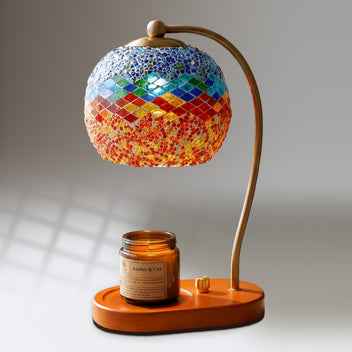
Moroccan candle warmer lamp in Starry, Chime or Blossom glass, with a timer and 4-step dimmer. Free 4-oil s...
Candle Warmer Mistakes to Avoid
Most candle warmer accidents start with a few everyday habits, and each one is easy to fix. Here are six to avoid:
- Lighting the wick: never burn a candle while it's under the lamp.
- A bigger bulb: an LED won't melt wax, which can tempt people to try more watts. Use only what your lamp lists.
- Moving it warm: let the wax turn solid and the shade cool before moving it.
- Covering it: keep towels, clothes and papers off the shade and away from it.
- Leaving the house with it on: switch the lamp off before you head out.
- Treating the timer as a babysitter: NFPA says automatic shutoffs can protect against predictable human error. A timer is a helpful backup, then, but it isn't a reason to walk away.
Bedtime deserves a note of its own. If you like a soft glow as you fall asleep, dim the lamp low at bedtime and set the shortest timer. Prefer sleeping in the dark? Switch it off.
Your nose stops noticing a steady scent within minutes to about 20 minutes, so leaving it on all night adds little scent you'll notice. Read more about how long you can leave a candle warmer on.
Is a Candle Warmer Healthier Than Burning a Candle?
Without a flame, you don't get soot or smoke from a wick, as our warming vs burning guide explains. Scent is a separate matter: a scented candle releases fragrance compounds into the air with or without a flame, and those compounds are what you smell.
In a 2025 Purdue University study, researchers heated scented wax melts on electric warmers. Scent compounds called terpenes reacted with indoor ozone to form tiny particles; unscented melts did not.
Keep in mind that the study tested wax melts, not jar candles under lamps. If scent bothers you, open a window and choose fragrances you tolerate well.
Safety Features to Look For

When you compare lamps, look for these five features. Each one makes everyday use a little safer:
- Auto-off timer: works like an oven timer, cutting the power when the time is up.
- Dimmer: lets you turn down the heat once the wax has melted.
- Adjustable height: lets the shade sit at the right distance without ever resting on the jar.
- Wide, heavy base: makes the lamp harder for a tail or elbow to tip over.
- The right bulbs in the box: takes the guesswork out of watts when a bulb burns out.
Comparing a few lamps? Our best candle warmer lamps guide helps you look through the options.
Try It With the Scentreat Moroccan Candle Warmer Lamp

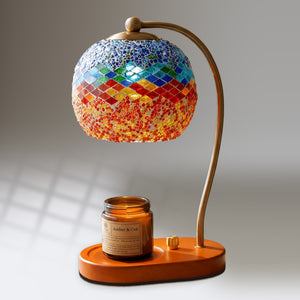
The Moroccan candle warmer lamp brings many of those controls together on its cord. The Starry style pairs a round globe of blue, teal and red mosaic glass with a curved gold-tone arm, which holds it above an oval wood base.
- Timer: tap the clock button to choose 2, 4 or 8 hours before the lamp turns off.
- Dimmer: choose from 4 light levels on the cord, or hold for a smooth change.
- Bedtime: hold the power button for 1 second, and the light will go out a minute later.
- Base: oval wood with a round dip to guide where you place the jar.
- Bulbs: includes 3 GU10 halogen bulbs, with 1 fitted and 2 spares.
- Free gift: a 4-oil set (Lemon, Peppermint, Eucalyptus, Lavender), a $59.96 value.
Since the globe doesn't slide up or down, choose a jar with wax that sits a little below the glass. Both the glass and arm get hot, so give the lamp time to cool before touching or cleaning it.
See the Moroccan Lamp + Free 4-Oil Set
Free US shipping · 100-day returns · 1-year warranty
If you prefer a marble base, the black marble candle warmer lamp rests on a slab of black marble, while the gold candle warmer lamp has a round white marble base. Both come with an auto-off timer and a dimmer.
Conclusion
Let your household guide the setup: choose a spot a climbing cat can't reach, a tall dresser with the cord out of reach for small kids, and no scent near birds. An auto-off timer helps if you tend to forget. With those habits in place, a warmer lets you avoid a candle's open-flame risk.
The Moroccan candle warmer lamp in the Starry style is a good fit for those habits, bringing together a 2, 4 or 8 hour timer, a 4-level dimmer and the right bulbs in the box.
Have questions? Email support@scentreat.com. We reply within 24 hours, 7 days a week.
Frequently Asked Questions
Are candle warmers safe to leave on overnight?
We don't recommend leaving one on all night. For a soft glow as you fall asleep, dim it low and set the shortest timer; if you sleep in the dark, switch it off before bed. A timer doesn't replace switching it off, and your nose stops noticing scent within minutes anyway. Read more about how long you can leave a candle warmer on.
Can a candle warmer start a fire?
Yes, a candle warmer can start a fire without a flame. A hot bulb or shade can ignite fabric or paper, while a worn or pinched cord can overheat. Allow 1 foot of clear space around the lamp, keep the area above the shade clear, and use only the listed bulb. Never light the wick while the candle is under the lamp.
How hot does a candle warmer get?
A candle warmer gets hot enough to burn skin. We haven't found an official figure for these lamps' 35W or 50W bulbs, but an ordinary 75-watt household bulb runs at about 260°F. Melted wax is around 120 to 160°F. Treat the bulb, shade and jar as hot while the lamp is on and for a while afterward.
Are candle warmers safe for cats?
They can be, if you choose the right spot. Use a heavy, wide base somewhere your cat can't reach, with nothing nearby to climb on. Keep the cord and any essential oils out of reach too. If your cat licks wax or chews the cord, turn the lamp off if it's safe to do so and call your vet.
Are candle warmers safe for dogs and birds?
For dogs, yes, provided the lamp is on a high, steady surface away from wagging tails, with the cord out of a chewing puppy's reach. Birds need different care because their breathing passages are very sensitive. Keep every scented product, including a candle warmer, out of the room where your bird lives.
Is a candle warmer safer than burning a candle?
In one important way, yes: a candle warmer removes the open flame and matches. It's still an electrical lamp with a hot bulb, shade and wax, though, so give it about 1 foot of space. Keep it out of reach of pets and kids, and switch it off before you leave.
A few words you'll see in this guide
- Halogen: an older style of bulb that heats a tiny wire until it glows, releasing most of its power as heat.
- GU10: the two-pin base used by most candle warmer bulbs.
- Melt pool: the liquid layer of wax on top of a warm candle.
- Auto-off timer: a countdown that turns the lamp off for you.
- Combustible: anything that can catch fire, such as fabric, paper or wood.
- Terpenes: natural scent compounds present in many fragrances.
Sources
- National Fire Protection Association, Home Structure Fires (August 2025), checked November 15, 2026.
- National Fire Protection Association, Candle Safety tip sheet, checked November 15, 2026.
- National Fire Protection Association, Be Fire-Safe with Electricity tip sheet (Ohio State University copy), checked November 15, 2026.
- ENERGY STAR (U.S. EPA), Lighting Technologies: A Guide to Energy-Efficient Illumination fact sheet, checked November 15, 2026.
- U.S. Consumer Product Safety Commission, staff report on halogen lamps, checked November 15, 2026.
- U.S. Consumer Product Safety Commission, Avoiding Tap Water Scalds, checked November 15, 2026.
- U.S. Consumer Product Safety Commission, electric candle warmers recall (2008), checked November 13, 2026.
- ASPCA, Is the Latest Home Trend Harmful to Your Pets?, checked November 15, 2026.
- American Chemical Society, Scented wax melts may not be as safe for indoor air as initially thought (February 2025), checked November 13, 2026.
- Dalton and Wysocki, The nature and duration of adaptation following long-term odor exposure, Perception and Psychophysics (1996).
- Olfactory clearance: what time is needed in clinical practice?, Journal of Laryngology and Otology (2007).
- NBC News Select, candle warmer safety tips (2024), checked November 13, 2026.

