

Which is better in the ultrasonic vs nebulizing diffuser debate? The answer depends on your space, budget, and how strong you want the scent. Ultrasonic models mix oil with water for a humid mist, while nebulizers spray pure oil. In this guide, Scentreat will compare both to help you choose.
Comparison Table: Ultrasonic vs Nebulizing at a Glance
Here is a quick ultrasonic vs nebulizing diffuser comparison before we go deeper.
| Feature | Ultrasonic Diffuser | Nebulizing Diffuser |
|---|---|---|
| How it works | Vibrations turn water and oil into cool mist | Pressurized air breaks pure oil into micro-particles |
| Water needed | Yes | No (waterless) |
| Scent strength | Light to medium | Strong and concentrated |
| Oil use | Low (5–15 drops per fill) | High (undiluted oil) |
| Room size | Small to medium rooms | Medium to large spaces |
| Humidity | Adds light moisture | None |
| Noise | Very quiet | Soft pump hum |
| Typical price | Budget to mid-range | Mid-range to premium |
What Is an Ultrasonic Diffuser?

An ultrasonic diffuser uses a small ceramic disc that vibrates at a high frequency. You fill the tank with water, add a few drops of essential oil, and the vibrations turn the mixture into a fine, cool mist. This cool mist diffuser is the most common essential oil diffuser for bedrooms, offices, and living rooms, and the starting point of any ultrasonic vs nebulizing diffuser comparison.
What Is a Nebulizing Diffuser?

A nebulizing diffuser works without water. A small air pump pushes pressurized air across a tube, which pulls pure essential oil upward and breaks it into tiny particles. Many brands call it a waterless diffuser or cold-air diffuser, and it is popular in larger homes, studios, and retail spaces where an ultrasonic vs nebulizing diffuser choice often favors power.
Ultrasonic vs Nebulizing Diffuser: Key Differences

Both devices fill a room with aroma, but the ultrasonic vs nebulizing diffuser differences show up in daily use.
Diffusion Method (Water vs Waterless)
An ultrasonic diffuser dilutes oil in water before misting it. A nebulizing diffuser diffuses pure oil with air only.
Scent Strength and Aroma Concentration
Nebulizers win on intensity because nothing dilutes the oil. Ultrasonic models give a softer, more relaxing aroma that suits sleep and small rooms.
Essential Oil Consumption
In the ultrasonic vs nebulizing diffuser match-up, oil use is the biggest cost factor. An ultrasonic model needs only 5–15 drops per tank. A nebulizer can empty a 10 ml bottle in a few sessions.
Room Size Coverage
Most ultrasonic diffusers suit rooms up to about 300–400 sq ft. Nebulizing models suit open-plan spaces and small shops. Room size is often the deciding ultrasonic vs nebulizing diffuser factor.
Humidity Output
Ultrasonic diffusers add a light touch of moisture, pleasant in dry or air-conditioned rooms. A nebulizing diffuser adds no humidity.
Noise Level
Ultrasonic units are almost silent, often under 30 dB. Nebulizers use an air pump, so you may hear a soft, steady hum. For bedrooms, the ultrasonic vs nebulizing diffuser noise gap matters.
Run Time and Auto Shut-Off
An ultrasonic diffuser runs until its water tank is empty, often 4–10 hours, with auto shut-off for safety. Nebulizers rely on timer cycles to save oil.
Price and Long-Term Cost
Ultrasonic diffusers cost less upfront and use less oil over time. Nebulizers cost more but deliver stronger scent. Budget-wise, the ultrasonic vs nebulizing diffuser winner is usually ultrasonic.
Design and Material Options
Ultrasonic diffusers come in wood, ceramic, fabric, and plastic. Nebulizers usually pair a glass reservoir with a wood or metal base for a sleek, minimalist look.
Pros and Cons of Ultrasonic Diffusers

Pros of Ultrasonic Diffusers
- Uses very little essential oil per session
- Quiet enough for bedrooms and nurseries
- Adds gentle humidity to dry air
- Auto shut-off for overnight use
Cons of Ultrasonic Diffusers
- Softer scent that may not fill large spaces
- Needs regular cleaning to prevent water residue
- Requires refilling with water
Pros and Cons of Nebulizing Diffusers

Pros of Nebulizing Diffusers
- Strongest, most concentrated aroma
- No water, so no humidity or mineral residue
- Covers larger rooms quickly
Cons of Nebulizing Diffusers
- Uses essential oil much faster
- Higher upfront price
- Soft pump noise
- Thick oils like Vetiver or Sandalwood can clog the nozzle
Which Diffuser Is Better for Therapeutic Aromatherapy?
If you want the most concentrated aroma for short sessions, a nebulizing diffuser delivers more oil into the air. For everyday aromatherapy, an ultrasonic aromatherapy diffuser is often enough and far more economical. In the ultrasonic vs nebulizing diffuser question for daily wellness, consistency matters more than intensity.
Which Diffuser Is Safer?
Both types are safe when used correctly. Neither uses heat, so the oil does not burn. With an ultrasonic diffuser, clean the tank weekly and use auto shut-off. With a nebulizer, use timer cycles. For either, keep the device away from children and pets, and choose pure essential oils without synthetic fillers.
Ultrasonic vs Nebulizing Diffuser: Which One Should You Choose?

For most readers, the ultrasonic vs nebulizing diffuser answer is simple. Choose an ultrasonic diffuser if you want a quiet bedroom diffuser, light humidity, a soft scent, and low running costs. Choose a nebulizing diffuser if you have a large room, want a powerful aroma, and do not mind using more oil. For most homes, the ultrasonic vs nebulizing diffuser decision comes down to room size and budget.
Ready to Upgrade Your Home’s Scent? Meet Scentreat’s Ultrasonic Diffusers
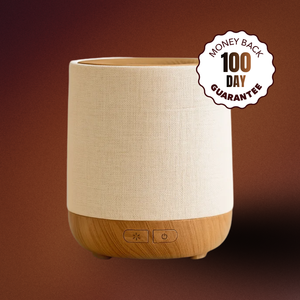
Scentreat creates aromatherapy essentials for calmer homes, from 100% pure essential oils to thoughtfully designed diffusers. Our ultrasonic range includes two quiet cool mist diffusers. Each ships with a free 10 ml Lavender oil, a 100-day money-back guarantee, and a 1-year warranty.
Scentreat Minimalist Wood Diffuser (200 ml)
The Scentreat Minimalist Wood Diffuser has the largest tank in our range, so it is the pick for sleep.
Key features:
- Two mist modes: continuous and intermittent
- Four light settings: 100%, 50%, candlelight, and off
- Auto shut-off when the water runs out
- Soft fabric cover over a solid wood base

Scentreat Ceramic & Rubber Wood Diffuser (180 ml)
The Scentreat Ceramic Diffuser pairs a handcrafted porcelain cover with a natural rubber wood base. It looks like décor, not an appliance.
Key features:
- Timer: 1 hour, 3 hours, 8 hours, or continuous
- Warm yellow LED with bright, dimmed, breathing, and off modes
- Auto shut-off when the tank runs dry
 Shop Scentreat Ceramic Diffuser→
Technical Specifications
| Specification | Wood Diffuser | Ceramic Diffuser |
|---|---|---|
| Tank capacity | 200 ml | 180 ml |
| Run time | 4–5 h continuous / 8–10 h intermittent | 4–5 h continuous / 8–10 h intermittent |
| Mist output | 15–20 ml per hour | 15–20 ml per hour |
| Noise level | 27.3 dB(A) at 1 m | 27.3 dB(A) at 1 m |
| Room coverage | Up to 35 m² (375 sq ft) | Up to 30 m² (320 sq ft) |
| Size | 116 × 116 × 130 mm | 129 × 129 × 237 mm |
| Power | Plug-in adapter | Plug-in DC 24 V / 12 W adapter |
| Price | $79.95 | $99.95 |
Best Essential Oils for Ultrasonic Diffusers
A great diffuser needs great oil. The Scentreat 100% Pure Essential Oil Collection offers undiluted single oils for every mood. Add 7–17 drops to a full 200 ml tank.
- 100% Pure Essential Oil (Lavender): a soft floral scent for sleep and relaxation.
- 100% Pure Essential Oil (Frankincense): warm and grounding for meditation or yoga.
- 100% Pure Essential Oil (Eucalyptus): fresh and clean for a clear-feeling room.
- 100% Pure Essential Oil (Sweet Orange): bright and cheerful for mornings.
- 100% Pure Essential Oil (Peppermint): cool and uplifting for focus.
- 100% Pure Essential Oil (Cedarwood): woody and calming for evenings.
Whether you are searching for 100% organic essential oil (Lavender) or a pure Tea Tree oil, always check the label for undiluted oil with no synthetic fragrance.
Conclusion
The ultrasonic vs nebulizing diffuser choice depends on your room size, scent strength, and budget. For quiet, everyday aromatherapy, the Scentreat Minimalist Wood Diffuser paired with our 100% Pure Essential Oil Collection is an easy, affordable place to start today.
For more aromatherapy tips and diffuser inspiration, follow us on Facebook and Instagram! If you have any questions or promotions, please feel free to contact us at support@scentreat.com. Our dedicated team is available 24/7 and always happy to assist you.
Frequently Asked Questions
1. Is a nebulizing diffuser better than an ultrasonic diffuser?
Not always. A nebulizing diffuser gives stronger scent for large rooms, while an ultrasonic diffuser is quieter, cheaper to run, and better for most bedrooms.
2. Which diffuser uses less essential oil?
An ultrasonic diffuser uses less oil, needing 3–5 drops per 100 ml of water. A nebulizing diffuser uses pure, undiluted oil, so bottles empty faster.
3. Can I use any essential oil in an ultrasonic diffuser?
Most pure essential oils work very well. Avoid thick carrier oils and synthetic fragrance oils, and clean the tank weekly to prevent residue and buildup.
4. Which diffuser is best for sleep?
An ultrasonic diffuser is usually best for sleep because it is quiet, has auto shut-off, and gives gentle scent. Try Lavender or Cedarwood oil tonight.
5. How often should I clean my diffuser?
Clean an ultrasonic diffuser once a week with water and a little vinegar. Clean a nebulizer glass reservoir when switching oils or when diffusion slows.

