

Why does lavender oil help some people sleep, while others notice little difference? Mostly because the response depends on personal scent associations, scent sensitivity, and how the oil is used — not on the oil itself. Lavender doesn't work like a sleep medicine; its scent may help calm the nervous system and create an environment that supports winding down. For most people, it's a gentle, low-risk addition to a nighttime ritual rather than a standalone fix.
Lavender is the most studied option, not the only one — the wider sleep oils guide covers the alternatives.
In this guide, you will learn why lavender is often associated with sleep, why it works differently from person to person, and how people commonly use it as part of a nighttime routine. For a closer look, read about Chamomile for Sleep.
Why Lavender Became the "Sleep Oil"

Lavender is probably the scent most people think of when they hear the words "sleep" or "relaxation." Over the years, it has appeared in countless bedtime products and evening rituals.
You can find lavender in many things designed to help people unwind at night, such as:
- Pillow sprays
- Bath salts
- Relaxation candles
- Body lotions
- Essential oil blends
Because lavender appears so frequently in sleep-related products, many people naturally begin to associate the scent with bedtime.
Another reason lavender oil for sleep became so popular is that the scent itself is usually described as soft and gentle. Compared with sharper scents like peppermint or citrus oils, lavender tends to feel calmer and less stimulating.
Many people say lavender smells:
- Warm
- Familiar
- Comforting
For example, someone might first encounter lavender in a relaxing bath product or a calming candle during a quiet evening at home. Over time, experiences like these can create a mental link between the scent of lavender and feelings of relaxation.
When people later smell lavender again, the scent can remind them of those calm moments.
Because of this long history and widespread use, lavender gradually earned its reputation as the "sleep oil." While it does not guarantee better sleep for everyone, its gentle scent makes it a natural choice for many nighttime routines.
Why Lavender Works for Some People — but Not Others

Scent is highly personal. This is one of the biggest reasons lavender oil for sleep does not create the same experience for everyone.
Two people can smell the same lavender oil and respond very differently. One person may instantly feel relaxed, while another person may barely notice the scent at all.
Part of the reason is that smell is closely connected to memory and personal preference. Over time, people build associations with certain scents based on their past experiences.
For example:
- Someone who often used lavender bath products during relaxing moments may associate the scent with calm and comfort.
- Someone who rarely encountered lavender before might not feel any emotional connection to the scent.
- Another person may simply prefer different scent types, such as woody or herbal aromas.
Because of this, lavender oil for sleep works best when the scent feels naturally pleasant and easy to tolerate.
Another factor is scent sensitivity. Some people are more sensitive to smells than others. A scent that feels soft and calming to one person might feel strong or distracting to someone else.
For instance, if the aroma feels noticeable all the time, the brain may keep paying attention to it. When that happens, the scent can actually make relaxation harder instead of easier.
This is why lavender tends to work best when the scent is light and subtle. The goal is not to constantly notice the smell, but to allow it to quietly blend into the background of a calm evening environment.
Over time, when the scent appears regularly during relaxing activities, the brain may start to associate lavender with winding down for the night.
What Lavender Actually Does Before Sleep

Many people think lavender oil directly makes you fall asleep. In reality, its role is much simpler.
Lavender does not "knock you out." Instead, it can help create a calm atmosphere that supports relaxation.
Several clinical studies have also explored the relationship between lavender aromatherapy and sleep quality, with some findings suggesting that lavender exposure may be associated with improved sleep in certain individuals.
What the Research Says
A 2025 meta-analysis of lavender aromatherapy in adults found that lavender inhalation was associated with improved sleep-quality scores (PSQI) compared to controls. Researchers suggest linalool — lavender's primary active compound, making up roughly 30–40% of the oil — may influence calming pathways in the brain, possibly through GABA-A receptor activity. That said, the effect appears to be on perceived sleep comfort rather than on measured sleep architecture. As the Sleep Foundation notes, current evidence is promising but modest — lavender works best as part of a broader wind-down routine, not as a replacement for good sleep habits.
Think about the difference between these two evening environments.
In the first environment:
- Bright lights are on
- The television is loud
- Notifications keep appearing on the phone
In the second environment:
- The lights are dim
- The room is quiet
- Relaxing music or reading replaces screen time
- A gentle lavender scent is present
The second environment naturally feels calmer.
Lavender oil for sleep often works best when it becomes part of a calm evening environment rather than the only tool used to improve sleep. The scent becomes one of several signals that the day is ending. Curious how other calming scents compare? See our overview of the science behind scent and sleep.
Common Situations Where Lavender Helps

Lavender oil tends to be most helpful when the main problem is difficulty winding down at night.
For example, some people feel physically tired but mentally active after a busy day. Their mind keeps replaying conversations or thinking about tomorrow's tasks.
In situations like this, a calm evening environment can help the body transition toward rest.
Some research has also found that combining lavender aromatherapy with healthy sleep habits may help improve overall sleep quality for people who report mild sleep difficulties.
Lavender sometimes supports this transition because the scent feels gentle and familiar.
Common situations where people find lavender helpful include:
- Feeling mentally busy before bed
- Needing a calm transition after work
- Trying to build a relaxing evening routine
Example:
Someone who finishes work late might dim the lights, make tea, read a book, and start a lavender diffuser. After repeating this routine for several nights, the lavender scent may begin to feel like part of the "wind-down" signal. If you're exploring a fuller sleep oil set, the Deep Sleep Ritual™ set pairs lavender with complementary calming oils — a curated starting point for a more complete nighttime ritual. Lavender appears in every Scentreat Ritual Kit, so you can keep it as your anchor and choose the supporting oils around it.
 Pair it with 100% Pure Lavender Essential Oil
$14.99
Pair it with 100% Pure Lavender Essential Oil
$14.99
Situations Where Lavender May Not Work

Even though lavender oil for sleep is widely recommended, it does not solve every type of sleep problem.
Sometimes the reason sleep feels difficult has nothing to do with relaxation.
Here are a few situations where lavender may not make much difference.
| Situation | Why lavender may not help |
|---|---|
| Very irregular sleep schedule | The body may not feel ready for sleep yet |
| Bright screens before bed | Light stimulation can keep the brain alert |
| Loud environment | Noise may interrupt relaxation |
| Dislike of floral scents | The scent may feel distracting |
Example:
If someone spends the hour before bed scrolling on their phone under bright light, adding lavender scent alone may not change much.
In that situation, reducing screen time may have a bigger impact than scent.
Lavender works best as a small part of a calming environment, not the only solution. If you're wondering whether aromatherapy can genuinely affect sleep quality, this piece on whether aromatherapy helps insomnia digs deeper into what the evidence actually shows.
Simple Ways People Use Lavender at Night

People use lavender oil for sleep in several simple ways. The goal is usually to introduce a light scent that feels comfortable rather than strong.
Some common methods include:
- Diffusing lavender oil in the bedroom — typically 3–5 drops per 100 ml of water
- Using a lavender pillow spray
- Adding a few drops to a warm bath
- Applying diluted lavender oil (0.5–1% in a carrier oil) to the wrists or neck
Here is a simple example of a lavender evening routine.
- Step 1: Lower the lights in the room.
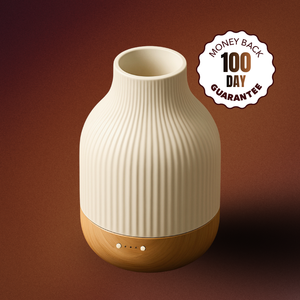
- Step 2: Start a diffuser with 3–5 drops of lavender oil. A quiet diffuser for the bedroom that runs all night keeps the mist gentle and consistent without waking you.
- Step 3: Spend about 20 minutes doing a relaxing activity such as reading or stretching.
- Step 4: Go to bed once the body begins to feel calmer.
Over time, repeating the same routine can help the brain recognize that bedtime is approaching.
 Pair it with 100% Pure Chamomile Essential Oil
$14.99
Pair it with 100% Pure Chamomile Essential Oil
$14.99
Safety & Dilution: What to Know Before Using Lavender Nightly
Lavender is one of the gentler essential oils, but a few precautions are worth keeping in mind before adding it to a regular nighttime routine.
- Topical use: Always dilute to 0.5–1% in a carrier oil (for example, 1 drop per teaspoon of jojoba or sweet almond oil) before applying to skin. Undiluted essential oils can irritate skin, especially with repeated use.
- Diffusion: Use 3–5 drops per 100 ml of water and run the diffuser for 30–60 minutes rather than continuously through the night. Over-diffusing in a closed room can cause headaches in sensitive individuals.
- Cats: Keep lavender diffusion out of rooms where cats spend time, and if a cat shares the space, always leave a door open so it can walk away from the scent. Cats lack the liver enzyme (glucuronyl transferase) needed to metabolize linalool — one of lavender's main aroma compounds — making it potentially harmful to them even via inhalation over time. Never apply lavender oil, diluted or not, to a cat's fur or skin.
- Pregnancy and medication: If you are pregnant, nursing, or taking medication, consult your healthcare provider before using lavender oil regularly. While topical and inhalation use is generally considered low-risk, individual circumstances vary.
If you experience headaches, skin irritation, or any unusual symptoms after using lavender oil, stop use and consult a healthcare provider.
How to Know if Lavender Is the Right Oil for You

Because scent preferences vary so much, the best way to evaluate lavender oil for sleep is simply to notice how you feel when using it.
Lavender may be a good fit if:
- The scent feels calming
- You stop noticing the smell after a few minutes
- Your evening routine feels more relaxing
On the other hand, lavender may not be the right choice if:
- The scent feels too strong
- You keep noticing the smell constantly
- You feel more alert instead of relaxed
For many people, the best scent is one that fades quietly into the background after a few minutes.
If lavender feels comfortable and easy to ignore, it may be supporting your relaxation routine. If you prefer to explore a wider set of calming oils to find your fit, the sleep oil collection brings together the most commonly used scents for winding down at night.
Pair it with 100% Pure Lavender Essential Oil
$14.99
Conclusion
Lavender oil for sleep has become popular because many people associate its scent with calm evenings and relaxation. While it does not act like a sleeping pill, lavender may help create an environment that feels more peaceful before bedtime — and researchers suggest linalool, its main aroma compound, may play a part by influencing calming pathways in the brain, though that evidence is still early. We cover this further in Poor Sleep Quality.
For many people, the benefit of lavender comes from how it fits into a relaxing nighttime routine. When the same scent appears during quiet evening activities, it can gradually become a familiar signal that the day is ending.
Instead of expecting lavender to "make you fall asleep," think of it as one small part of a calming sleep environment.
For example, lavender may work best when you:
- Keep the scent gentle — 3–5 drops per 100 ml, not more
- Use it during relaxing evening activities such as reading or stretching
- Repeat the same bedtime routine regularly
- Create a quiet and comfortable bedroom environment
Over time, small habits like these can make evenings feel calmer and more predictable. When lavender is used consistently in a peaceful setting, it may help the body transition more naturally from daytime activity into nighttime rest. Want a ready-to-go option? The Deep Sleep Ritual set takes the guesswork out of building a sleep-focused oil collection. If lavender is not working, room size is worth checking — Scentreat rates its 180 ml Ceramic & Rubber Wood Diffuser to 30 m² (320 sq ft) and no further.
FAQs
Does lavender oil really help sleep?
Lavender may help create a calm atmosphere that supports relaxation before bedtime. Research on lavender inhalation has found an association with improved sleep-quality scores, though the effect is on perceived comfort rather than measured sleep architecture. Use it as part of a broader wind-down routine for best results.
How should lavender oil be used at night?
Many people use lavender oil in a diffuser (3–5 drops per 100 ml of water), a pillow spray, or as part of a relaxing bedtime routine. For topical use, dilute to 0.5–1% in a carrier oil before applying to skin. Run your diffuser for 30–60 minutes rather than all night in a sealed room.
Can lavender oil make sleep worse?
If the scent is too strong or distracting, it may increase alertness rather than relaxation. Using too many drops or diffusing continuously in a small, unventilated space can also cause headaches in sensitive individuals. Start with 3 drops and adjust from there.
Is lavender oil safe to use every night?
For most adults, moderate nightly use of lavender oil is generally well tolerated — especially in a diffuser at low concentrations. For topical use, dilute to 0.5–1% in a carrier oil to avoid skin irritation over time. If you have cats, avoid diffusing in their shared spaces, as linalool (lavender's primary compound) is difficult for cats to metabolize. Consult your healthcare provider if you are pregnant, nursing, or on medication.
What if lavender oil does not work for me?
Scent preferences vary, so another gentle aroma such as cedarwood or chamomile may work better for your bedtime routine. You can also try a dedicated sleep blend that combines several calming notes — sometimes a single-note oil isn't the right fit but a curated mix is.
What is linalool and why does it matter for sleep?
Linalool is one of lavender's main aroma compounds, making up roughly 30–40% of the oil. Laboratory and animal studies suggest it may act on calming pathways in the brain, possibly involving GABA-A receptors, but those studies use far higher exposures than anyone gets from smelling a diffuser, so the mechanism in people is still unproven. What human research does show is a modest association with better perceived sleep quality. That is why lavender is best thought of as something that may ease the mental "busy-ness" which delays sleep onset, rather than as a direct sedative.
This is one reason lavender is thought to ease the mental "busy-ness" that can delay sleep onset, rather than acting as a direct sedative.
