

The most common essential oil diffuser mistakes are using too much oil, running the diffuser for too long, skipping regular cleaning and using the wrong oil or water for the device. This guide from Scentreat covers the 10 mistakes beginners make most often, how to fix them and the simple habits that help a diffuser smell better and last longer.
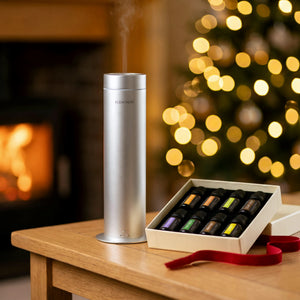
Covers 1,500 sq ft
Waterless Cold-Air Diffuser for Large Rooms, 1,500 sq ftEssential Oil Diffuser Mistakes at a Glance

Most diffuser problems are easier to prevent than to fix. Start with the manual, use less oil than you think you need and keep the diffuser clean.
| Common mistake | Better habit |
|---|---|
| Too many drops | Start low, then add more |
| Running nonstop | Use shorter or intermittent sessions |
| Skipping cleaning | Wipe the diffuser regularly |
| Leaving old water inside | Empty it after use |
| Using the wrong oil | Check oil compatibility |
| Guessing the water type | Follow the manual |
| Poor placement | Use a stable, open location |
| No ventilation | Allow normal air exchange |
| Ignoring people or pets | Check who shares the room |
| Treating every diffuser alike | Match oil and setup to diffuser type |
Key takeaway: there is no single number of drops, runtime or cleaning method that fits every diffuser. A 180 ml ultrasonic diffuser and a 150 ml waterless cold-air diffuser work very differently, so follow the instructions for the device first, then adjust the scent gradually.
Top 10 Essential Oil Diffuser Mistakes to Avoid

Mistake #1: Adding Too Many Drops of Essential Oil
More oil does not automatically make a diffuser work better. In an ultrasonic diffuser, too much oil can make the scent overwhelming and leave more residue in the tank or on the ultrasonic plate. Strong fragrance can also cause headaches, nausea or irritation in some people.
The right amount depends on tank size, room size, the oil itself and your sensitivity to fragrance. For the current Scentreat Ceramic Diffuser, a full 180 ml tank uses about 10–15 drops on the product page, while Scentreat’s oil guide suggests 8–12 drops as a medium starting point. Both are starting ranges rather than a reason to keep adding oil until the room smells stronger.
Do this instead: start at the lower end of your diffuser’s instructions and give the scent time to spread before adding another drop. If you stop noticing the scent later, check for nose fatigue before assuming you need more oil.
Mistake #2: Running Your Diffuser Nonstop
A diffuser does not need to run all day to be useful. Continuous fragrance can become overwhelming, especially in a bedroom, office or other enclosed room. Your nose also adapts to a scent over time, so running the diffuser longer may not make the aroma feel stronger to you.
Intermittent diffusion is often a better starting point than continuous all-day use. Essential-oil safety guidance commonly recommends periods of diffusion followed by fresh-air breaks rather than constant exposure.
Do this instead: use the timer or intermittent mode your diffuser already has. A shorter session lets you judge both the scent strength and how everyone in the room responds to it. If the room still smells pleasant after the diffuser stops, there is no need to immediately restart it.
Waterless diffusers deserve extra attention here. Because they diffuse undiluted oil, they can produce a much stronger scent than a water-based ultrasonic model.
Mistake #3: Not Cleaning Your Diffuser Regularly
A dirty diffuser can smell weaker even when the motor is working normally. Essential-oil residue can collect inside the tank and around the ultrasonic plate, and hard-water minerals can build up in some devices. Over time, that residue can reduce mist output or mix yesterday’s scent into today’s oil.
Manufacturers commonly recommend emptying and wiping the tank regularly instead of waiting until the diffuser stops misting properly.
Do this instead: wipe an ultrasonic tank after regular use and deep-clean it according to the manufacturer’s instructions. Do not automatically copy a vinegar, alcohol or cleaning recipe from another diffuser, because materials and internal designs differ. For a waterless diffuser, follow the instructions for cleaning the atomizer or oil pathway rather than treating it like a water tank.
Mistake #4: Leaving Old Water and Oil in the Tank
Do not leave yesterday’s water-and-oil mixture sitting in an ultrasonic diffuser for days. Stagnant water can develop an unpleasant odor, essential-oil residue stays in contact with the tank and internal parts, and old oil can interfere with the next scent you add. Some diffuser manuals specifically identify water and oil left in the tank for long periods as a cause of unpleasant smells and reduced performance.
Do this instead: if you are finished diffusing for the day, empty leftover water, wipe the tank and let it dry. Pour from the side recommended in the manual, because some units have an air outlet or internal vent that should not get flooded.
This mistake does not apply to bottle-fed waterless diffusers in the same way. Those devices are designed to hold oil between scheduled sessions, so follow their own storage and cleaning instructions.
Mistake #5: Using Low-Quality or Synthetic Fragrance Oils
Not every scented liquid belongs in an essential oil diffuser. Pure essential oils, fragrance oils, perfume oils and essential oils diluted in carrier oil are different products, and a diffuser may be designed for one and not another.
Scentreat, for example, recommends 100% pure essential oils in its diffusers and warns against thick carrier oils, fragrance oils and blends with additives because they can leave residue or interfere with the diffuser.
Do this instead: read both the diffuser manual and the oil label, and look for the product type rather than assuming anything sold beside an essential oil is interchangeable. For Scentreat diffusers, the current single-oil collection contains 36 oils described as 100% pure, with no fillers, carrier oils or synthetic fragrance.
Mistake #6: Using the Wrong Water or Overfilling the Tank
Do not assume every ultrasonic diffuser needs distilled water. Some manufacturers recommend tap water because their ultrasonic system performs better with the mineral content, while others recommend clean room-temperature water or give different instructions.
That is why “always use distilled water” is poor universal advice. NOW, for example, specifically tells users that its ultrasonic diffusers are designed for tap water, while Scentreat instructs users to fill its Ceramic Diffuser with water to the stated maximum line.
Overfilling can cause a different problem. An ultrasonic diffuser needs the correct water level for the plate, airflow and mist outlet to work properly, and some manuals list too much water as a reason the light turns on while little or no mist comes out.
Do this instead: use the water type stated in your manual and stop at the MAX line. More water does not mean more mist.
Mistake #7: Placing Your Diffuser in the Wrong Spot
Where you put the diffuser changes how well you smell it. A diffuser hidden inside a cabinet or pushed under a shelf has poor airflow. One placed directly beside an open window, strong fan or air-conditioning vent may send the aroma away before it spreads through the room. A diffuser also needs a flat, stable surface where it cannot easily be knocked over.
Do this instead: place it in an open part of the room with space around the mist outlet. Keep ultrasonic mist away from electronics, untreated wood and other surfaces that should not stay damp. If pets or children share the home, put the diffuser somewhere they cannot pull it down or reach the concentrated oil.
If the scent always seems weak despite using the correct amount of oil, placement is one of the first things to check before buying a new diffuser.
Mistake #8: Diffusing in a Closed, Unventilated Room
A stronger scent is not always a better scent. In a tightly closed bedroom or small office, aromatic compounds can build up much faster than they would in a large living room. Normal air exchange helps keep the scent comfortable, and guidance on essential-oil diffusion commonly recommends using essential oils in a ventilated area rather than trying to saturate a sealed room.
Do this instead: allow some air exchange and use a lower setting in smaller rooms. You do not necessarily need to leave every window wide open while the diffuser runs; the point is to avoid deliberately trapping an increasingly strong concentration of fragrance in a small space for hours.
This is especially important if several people share the room, because the scent level that feels light to one person may be uncomfortable to another.
Mistake #9: Ignoring Kids, Pets, Pregnancy and Asthma
Essential oils should not be treated as universally appropriate just because they come from plants. Children, pregnant people, people with asthma or allergies and different animal species can respond differently to essential oils. The oil, concentration, exposure time and the person’s or animal’s health all matter.
Nationwide Children’s advises checking with an appropriate healthcare professional before essential-oil use during pregnancy or with conditions including asthma, seizures and allergies. Pets require separate consideration: the ASPCA advises keeping concentrated oils away from pets, allowing dogs and cats to leave the scented area and being particularly cautious around animals with breathing problems. Birds are especially sensitive to airborne fragrance and essential-oil diffusion.
Do this instead: check the oil before you diffuse it, not after. Keep concentrated bottles out of reach, use a conservative setting and do not force a child, person or pet to remain in a fragranced room. If someone has asthma, is pregnant or has another relevant health condition, ask their clinician rather than relying on a generic “safe oils” list online.
Mistake #10: Using the Wrong Oil for Your Diffuser Type
One of the easiest beginner mistakes is treating every diffuser as though it works the same way. Adding water to a waterless diffuser because you are used to an ultrasonic model can prevent the system from working as designed, and putting a carrier-oil blend into an atomizer can leave thick residue.
| Diffuser type | How it works | What to do |
|---|---|---|
| Ultrasonic | Water plus a small amount of compatible essential oil | Add water to the correct line, then the recommended amount of compatible essential oil |
| Waterless cold-air | No water tank; atomizes undiluted oil | Use the compatible oil specified by the manufacturer and do not add water unless the device requires it |
| Passive (ceramic and reed) | Works through natural evaporation | Follow the product’s own instructions for the oil or blend it accepts |
Do this instead: identify your diffuser type first. The manual matters more than a generic diffuser tip you found online.

Whisper-quiet for sleep
Quiet Ceramic Essential Oil Diffuser for Bedroom, 180 mlHandcrafted ceramic essential oil diffuser for bedroom and sleep: quieter than a whisper (27.3 dB, lab-test...
Bonus Mistakes Beginners Often Overlook

Thinking Your Diffuser Is Broken When It’s Just Nose Fatigue
If the diffuser smells strong when you first enter the room and seems to disappear later, the machine may be working perfectly. This is called olfactory adaptation or nose fatigue: after continuous exposure to the same odor, your perception of it becomes weaker even though the fragrance is still present. Research on olfactory adaptation confirms that scent sensitivity decreases during continued exposure.
Do not immediately double the oil. Leave the room for a few minutes, come back and see whether the scent is noticeable again, or ask someone who has just entered the room what they smell. Intermittent diffusion can also help because the scent is not constant.
Mixing Too Many Oils at Once
A beginner blend does not need six or seven oils. Once too many scents go into one tank, it becomes difficult to tell which oil is dominating the blend and even harder to fix it if you dislike the result.
Start with two or three oils. A simple blend also makes it easier to learn which scent families you actually enjoy: pair a floral note with a woody oil, or a citrus with an herbal note, instead of pouring a little of everything into the tank. Write down the number of drops when a blend works, or the blend you loved yesterday can be surprisingly difficult to recreate.
Choosing the Wrong Diffuser Size for Your Room
A small diffuser in a large open-plan room can seem weak even when nothing is wrong with it. Instead of adding more and more oil, compare the room size with the manufacturer’s stated coverage. Small ultrasonic diffusers are usually better for enclosed bedrooms and offices, while large rooms may need a higher-output diffuser or a waterless cold-air model.
Room shape matters too. High ceilings, open doors and strong HVAC airflow can make fragrance spread differently from the square-footage number on the box. For Scentreat, the Ceramic Diffuser is rated up to about 320 sq ft, while Pillar is the large-room cold-air option. Choose the machine for the room instead of trying to compensate for an undersized diffuser with more oil.
Skipping the Manual (Max Fill Line, Auto Shut-Off, Oil Compatibility)
The manual answers the questions that generic diffuser guides cannot. It tells you:
- The correct water type
- The maximum fill line
- Compatible oils
- Timer functions
- Cleaning method
- Where to pour out water
- Whether the light can switch off
- What automatic shut-off actually does
Skipping those details is how people end up overfilling a tank, pouring water into the wrong vent or putting an incompatible oil into a diffuser. Read the manual once before the first use; it usually saves much more time than troubleshooting the diffuser later.
How to Use an Essential Oil Diffuser the Right Way (Step-by-Step)

For an ultrasonic diffuser, the basic routine is simple:
- Put the diffuser on a flat, stable surface in an open part of the room.
- Remove the cover and check the MAX fill line.
- Add the water type recommended in the manual.
- Add a small amount of compatible essential oil.
- Replace the cover before turning the diffuser on.
- Start with a lower scent level or shorter session.
- Use the timer or intermittent mode when available.
- Keep normal airflow in the room.
- Turn the diffuser off if the scent becomes uncomfortable.
- Empty and wipe the tank when you are finished.
A waterless diffuser skips the water steps. For a bottle-fed cold-air model such as Scentreat Pillar, attach the compatible pure essential oil, set the strength and schedule, and let the atomizer run according to the device instructions.
Key takeaway: do not convert instructions between diffuser types. Ultrasonic and waterless machines are designed around different oil concentrations.
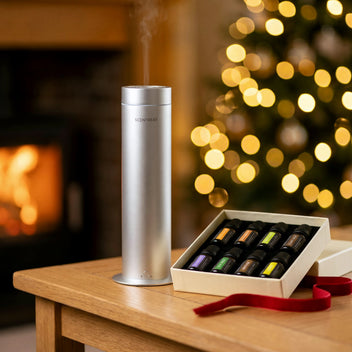
Covers 1,500 sq ft
Waterless Cold-Air Diffuser for Large Rooms, 1,500 sq ftWaterless cold-air diffuser in aluminum: 100 ml oil bottle, covers up to 1,500 sq ft, under 30 dB, app time...
Quick Reference: Drops, Run Time and Room Size

There is no medically established universal drop count for every diffuser. Use this as a conservative starting guide for ultrasonic diffusers, then check the instructions for your actual tank and oil.
| Room size | Starting oil amount | Beginner session |
|---|---|---|
| Under 160 sq ft | 3–5 drops | 20–30 min |
| 160–270 sq ft | 5–8 drops | 30–60 min |
| 270–430 sq ft | 8–12 drops | 30–60 min |
| Over 430 sq ft | Consider a larger diffuser | Follow device schedule |
These are starting points, not exposure limits. A strong oil may need less, and children, pets, pregnancy, asthma or fragrance sensitivity can change what is appropriate. Published diffuser guidance also varies by tank size and manufacturer.
For comparison, Scentreat recommends roughly 8–12 drops for a medium scent in a full 180 ml ultrasonic tank. Its waterless diffusers use pure oil directly, so the table above does not apply to them.
Warning Signs You Should Stop Diffusing

Stop the diffuser and move to fresh air if fragrance is causing discomfort rather than improving the room.
In people, watch for:
- Headache
- Dizziness
- Nausea
- Burning or irritated eyes
- Nose or throat irritation
- Persistent coughing
- Wheezing
- Shortness of breath
- A child becoming uncomfortable around the scent
In pets, watch for:
- Coughing
- Drooling
- Vomiting
- Acting unusually
- Trouble breathing
High or prolonged essential-oil exposure can cause symptoms such as headache, dizziness and nausea in some people, while respiratory symptoms around pets deserve particular attention. If breathing difficulty is severe or does not quickly improve in fresh air, seek appropriate medical or veterinary care.
Important: if a child or pet swallows concentrated essential oil, do not wait for symptoms before getting poison-control or professional advice.
Scentreat Essential Oil Diffusers: Beginner-Friendly Options for Every Space

Scentreat gives beginners two straightforward ways to diffuse: a quieter water-based ultrasonic model for smaller rooms and a stronger waterless cold-air model for large open spaces.
Both options clearly state the diffuser type, room size and operating method, so you do not have to make one diffuser work in a room it was not designed for. Scentreat diffusers also come with a 100-day money-back guarantee and a 1-year limited warranty.
Scentreat Waterless (Cold Air) Diffuser
The Scentreat Pillar Cold-Air Diffuser is the easier choice when a small ultrasonic diffuser cannot carry scent across a large living room or open-plan space. Pillar uses cold-air atomization and runs directly from pure essential oil, with no water tank to fill and no intentional heat.
The app lets you control strength and timing, which is useful for beginners because you can start with lighter, shorter scent cycles instead of leaving a high-output diffuser running continuously.
| Specification | Scentreat Pillar |
|---|---|
| Type | Waterless cold-air |
| Oil bottle | 150 ml |
| Coverage | Up to 1,500 sq ft* |
| Water | None |
| Intentional heat | None |
| Noise | Under 30 dB* |
| Controls | App timer + strength |
| Power | Plug-in |
| Returns | 100 days |
| Warranty | 1 year |
*Current manufacturer-published collection specifications.
Pillar suits large living rooms, open-plan homes, kitchen-diners, lofts, larger home offices, beginners who want waterless diffusion and anyone tired of filling an ultrasonic water tank. Use a smaller diffuser for a bedside table or compact room.
Scentreat Ultrasonic Diffuser
The Scentreat Ceramic Diffuser is the simpler starting point for a bedroom, office or smaller living area. It uses a 180 ml tank with water and a small amount of essential oil. You can choose continuous or intermittent mist, set a 1-, 3- or 8-hour timer and switch the warm light fully off.
The diffuser has been independently measured at 27.3 dB(A) from one meter, so it is designed to fade into the background rather than become another noisy bedroom appliance.
| Specification | Scentreat Ceramic |
|---|---|
| Type | Ultrasonic cool mist |
| Tank | 180 ml |
| Coverage | Up to 320 sq ft |
| Continuous runtime | 4–5 h |
| Intermittent runtime | 8–10 h |
| Noise | 27.3 dB(A)* |
| Timer | 1 / 3 / 8 h |
| Light | Fully off option |
| Auto shut-off | Yes |
| Returns | 100 days |
| Warranty | 1 year |
*Independent measurement at 1 meter.
The Ceramic Diffuser suits bedrooms, bedside tables, home offices, reading rooms, meditation spaces, smaller living rooms and first-time ultrasonic diffuser users. It is the easier Scentreat model to start with when you want a softer scent and a simple drops-and-water routine.
Pair Your Scentreat Diffuser with Scentreat 100% Pure Essential Oils
The easiest way to avoid oil-compatibility mistakes is to use oil that clearly states what is inside the bottle. Scentreat currently offers 36 single essential oils in amber glass bottles, each described as 100% pure, with no fillers, carrier oils or synthetic fragrance.
A beginner does not need a large collection. Start with a few distinct scent families so you can learn what you like:
| Oil | Scent family |
|---|---|
| Lavender | Soft floral |
| Sweet Orange or Lemon | Citrus |
| Peppermint | Sharper mint |
| Eucalyptus | Fresh herbal |
| Cedarwood | Woody |
| Frankincense | Deeper, resinous |
Browse Scentreat Essential Oils and use the oil according to the diffuser type. For the Ceramic Diffuser, start light and add more only when needed. For Pillar, use compatible pure essential oil without adding water.
Conclusion

Most essential oil diffuser mistakes come down to using too much, running too long, skipping cleaning or ignoring the instructions for the actual diffuser.
Start light, use the timer, keep the diffuser clean and match the machine to the room. Choose the Scentreat Ceramic Diffuser for a smaller room or Pillar for stronger waterless scent across a larger space.
Need help getting started? Follow Scentreat on Facebook or Instagram, or email support@scentreat.com.
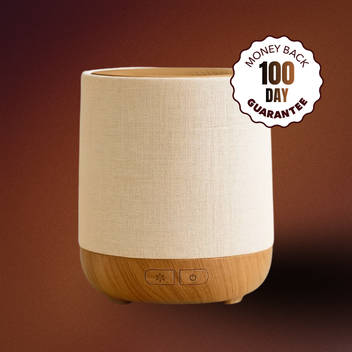
10 hours per fill
Wood Diffuser for Essential Oils, 200 ml, Up to 10 HoursWood essential oil diffuser that runs up to 10 hours on one 200 ml fill. Quieter than a whisper (27.3 dB, l...
FAQs
How Many Drops of Essential Oil Should a Beginner Put in a Diffuser?
Follow the diffuser’s own instructions first. For an ultrasonic diffuser, a few drops may be enough in a small tank, while a larger tank may need more. Scentreat recommends about 8–12 drops for a medium scent in its full 180 ml ultrasonic tank.
Start lower if you are new to the oil and increase gradually.
How Long Should a Beginner Run an Essential Oil Diffuser?
Start with a short session rather than running it all day. Around 30–60 minutes followed by a break is a practical starting approach for many adult users, but the oil label, diffuser instructions and people or pets sharing the room should guide your decision.
Is It Bad to Leave Water in an Essential Oil Diffuser Overnight?
For an ultrasonic diffuser, it is better to empty unused water when you are finished and wipe the tank rather than repeatedly leaving old water and oil sitting inside.
Bottle-fed waterless diffusers work differently and may be designed to hold oil between scheduled sessions.
Why Can’t I Smell My Essential Oil Diffuser Anymore?
Your nose may have adapted to the scent. Olfactory fatigue is a temporary reduction in sensitivity after continued exposure to the same odor. Leave the room for a while before adding more oil, and check the tank, placement and room size if the scent still seems weak.
Can I Use Fragrance Oil in an Essential Oil Diffuser?
Only if the diffuser manufacturer says it is compatible. A diffuser designed for pure essential oils may not work properly with fragrance oils, perfume oils or products diluted in thick carrier oils.
Should I Use Tap or Distilled Water in an Essential Oil Diffuser?
Use the water recommended by your diffuser manufacturer. Some ultrasonic diffusers are specifically designed for tap water, while others call for clean or filtered water. There is no universal rule that distilled water is best for every diffuser.

