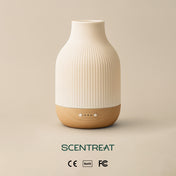
Looking for the best ceramic diffuser before buying? Many shoppers choose ceramic diffusers for their natural look, distinctive texture, and home-friendly design. In this guide, Scentreat will explore the real ceramic and natural rubber wood used in its diffuser, how these materials differ from ceramic-look plastic, and what to look for when choosing a ceramic diffuser.
In this article
What Is a Ceramic Diffuser?

A ceramic diffuser is an essential oil diffuser that uses ceramic as part of its exterior construction, typically as a decorative cover or housing. While some products use real ceramic, others use plastic or resin designed to recreate the look and texture of ceramic.
As interest in home-friendly aromatherapy products continues to grow, more consumers are searching for a best ceramic diffuser before making a purchase. Understanding what the diffuser is actually made from can help you distinguish genuine ceramic construction from products that simply imitate its appearance.
How Ceramic Diffusers Are Made
Real ceramic begins with clay that is shaped, dried, and fired at high temperatures before being finished or glazed. This process gives ceramic its distinctive surface, weight, texture, and natural variations.
For the Scentreat Rubber Wood & Ceramic Ultrasonic Essential Oil Diffuser, the ceramic is used as the exterior cover, while the ultrasonic reservoir and internal operating components form the functional interior.
Why Real Ceramic Is Different
Real ceramic offers a material character that molded plastic is designed to imitate. Subtle variations in texture, finish, and appearance can give a ceramic diffuser a more tactile, natural presence, while the material itself becomes part of the product's overall design.
This is one reason material details matter when choosing the best ceramic diffuser. A product may look ceramic in a photo, but checking the actual material specifications can tell you whether you are buying real ceramic or simply a ceramic-look finish.
Ceramic Diffuser Review: Pros and Cons

Before choosing a diffuser, it's important to look beyond the product's appearance and consider the materials used in its construction. A balanced ceramic diffuser review should look at both the advantages of real ceramic and natural wood, as well as the potential limitations compared with lightweight plastic alternatives.
Advantages of Real Ceramic Diffusers
Authentic Ceramic Construction
A real ceramic cover is made from ceramic rather than plastic molded to imitate its appearance. Its surface can have subtle variations in texture and finish that give the diffuser a more distinctive material character.
Distinctive Texture and Feel
Ceramic has a solid, tactile feel that differs from molded plastic. Small variations in the surface can also contribute to a more natural, less uniform appearance.
Natural Rubber Wood Base
The Scentreat diffuser pairs its ceramic cover with a natural rubber wood base. The wood grain adds warmth and contrast to the cooler ceramic surface, creating a material combination that feels more like home décor than a typical plastic appliance.
Material Authenticity
One of the clearest advantages is simply knowing what you are looking at. Instead of a plastic exterior designed to create a ceramic or wood-like appearance, Scentreat uses real ceramic for the cover and natural rubber wood for the base.
Potential Drawbacks of Ceramic Diffusers
Greater Weight and Fragility
Ceramic is generally heavier and more susceptible to impact damage than plastic. This can make a ceramic diffuser less forgiving if it is dropped or handled roughly.
Material Details Can Vary
Not all ceramic products use the same type of clay, glaze, or firing process. For the Scentreat diffuser, specific details such as ceramic type, firing temperature, glaze composition, and water absorption are not publicly specified, so these characteristics should not be assumed.
Rubber Wood Requires Proper Care
Rubberwood is suitable for furniture and home products, but it is not naturally waterproof or rot-resistant. Its long-term appearance depends partly on moisture control and the finish applied to the wood.
Despite these considerations, a ceramic diffuser review should not treat plastic as automatically inferior. Plastic can be lightweight, practical, and impact-resistant. The key difference is whether you value the authentic texture, weight, grain, and visual character of real ceramic and natural wood in your home.
How Ceramic Compares to Other Diffuser Materials

Comparisons are an important part of any ceramic diffuser review because shoppers often compare real ceramic with plastic and other materials before making a purchase.
Ceramic vs Plastic
Plastic diffusers are popular because they are lightweight, practical, and generally more resistant to impact. However, some products use molded plastic or resin specifically designed to recreate the appearance of ceramic.
Real ceramic offers a different material experience, with its solid feel, distinctive surface, and subtle variations in texture and finish. For shoppers who care about authentic materials and home décor, this can make a meaningful difference.
Ceramic vs Ceramic-Look Plastic
Ceramic-look plastic is designed to resemble ceramic through color, texture, or surface finishing. From a distance, the two can look very similar, but the underlying materials are different.
A real ceramic diffuser uses ceramic as its exterior cover rather than relying on a plastic shell made to imitate it. This distinction is particularly important when product photos alone do not reveal the actual construction.
Ceramic + Rubber Wood vs Wood-Look Plastic
The Scentreat diffuser combines its ceramic exterior with a natural rubber wood base. Unlike a printed or molded wood-look surface, natural wood has its own grain and material character.
Rubberwood is commonly used for furniture and home products, and its natural grain provides a warm contrast to the cooler appearance of ceramic.
Real Materials vs Appearance
Ultimately, the choice comes down to what you value in a diffuser. Plastic can offer practical advantages such as lighter weight and greater impact resistance, while real ceramic and natural wood provide a more distinctive tactile and visual experience.
For anyone researching the best ceramic diffuser, looking beyond the product's appearance and checking the actual material specifications is one of the simplest ways to make a more informed comparison.