

Many people use essential oils to create a calmer atmosphere before bedtime, yet simply turning on a diffuser does not always produce the relaxing effect people expect. When used thoughtfully, essential oils can help shape a peaceful nighttime environment, and over time a familiar scent may become part of a routine that signals the body it is time to wind down.
For the full list of oils this routine can draw on, see best essential oils for sleep and relaxation.
In this guide, Scentreat explains practical ways to use essential oils for sleep, including when to start diffusing, how strong the scent should be, and how to incorporate aroma into a relaxing bedtime routine.
Why the Way You Use Essential Oils Matters for Better Sleep

Essential oils for sleep are often associated with calming scents such as lavender or chamomile. While choosing the right oil is helpful, the way you use essential oils can be just as important as the scent itself.
What the research says: Lavender and chamomile are among the most studied oils for nighttime routines — multiple clinical trials have reported improvements in perceived sleep quality with regular inhalation, according to the Sleep Foundation. That said, aromatherapy supports a restful environment; it is not a replacement for medical treatment of sleep disorders.
In general, many people assume that adding a relaxing aroma will immediately make them sleepy. In reality, scent usually works best when it becomes part of a consistent nighttime routine.
Our bodies respond strongly to repeated patterns. When certain signals appear every evening, the brain gradually learns to associate those signals with sleep.
These signals can include simple environmental changes such as:
- dimming the lights in the room
- lowering background noise
- stopping phone or computer use
- doing a calm activity like reading
- introducing a familiar relaxing scent
When these elements occur together each night, they begin to form what sleep researchers often describe as a sleep cue system.
In short, instead of relying on a single trigger, your body recognizes several signals happening at once. Over time, this pattern can make it easier to transition from daytime activity into nighttime relaxation.
Which Essential Oils Are Commonly Used in Bedtime Routines?

Many essential oils are associated with relaxation and nighttime routines. Different aromas may create slightly different emotional responses depending on their scent profile.
Some scents feel soft and familiar, while others feel grounding or emotionally calming. Because scent perception is personal, different oils may feel more comfortable for different people.
Here are the oils most commonly used at night and why they're chosen:
- Lavender — contains linalool and linalyl acetate, compounds associated with a calming effect on the nervous system. One of the most widely researched oils for relaxation.
- Roman chamomile — a softer, slightly apple-scented oil often used to ease mental chatter and tension before bed.
- Cedarwood — a grounding, woody scent said to support a calm environment; the compound cedrol is thought to interact with the limbic system.
- Bergamot — citrusy and uplifting yet also calming at low doses in nighttime blends. Important: bergamot is phototoxic — do not apply it to skin that will be exposed to sunlight or UV light within 12–18 hours. Use bergapten-free (FCF) bergamot oil for topical use.
- Ylang ylang — floral and sweet; often blended with lavender as the intensity can be strong on its own.
Essential oils are often used in nighttime routines to help:
- create a gentle bedtime atmosphere
- calm an overactive mind
- ease tension after a stressful day
- build a consistent aroma associated with sleep
If you'd like to explore which essential oils may suit different sleep situations — such as calming anxious thoughts or supporting deeper relaxation — see our full guide: The Best Essential Oils for Sleep and Nighttime Calm.
Different Ways to Use Essential Oils at Night
Many people think diffusers are the only way to use essential oils for sleep. In reality, there are several methods that can create a gentle nighttime aroma.
Choosing the right method often depends on personal preference and how strong you want the scent to be.
01 - Diffusing Essential Oils

A diffuser disperses essential oil particles into the air, creating a soft background aroma throughout the room. This method works well if you want the entire bedroom to have a relaxing scent.
02 - Applying Diluted Oils

Some people prefer applying diluted essential oils to pulse points such as the wrists or neck. Always dilute essential oils before any skin contact — 1 drop per teaspoon (5 ml) of carrier oil is about 1%, a safe starting point for nighttime or sensitive-skin use, and 2–3 drops per teaspoon is 2–3%, the usual general-adult strength. Jojoba and fractionated coconut oil are popular carrier choices.
Bergamot note: if your blend includes bergamot, use a bergapten-free (FCF) version for topical use, and avoid applying to skin that will see sunlight or UV exposure within 12–18 hours.
03 - Pillow Sprays

A pillow spray made with diluted essential oils or hydrosol can add a gentle scent to bedding. A light mist on pillows creates a noticeable but subtle nighttime aroma. Because the spray touches fabric near your face, keep dilution light — 1–2% in water with a small amount of dispersant or witch hazel.
04 - Aromatherapy Rollers
Pre-blended aromatherapy rollers contain diluted essential oils that can be applied to the wrists or temples before sleep. Most quality rollers arrive pre-diluted at 2–3% in a carrier oil — no further mixing needed.
05 - Bath Aromatherapy

Adding essential oils to an evening bath can help create a relaxing transition between daytime activity and bedtime. Always disperse essential oils in a carrier or bath salt first — never add undiluted oil directly to bath water.
Each of these methods can work well. The most important factor is choosing a method that feels comfortable and easy to repeat consistently.
How to Use an Essential Oil Diffuser for Sleep

One of the simplest and most popular ways to use essential oils for sleep is with an essential oil diffuser.
A diffuser disperses tiny aromatic particles throughout the room, creating a soft background scent that can help shape a calm bedtime atmosphere. This approach works well if you want the aroma to gently fill the bedroom instead of staying close to the body, as it would with topical application.
Some research suggests that inhaling natural aromatic compounds may influence mood and relaxation. A review titled "Inhalation Aromatherapy via Brain-Targeted Nasal Delivery: Natural Volatiles or Essential Oils on Mood Disorders" notes that scent molecules can interact with the brain through the olfactory system, which may contribute to relaxation and emotional balance.
Because bedrooms are enclosed spaces, it is usually best to keep diffusion subtle. A light scent tends to feel more comfortable than a strong fragrance, especially in a quiet nighttime environment.
If you'd like to learn more about setting up a diffuser correctly — including placement, airflow, and ventilation considerations — read our detailed guide:
Diffuser in Bedroom Tips: Safe Placement, Ventilation & Setup Guide
For a full comparison of diffuser types and what to look for in a bedroom diffuser, see our guide to the best diffuser for sleep — covering quiet operation, low-light mode, and runtime for all-night use.
When Should You Start Diffusing Before Bed?

One common question people ask is when to start diffusing essential oils before sleep.
Many people turn on their diffuser right after getting into bed. However, starting a little earlier often creates a smoother experience.
Running the diffuser about 20–30 minutes before bedtime allows the scent to spread gradually through the room. During this time, you might dim the lights, put away electronic devices, or switch to a quiet activity.
This short transition period helps the aroma become part of the overall wind-down environment.
If you want to explore this topic in more detail, you can read the full guide on:
When to Use a Diffuser Before Bed: Best Timing for Better Sleep.
 Pair it with 100% Pure Lavender Essential Oil
$14.99
Pair it with 100% Pure Lavender Essential Oil
$14.99
How Strong Should the Scent Be at Night?

Another important factor when using essential oils for sleep is scent intensity. While it may seem logical that a stronger fragrance would create a stronger relaxing effect, overly noticeable aromas can sometimes have the opposite result.
When a scent becomes too prominent, your brain may continue paying attention to it instead of gradually settling into rest. At night, the goal is not to constantly notice the aroma. Ideally, the scent should blend quietly into the background of the room.
Because of this, many sleep experts recommend keeping nighttime scents soft and subtle rather than strong or stimulating. A gentle aroma usually creates a more comfortable environment for winding down.
A Simple Guideline
For most diffusers, starting with:
3–5 drops of essential oil
This amount usually creates a light background scent that spreads naturally throughout the room without becoming overwhelming.
If the aroma feels too faint, you can slightly increase the amount during your next diffusion session.
If you're unsure whether the scent in your bedroom might be too strong, you can read our guide on how long to diffuse oils at night, where we explain the signs of over-diffusion and how to adjust scent intensity for a balanced nighttime environment.
Think of Scent Like Lighting
A helpful way to think about scent intensity is to compare it to lighting at night. Bright lights tend to keep the brain alert, while soft lighting helps the body relax. Aroma often works in a similar way — subtle scents usually support rest better than strong fragrances.
Creating a Consistent Nighttime Aroma Routine

Essential oils for sleep often work best when they become part of a consistent evening routine rather than something used occasionally.
Our brains are naturally good at recognizing patterns. When the same sequence of events happens each night, the body gradually learns that it is time to slow down and prepare for rest. Over time, these small cues begin to work together, helping the transition from daytime activity to sleep feel more natural.
Because of this, consistency usually matters more than complexity. A simple routine repeated every evening can be surprisingly effective.
For example, a calming nighttime routine might look like this:
01 - Prepare the Environment
- Dim the lights in the room
- Reduce background noise
- Close curtains or blinds
02 - Introduce the Scent
- Turn on your diffuser or apply a diluted essential oil
- Use the same calming oil each night
03 - Shift Into Relaxation
- Read a book
- Stretch gently
- Listen to calm music
04 - Go to Bed
Allow the scent and calm environment to signal that it's time to sleep.
A simple example of a nighttime wind-down pattern
Imagine this repeating nightly pattern:
- 9:30 PM – lights become dimmer
- 9:35 PM – diffuser turns on
- 9:40 PM – phone goes away
- 9:45 PM – quiet reading or stretching
- 10:00 PM – sleep
The scent itself begins to feel like a transition signal, helping your body shift from daytime alertness toward nighttime relaxation.
Why consistency matters
If the scent changes every night, your brain may not build a clear connection between the aroma and sleep. Using the same essential oil consistently allows the fragrance to become familiar.
After several weeks, some people notice that the aroma itself begins to trigger a relaxed feeling because the brain associates it with the quiet wind-down period before bedtime.
For this reason, aromatherapy often becomes more noticeable when it is used consistently as part of a predictable nighttime ritual.
Common Mistakes When Using Essential Oils for Sleep

Although essential oils are simple to use, a few common habits can make them less helpful for sleep. Small adjustments in how you use oils can often create a calmer and more comfortable nighttime environment.
01 - Using Too Many Oils
Mixing several oils together can sometimes create a scent that feels busy or overwhelming. For sleep routines, simpler aromas often work better. Using one or two calming oils usually creates a softer and more relaxing atmosphere.
02 - Running the Diffuser at High Intensity
Strong mist settings may cause the aroma to feel too noticeable in an enclosed bedroom. Lower or intermittent settings often create a gentler background scent.
03 - Changing Oils Every Night
Rotating to a new oil each evening is a common reason a routine never quite clicks — the association never gets time to form. Pick one oil, or one simple two-oil blend, and stay with it for several weeks before deciding whether it works for you. Keep a second scent for daytime if you want variety; the bedtime one is the one that needs to stay the same.
04 - Expecting Instant Results
Essential oils can help create a calming environment, but they are not a sleep medication. Think of aromatherapy as part of a relaxing bedtime routine rather than a quick fix for sleep problems.
05 - Applying Oils Undiluted to Skin
Undiluted essential oils applied directly to skin can cause irritation or sensitization, even with "gentle" oils like lavender. Always dilute — 1 drop per teaspoon (5 ml) of carrier oil, about 1%, is a gentle nighttime starting ratio.
 Pair it with 100% Pure Bergamot Essential Oil
$14.99
Pair it with 100% Pure Bergamot Essential Oil
$14.99
Why Some Essential Oils Feel Too Strong at Night
 Not every essential oil feels comfortable at bedtime. Some scents that seem relaxing during the day can feel surprisingly strong or distracting at night.
This often happens because nighttime environments are quieter and less stimulating. When lights are dim and distractions are reduced, your senses can become more sensitive to smells.
If an essential oil feels too strong before sleep, a few small adjustments may help:
- Reduce the number of oil drops in the diffuser
- Use a lower mist setting
- Place the diffuser slightly farther from the bed
- Choose softer scents instead of sharp or energizing ones
For sleep environments, a subtle background aroma usually works better than a noticeable scent.
Safety Notes and When to Consult a Professional
Essential oils are generally well tolerated when used as directed, but a few safety notes are worth keeping in mind:
- Dilute before topical use. 1 drop per teaspoon (5 ml) of carrier oil — about 1% — is a good starting point for nighttime or sensitive-skin use; 2–3 drops per teaspoon works out to 2–3%, a general adult strength.
- Bergamot phototoxicity. Bergamot contains bergapten, a compound that can cause skin reactions when exposed to UV light. Use bergapten-free (FCF) bergamot for any skin application, and avoid sun exposure on treated skin for 12–18 hours.
- Pregnancy, nursing, and infants. If you are pregnant, nursing, or using oils near babies or young children, consult your healthcare provider or a certified aromatherapist before use. Some oils — including clary sage, rosemary, and wintergreen — are not recommended during pregnancy.
- Cats and dogs in the bedroom. The door needs to stay ajar: cats metabolize essential oil compounds far more slowly than people do, so being able to leave the room is the real safeguard. The risk runs lower for dogs, but no pet should be treated with essential oil at home unless a vet has said to, whatever the label promises.
- Persistent sleep problems. If sleep difficulties are ongoing, consult your doctor or a sleep specialist. Aromatherapy can support a calming environment but is not a treatment for insomnia or other sleep disorders.
You can also find a roundup of the best essential oil diffusers if you're still choosing between models — it covers runtime, noise levels, and room coverage across a range of price points.
 Pair it with 100% Pure Clary Sage Essential Oil
$14.99
Pair it with 100% Pure Clary Sage Essential Oil
$14.99
A Diffuser and Oil Set Designed for Night
If you want a ready-made starting point, the SCENTREAT sleep & relaxation collection brings together 100% pure essential oils most commonly used for nighttime routines — including lavender, chamomile, and cedarwood — alongside quiet ultrasonic diffusers designed for bedroom use.
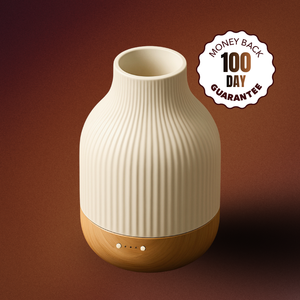
The whisper-quiet ultrasonic diffuser is measured at 27.3 dB(A) at 1 m and uses no heat, so it disperses oil molecules without altering their profile. Adjustable mist settings let you keep the aroma soft — which, as covered above, tends to work better for sleep than a strong fragrance.
For a curated oil set designed around night support, the Deep Sleep Ritual™ 6-oil set is a good starting point. All oils are 100% pure, with no synthetic fragrance or fillers. The full lineup of oil ritual kits shows how it compares with the Soft Wind-Down and Signature Ritual sets.
Conclusion
Understanding how essential oils fit into a nighttime routine can help create a calmer and more comfortable sleep environment. When used consistently, gentle aromas may become part of the signals that tell the body it is time to slow down and prepare for rest. With simple habits like diffusing oils before bed, keeping scent intensity soft, and using the same calming aroma regularly, aromatherapy can gradually support a more relaxing bedtime routine.
FAQs
How long should I diffuse essential oils before bed?
Many people find that diffusing oils for about 20–30 minutes before bedtime helps create a calm atmosphere. You don't need to run the diffuser all night — the scent that lingers after you switch it off is often enough.
Can I leave a diffuser on all night?
Some diffusers have intermittent settings designed for overnight use, but many people prefer diffusing oils before sleep instead of running the diffuser continuously. If you do run it overnight, choose a model with an auto-shutoff and keep the mist setting low.
How many drops of essential oil should I use?
For most diffusers, starting with 3–5 drops of essential oil creates a gentle scent suitable for sleep environments. Increase or decrease by 1–2 drops based on room size and personal preference.
Do essential oils make you fall asleep immediately?
Not usually. Essential oils help create a relaxing environment that supports sleep rather than causing instant sleepiness. Think of them as part of a broader wind-down routine, not a sleep medication.
Should I use the same oil every night?
Yes. Using a consistent scent helps your brain associate that aroma with relaxation and bedtime. After a few weeks of nightly use, many people find the familiar scent alone is enough to begin shifting into a calmer state.
Do I need to dilute essential oils before applying them to my skin?
Yes — always. Applying undiluted essential oils directly to skin can cause irritation or sensitization. A starting dilution of 1 drop per teaspoon (5 ml) of carrier oil — around 1% — is gentle enough for nighttime or sensitive-skin use; 2–3 drops per teaspoon is 2–3%, a general adult strength.

