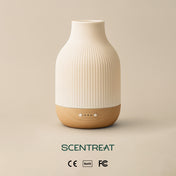
Are ceramic diffusers good for your home? Yes—when made with authentic materials, they can add a natural look, distinctive texture, and décor-friendly design to your space. In this guide, Scentreat will explore the benefits of ceramic diffusers, how ceramic compares to plastic, and what to consider before choosing one for your home.
In this article
What Is a Ceramic Diffuser?

A ceramic diffuser is an essential oil diffuser that uses ceramic as part of its exterior construction. Unlike traditional plastic diffusers, ceramic models can offer a more solid feel, distinctive texture, and natural appearance.
Many homeowners choose ceramic diffusers because they combine aromatherapy with a décor-friendly design. The ceramic exterior can complement different interior styles while adding a more tactile, substantial feel to the room. This is one reason why many people asking “are ceramic diffusers good for your home” consider ceramic as an alternative to conventional plastic designs.
Today, ceramic diffusers come in a variety of shapes, finishes, and material combinations. Some feature ceramic covers paired with natural wood bases, while others use ceramic-look plastic or resin. Understanding the materials used in the construction can help you choose a diffuser that fits both your practical needs and your home's design.
How Does a Ceramic Diffuser Work?

A ceramic diffuser works by using an ultrasonic system to break water and essential oils into tiny droplets, which are then released into the air as a cool mist. The ceramic component is typically used as the exterior cover, while the internal ultrasonic system handles the actual diffusion process.
Many ceramic diffusers combine the ceramic exterior with other materials, such as natural wood, to create a more decorative design. This allows the diffuser to function as both an aromatherapy device and a home décor piece, making it a popular choice for homeowners who want something that blends naturally into their space.
Ceramic diffusers come in several styles, finishes, and material combinations. Some feature a ceramic cover with a natural wood base, while others use ceramic-look plastic or resin to create a similar appearance. Understanding these differences can help you determine whether a product is actually made with ceramic or simply designed to look like it.
To use a ceramic diffuser, add water and the recommended amount of essential oil to the reservoir, then operate the diffuser according to the manufacturer's instructions. The ceramic cover remains part of the visible exterior while the internal ultrasonic system creates the cool mist.